
 The Journal of The Electrochemical Society is publishing a collection of papers on corrosion science and engineering for a sustainable future.
In today’s era of ever-increasing demand for metals, sustainable development is at the forefront of our attention. Corrosion science and engineering, including corrosion protection, are integral to sustainable development, as they enhance the durability and efficiency of infrastructure, conserve resources, and prolong objects’ lifespans.
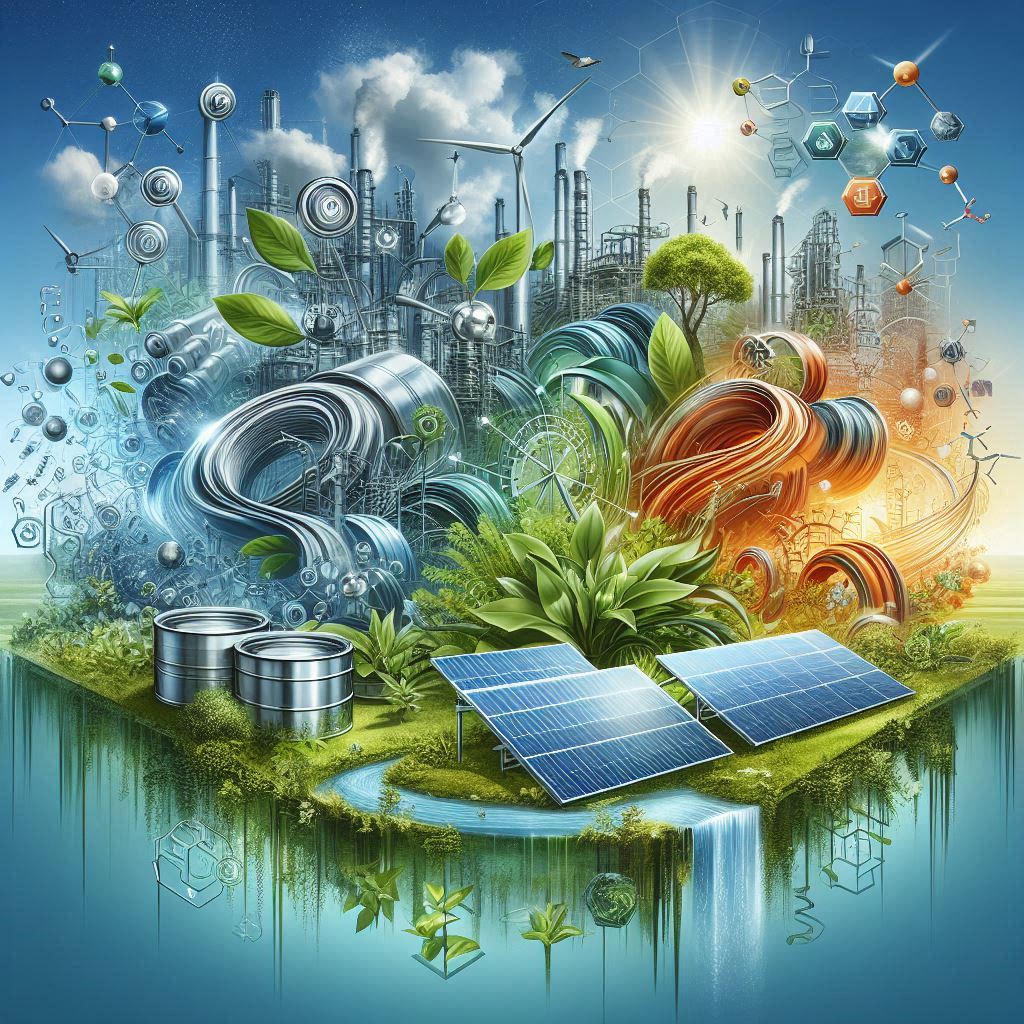
This focus issue aims to highlight sustainability across the entire metal cycle—from mining and metallurgy to metal design, modelling, fabrication, life extension, recycling, and recovery. Contemporary approaches are of interest that:
- Preserve metals,
- Substitute for critical elements,
- Reduce environmental impact,
- Produce recycled materials,
- Use modelling and machine learning methods to supplement experimental work,
- Develop corrosion protection treatments,
- Apply novel engineering solutions,
- Improve corrosion management.
Studies that quantify the costs associated with corrosion and its carbon footprint, increase circularity, and reduce the impact of corrosion processes at broader societal and environmental scales are welcome. The Journal of The Electrochemical Society invites researchers to submit articles to the Corrosion Science and Technology topical interest area of JES.
Additional requirements
- Graphical abstracts are mandatory for submissions to JES.
- ORCID iDs are required for all accepted papers and included in article metadata. All authors listed on a manuscript submission including the Submitting/Corresponding Author and all coauthors must have a valid account in the ECS ScholarOne Manuscripts submission system with a linked, valid ORCID iD.
- Corresponding authors of an article are the members of the author team who submit the original manuscript and submission form to the journal for consideration. These individuals are the primary points of contact for the journal, submit the articles on behalf of the entire author team, and confirm all certifying and attesting statements in the submission form. The corresponding authors are the single individuals responsible for all corresponding author duties. The corresponding authors cannot be changed once the articles have been formally submitted.
Accepting submissions: August 1, 2026 | Submission deadline: November 30, 2026
Guest Editors
Ingrid Milošev, Jožef Stefan Institute, Slovenia | ingrid.milosev@ijs.si
Gerald S. Frankel, The Ohio State University, US | frankel.10@osu.edu
Rajeev Gupta, North Carolina State University, US | rkgupta2@ncsu.edu
Sannakaisa Virtanen, Friedrich-Alexander-Universität Erlangen-Nürnberg, Germany | virtanen@ww.uni-erlangen.de
Technical Editor
Sannakaisa Virtanen, Friedrich-Alexander-Universität Erlangen-Nürnberg, Germany | virtanen@ww.uni-erlangen.de
Editor-in-Chief
David E. Cliffel, Vanderbilt University, US | paeepeditor@vanderbilt.edu
Articles are published in a standard issue of the journal as they are accepted. If selected at submission, accepted papers are published online in the ECS Digital Library on IOPscience within 24 hours of scheduling for publication. The version of record is published online within approximately 10 days of final acceptance.
Visit the ECS website for author submission instructions and requirements for each article type.
OPEN ACCESS
To take advantage of an article credit, the submitting/corresponding author must be from an ECS Plus-affiliated institution or Institutional member or be an ECS member in good standing. The APC applied to an article is determined based on the year of publication, not the date of submission, revision, or acceptance.