
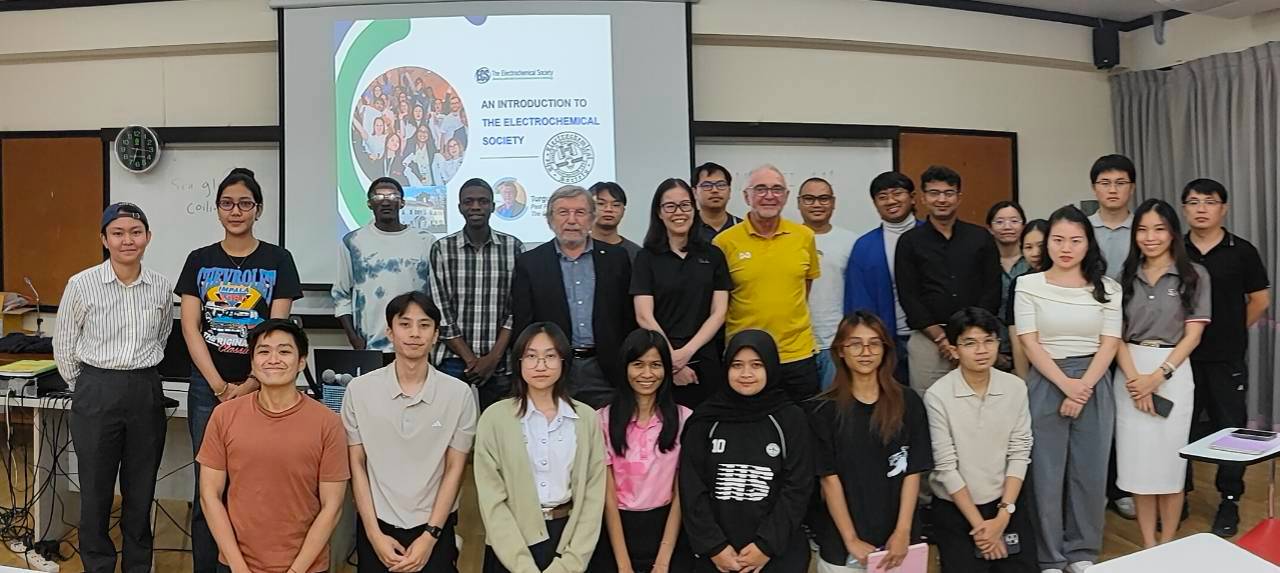
Prof. Turgut Gür meets with the ECS Chulalongkorn University Student Chapter in Bangkok, Thailand, on September 21, 2026; photo: Prof. R. Pornprasertsuk
ECS recently strengthened its connections with Thailand’s electrochemistry and solid state science communities through a visit to Bangkok by Prof. Turgut Gür of Stanford University. An active ECS member since 1973, Gür is an ECS Fellow and has held numerous leadership positions within the Society, including serving as president in 2022–2023. His visit provided an opportunity to engage with researchers and students in Thailand and highlight the strength and vitality of the country’s electrochemical and solid state science community.
ACSSI 2026
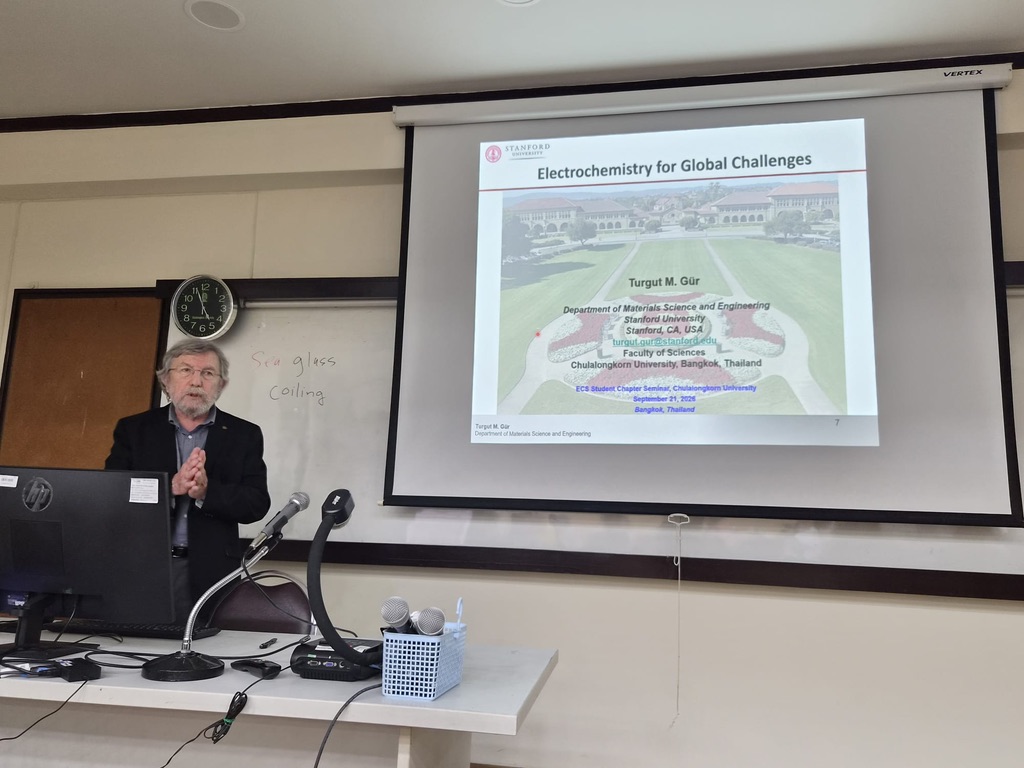
Photo: Prof. R. Pornprasertsuk
At the invitation of lead organizer and ECS member Prof. Soorathep Kheawhom, Chulalongkorn University, Prof. Gür presented a plenary talk, “Tera-Watt and Giga-Ton Challenges for Solid State Ionic Devices,” at the 19th Asian Conference on Solid State Ionics (ACSSI 2026) on September 14, in Bangkok. More than 250 scientists and researchers participated, with strong representation from India, China, South Korea, Japan, Thailand, and other Asian countries. ECS was one of the ACSSI 2026 conference sponsors.
“It was a well-organized, well-run, and well-attended conference. Equally important is the quality of the research presented. Also, the vibrant nature of SSI communities in Asia represented at the conference reinforced my belief that ECS should build more bridges to the other side of the ocean,” said Prof. Gür. “Several recent ECS members from Thailand, including Prof. Rojana Pornprasertsuk, Chulalongkorn University, were among the conference organizers.”
ECS Chulalongkorn University Student Chapter
While in Thailand, Prof. Gür also met with members of the ECS Chulalongkorn University Student Chapter. He helped charter the chapter in 2023 in collaboration with Chemical Engineering Prof. Kheawhom and Materials Science Prof. Pornprasertsuk who serve as chapter faculty advisors. The nearly two-hour meeting began with an introduction to ECS and an overview of opportunities for students and young scientists to engage with the Society and build their careers through active participation. The discussion continued with a technical presentation on energy transition, climate mitigation, and water scarcity, and the role electrochemistry can play in addressing these global issues.
ECS in Thailand
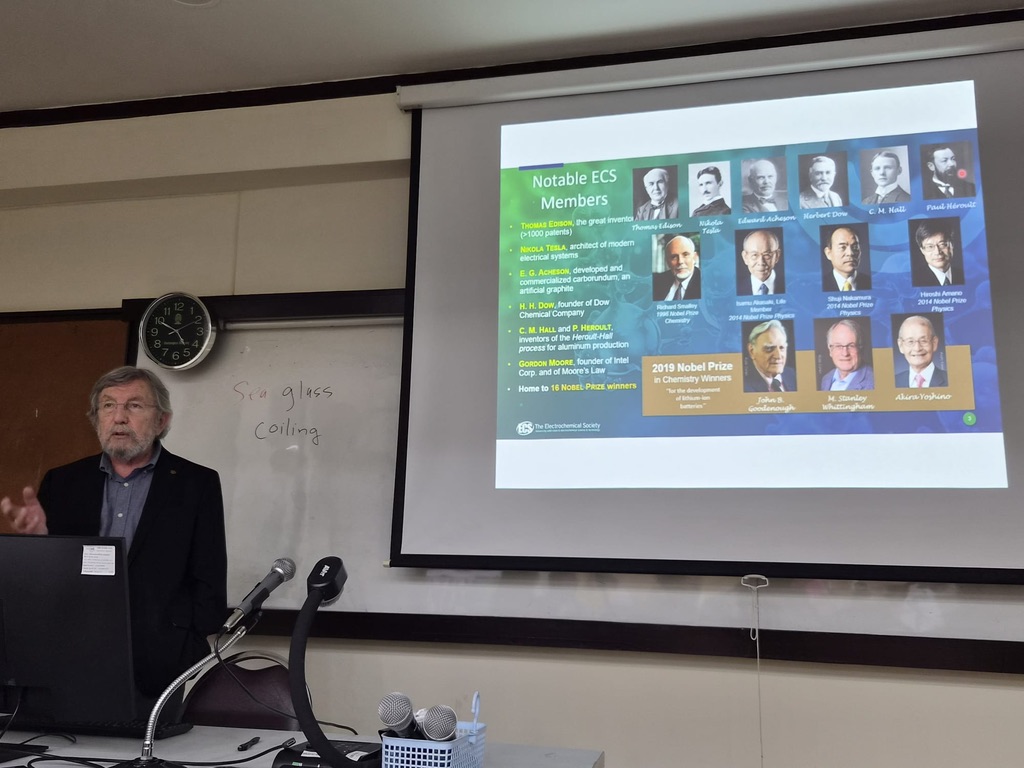
Photo: Prof. R. Pornprasertsuk
In a recent ECS video, Prof. Kheawhom shared what the Society community means to him. “Over the years, ECS has become more than a meeting for me. It’s a community where I have learned, connected, and grown.”
Prof. Kheawhom chairs the ECS Thailand Section, which was chartered in 2024. At that time, it was the only designated entity in Thailand supporting electrochemical professionals and students. Prof. Pornprasertsuk serves as the section’s secretary.
Thai representation at ECS 250
ECS looks forward to continued engagement with the chapter, section, and broader Thai electrochemistry and solid state community—and to welcoming about 10 participants from Thailand to the 250th Meeting (Calgary, Canada, October 25–29, 2026). There Prof. Kheawhom is co-chairing the A01—Flow Batteries and B01—Sensors symposia. Prof. Pornprasertsuk is co-chairing the A01—Materials 7, A01—Battery Materials Recycling, and A01—Miscellaneous symposia.
Together, these activities reflect the growing engagement between ECS and Thailand’s vibrant electrochemistry and solid state science communities and set the stage for continued collaboration in the years ahead.