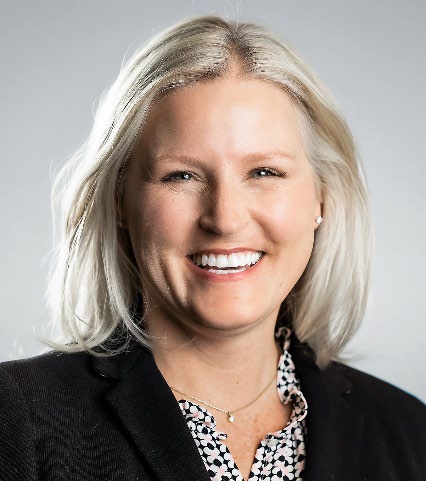
Maria Kelly

Maria Kelly
Sandia National Laboratories

Date: March 18, 2026
Time: 1300-1400h ET

Register

(more…)

Prof. Nagappan Ramaswamy

Prof. Nagappan Ramaswamy

Prof. Nagappan Ramaswamy
Indian Institute of Technology Bombay

Date: February 18, 2026
Time: 1000-1100h ET

Register now


Heavy-Duty Vehicles (HDV) powered by hydrogen-based Proton Exchange Membrane (PEM) fuel cells offer a cleaner alternative to the diesel-powered internal combustions engine vehicles for decarbonization of long-haul transportation sectors. The development path of sub-components for HDV fuel cell applications is guided by the Total Cost of Ownership (TCO) analysis of the truck. TCO analysis suggests that the cost of the hydrogen fuel consumed over the lifetime of the HDV is more dominant due to the operation of the trucks for longer mileage (~a million miles) than the fuel cell stack Capital Expense (CapEx). Commercial HDV applications consume more H2 fuel and demand higher durability and hence the TCO of the vehicle is largely related to the fuel cell efficiency and durability of catalysts. This article is written to bridge the gap between the industrial requirements and academic activity for advanced cathode catalysts with an emphasis on durability. From a materials perspective, the underlying nature of the carbon support, Pt-alloy crystal structure, stability of the alloying element, cathode ionomer volume fraction, and catalyst-ionomer interface play a critical role in improving performance and durability. We provide our perspective on four major approaches, namely, mesoporous carbon supports, ordered PtCo intermetallic alloys, thrifting ionomer volume fraction, and shell-protection strategies that are currently being pursued. While each approach has its merits and demerits, their key developmental needs for the future are highlighted.

(more…)

Noël Hallemans

Noël Hallemans

Noël Hallemans
University of Oxford

Date: January 21, 2026
Time: 1000–1100h ET

Register now


Electrochemical impedance spectroscopy (EIS) offers rich insights into the physical processes within batteries—but how can these measurements directly inform physics-based models? Recent work presented in this webinar demonstrates how impedance data can be used to extract grouped parameters for physics-based models such as the Doyle-Fuller-Newman (DFN) model or the reduced-order single particle model with electrolyte (SPMe). (more…)

Jeff Dahn

Jeff Dahn

The ECS Detroit Section invites you to “LFP Li-ion cells are boring – Why should I care?” This VIRTUAL seminar by Jeff Dahn is presented online on January 13 at 1800h EST.

Contact ECS Detroit Section at ecs.detroit.rsvp@gmail.com for attendee information. 

(more…)

Jian-Sian Li

Jian-Sian Li

Jian-Sian Li
Micron Technology
University of Florida

Date: November 19, 2025

Time: 13001400h ET

Register now

(more…)

The ECS Detroit Section invites you to “Driving the future of EVs: Battery Safety, Electrified Powertrain Efficiency, and Cooling System Innovation” on November 12 at the Nissan Technical Center North America.

Register now

(more…)

Don’t miss this limited time pricing! 

  • Nonmember – $329 
  • ECS Member – $269 
  • ECS Student Member – $179 

ECS’s Online Battery Courses are designed to help you deepen your understanding of the science and technology powering the next generation of energy solutions—from electric vehicles to grid-scale storage and advanced materials research.  (more…)

Ankit Verma

Ankit Verma
National Renewable Energy Laboratory

Date: October 29, 2025
Time: 1300–1400h ET

Register now


(more…)

Lennart Reuter, Technische Universität München (TUM)

Lennart Reuter, Technische Universität München (TUM)

 
Leonhard J. Reinschlüssel
Technische Universität München (TUM)

Leonhard J. Reinschlüssel, Technische Universität München (TUM)


The Electrochemical Society hosted “Development and Application of a 3-Electrode Setup for the Operando Detection of Side Reactions in Li-Ion Batteries,” a live webinar by Lennart Reuter and Leonhard J. Reinschlüssel (Technische Universität München), on August 6, 2025. A live Question and Answer session followed. Answers to some of the questions not addressed during the broadcast follow.

Replay webinar

Registration is required to view the webinar replay.

(more…)

  • Page 1 of 18
ECS
Privacy Overview

This website uses cookies so that we can provide you with the best user experience possible. Cookie information is stored in your browser and performs functions such as recognising you when you return to our website and helping our team to understand which sections of the website you find most interesting and useful.