The Journal of The Electrochemical Society is publishing a focus issue in connection with the Heterogeneous Functional Materials for Energy Conversion and Storage 4 symposium held at the 249th ECS Meeting in Seattle, WA, from May 2428, 2026.  

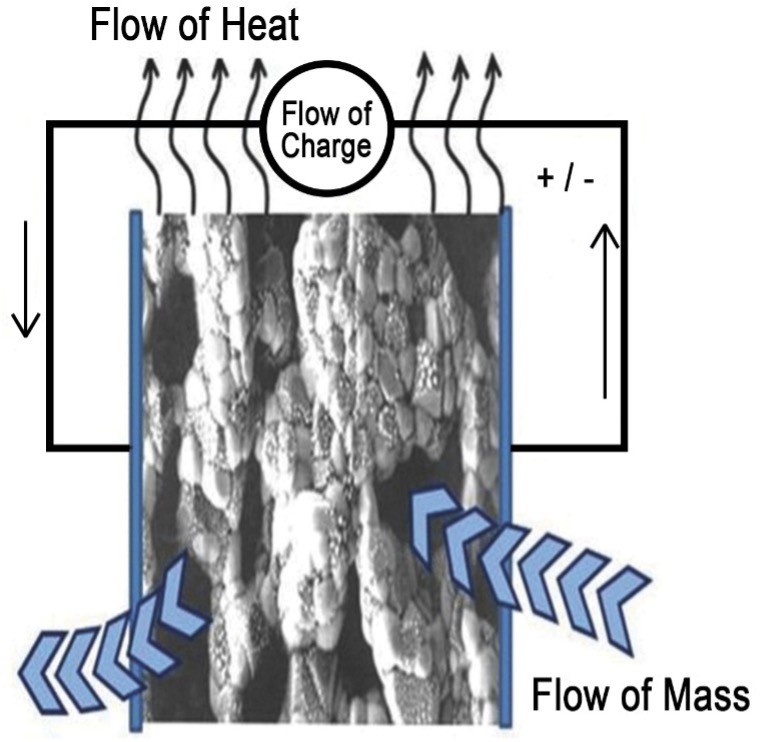
Heterogeneous functional materials (HeteroFoaMs) are pervasive in electrochemical devices. These devices consist of multiple materials combined at multiple scales (from atomic to macro) that actively interact during their functional history in a manner that controls their collective performance as a system at the global level. The principal motivation for this focus issue is to provide a place to publish the science that controls emergent properties in heterogeneous functional materials as a foundation for design of functional material devices with performance not bound by constituent properties.   (more…)

The ECS Detroit Section invites you to “Advancing Battery Technologies: Scientific and Industrial Perspectives” with Prof. Ping Liu (University of California San Diego) and Dr. Yong Seok Kim (Samsung SDI) on April 15 at Nissan Technical Centre North America.   

(more…)

Boaz Mamo, Addionics

The ECS Detroit Section invites you to “Smart Metals for Next-Gen Batteries: How Porous 3D Current Collectors Redefine Cell Design for a New Era of Performance and Cost” presented by Boaz Mamo (Addionics) on April 7 at Mercedes-Benz R&D North America.  

Register now


Title: “Smart Metals for Next-Gen Batteries: How Porous 3D Current Collectors Redefine Cell Design for a New Era of Performance and Cost”  

Date: Tuesday, April 7, 2026 

Schedule: 1800h Posters and Dinner | 1900h Speakers 

Location: Mercedes-Benz R&D North America, 35555 W 12 Mile Rd, Farmington Hills, MI 48331  (more…)

Noël Hallemans

Noël Hallemans

Noël Hallemans
University of Oxford

Date: January 21, 2026
Time: 1000–1100h ET

The Electrochemical Society hosted “Physics-based battery model parametrization from impedance data,” a live webinar by Noël Hallemans (University of Oxford), on January 21, 2026. A live Question and Answer session followed. Answers to some of the questions not addressed during the broadcast follow.

Replay Webinar

(more…)

Dr. Loraine Torres-Castro

Physicist Dr. Loraine Torres-Castro, Battery Safety Lead at Sandia National Laboratories, is serving as the lead organizer for the A01—New Approaches and Advances in Electrochemical Energy Systems Symposium at the 249th ECS Meeting in Seattle, WA, this spring.  

In a recent interview with ECS staff, Dr. Torres-Castro shared insights into the rewards and complexities of symposium leadership, encouraging colleagues to pursue similar roles. She is part of a dynamic new organizing team—which includes Dr. Yuliya Preger (Sandia National Laboratories) and Prof. Golareh (Goli) Jalilvand (University of South Carolina)—that has introduced a collaborative leadership model. Under this arrangement, the leads rotate each meeting: Dr. Preger led the 248th Meeting symposium, while Prof. Jalilvand is slated to lead it at the 250th. 

Learn more about symposium organizing and Dr. Torres-Castro.

(more…)

Prof. Nagappan Ramaswamy

Prof. Nagappan Ramaswamy

Prof. Nagappan Ramaswamy
Indian Institute of Technology Bombay

Date: February 18, 2026
Time: 1000-1100h ET

Register now


Heavy-Duty Vehicles (HDV) powered by hydrogen-based Proton Exchange Membrane (PEM) fuel cells offer a cleaner alternative to the diesel-powered internal combustions engine vehicles for decarbonization of long-haul transportation sectors. The development path of sub-components for HDV fuel cell applications is guided by the Total Cost of Ownership (TCO) analysis of the truck. TCO analysis suggests that the cost of the hydrogen fuel consumed over the lifetime of the HDV is more dominant due to the operation of the trucks for longer mileage (~a million miles) than the fuel cell stack Capital Expense (CapEx). Commercial HDV applications consume more H2 fuel and demand higher durability and hence the TCO of the vehicle is largely related to the fuel cell efficiency and durability of catalysts. This article is written to bridge the gap between the industrial requirements and academic activity for advanced cathode catalysts with an emphasis on durability. From a materials perspective, the underlying nature of the carbon support, Pt-alloy crystal structure, stability of the alloying element, cathode ionomer volume fraction, and catalyst-ionomer interface play a critical role in improving performance and durability. We provide our perspective on four major approaches, namely, mesoporous carbon supports, ordered PtCo intermetallic alloys, thrifting ionomer volume fraction, and shell-protection strategies that are currently being pursued. While each approach has its merits and demerits, their key developmental needs for the future are highlighted.

(more…)

All-solid-state batteries are widely viewed as a next-generation solution for safer and higher energy storage. But translating promising materials from the lab to large-scale manufacturing depends on more than performance alone—it also requires compatibility with real-world production environments.

A new open-access article in the Journal of The Electrochemical Society examines how chloride-based solid-state electrolytes behave when exposed to dry room conditions commonly used in battery manufacturing. The study focuses on practical considerations that matter for scalability, offering valuable insight into how these materials respond outside ideal laboratory settings.  (more…)

Noël Hallemans

Noël Hallemans

Noël Hallemans
University of Oxford

Date: January 21, 2026
Time: 1000–1100h ET

Register now


Electrochemical impedance spectroscopy (EIS) offers rich insights into the physical processes within batteries—but how can these measurements directly inform physics-based models? Recent work presented in this webinar demonstrates how impedance data can be used to extract grouped parameters for physics-based models such as the Doyle-Fuller-Newman (DFN) model or the reduced-order single particle model with electrolyte (SPMe). (more…)

Jeff Dahn

Jeff Dahn

The ECS Detroit Section invites you to “LFP Li-ion cells are boring – Why should I care?” This VIRTUAL seminar by Jeff Dahn is presented online on January 13 at 1800h EST.

Contact ECS Detroit Section at ecs.detroit.rsvp@gmail.com for attendee information. 

(more…)

Nomination deadline: March 15, 2026

The Journal of The Electrochemical Society (JES) invites nominations for the position of Technical Editor in the topical interest area (TIA) of Battery and Energy Storage.

On December 31, 2026, Dr. Doran Aurbach completes his 12-year term as Technical Editor for this important topic area. Under his leadership, the Battery and Energy Storage TIA has become the most active in JES—garnering the highest number of citations, submissions, and associate editors in the journals portfolio.

Recognizing the critical importance of this TIA to JES and the global electrochemical science community, the ECS Publications Subcommittee seeks a highly qualified and visionary individual to continue this legacy of excellence.

(more…)

  • Page 1 of 65
ECS
Privacy Overview

This website uses cookies so that we can provide you with the best user experience possible. Cookie information is stored in your browser and performs functions such as recognising you when you return to our website and helping our team to understand which sections of the website you find most interesting and useful.