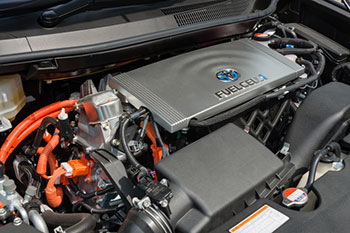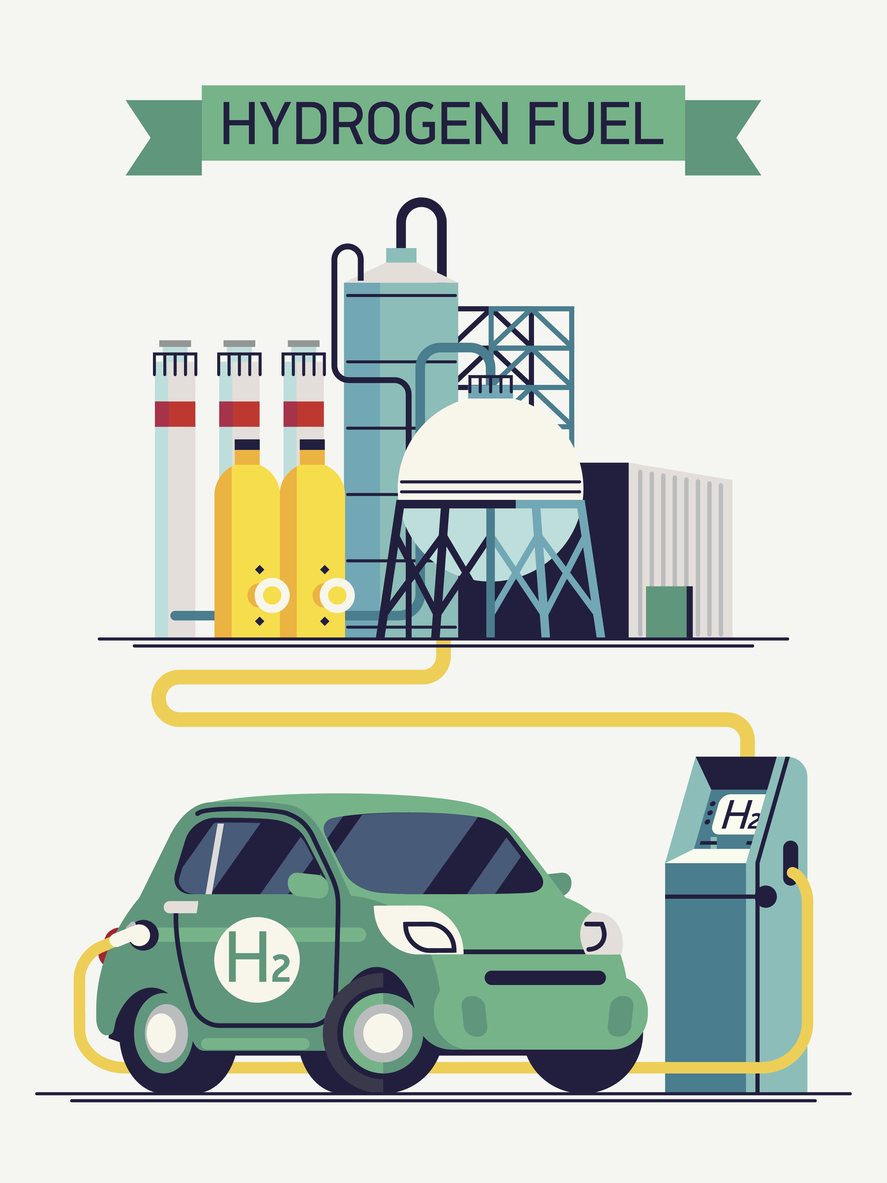
The Electrochemical Society hosted “Fuel Cell Catalyst Requirements for Heavy-Duty Vehicle Applications,” a live webinar by Nagappan Ramaswamy (Indian Institute of Technology Bombay), on February 18, 2026. A live Question and Answer session followed. Answers to questions not addressed during the broadcast are provided below.
Replay webinarDeadline Extended: Apply Now for the ECS Toyota Young Investigator Fellowship!
Posted on January 31, 2025 by Shannon ReedAre you working on groundbreaking research in green energy technologies? There’s great news for innovators and researchers passionate about sustainable solutions—the deadline for the ECS Toyota Young Investigator Fellowship has been extended to February 21, 2025!
This prestigious fellowship, a partnership between Toyota Research Institute of North America and The Electrochemical Society (ECS), offers a minimum $50,000 fellowship to support innovative research in batteries, fuel cells, hydrogen, and other sustainable energy technologies. The opportunity is open to applications from individuals working in Europe, Canada, Mexico, and the US.
Why apply for the ECS Toyota Young Investigator Fellowship?
Focus Issue on Proton Exchange Membrane Fuel Cell and Proton Exchange Membrane Water Electrolyzer Durability III
Posted on January 25, 2024 by Beth Schademann
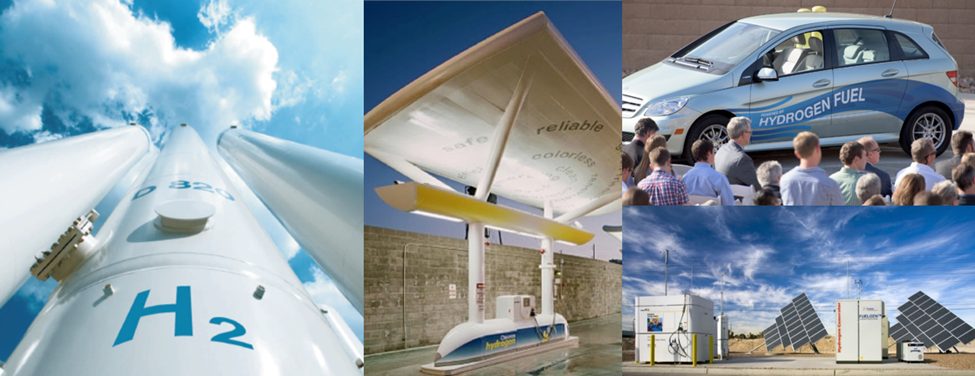
Image courtesy of U.S. Department of Energy, Energy Efficiency and Renewable Energy Office’s Hydrogen and Fuel Cell Program.
All aspects of PEMFC and PEMWE durability are considered: (more…)
243rd ECS Meeting Topic Close-up: SOFC-XVIII / The Eighteenth International Symposium on Solid Oxide Fuel Cells
Posted on November 8, 2022 by JaneAnn Wormann
Topic Close-up #5
Symposium SOFC-XVIII / The Eighteenth International Symposium on Solid Oxide Fuel Cells
Extended deadline for submitting abstracts:
December 16, 2022
Submit today!
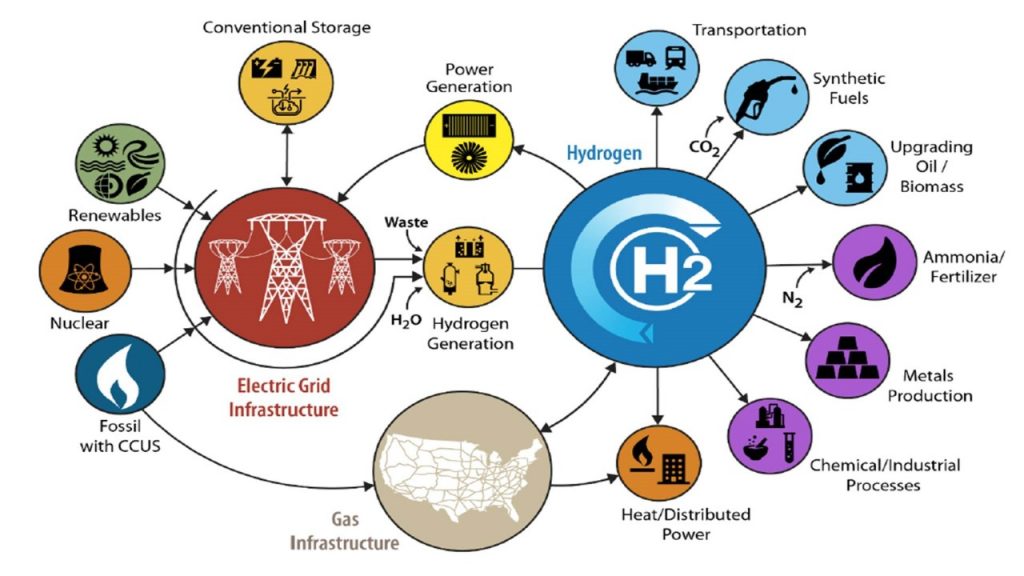
ECS Webinar: “Hydrogen’s Big Shot: Where we are and where we are going”
Posted on February 8, 2022 by Kellie GilbertBryan Pivovar
Senior Research Fellow and Electrochemical Engineering and Materials Chemistry Group Manager
Chemistry and Nanosciences Center
National Renewable Energy Laboratory, U.S.
Date: February 23, 2022
Time: 1000h ET
Sponsors: Hiden Analytical, Scribner Associates, Gamry Instruments
ECS’s mission is to advance theory and practice at the forefront of electrochemical and solid state science and technology, and allied subjects by encouraging research, discussion, critical assessment, and dissemination of knowledge in these fields. We couldn’t do this without the help of our sponsors! Their support plays a key role in the advancement of the sciences.
Most recently, the Army Research Office, an element of the U.S. Army Combat Capabilities Development Command’s Army Research Laboratory, contributed $5,000 to the 19th Polymer Electrolyte Fuel Cells & Electrolyzers 19 (PEFC&E-19) symposium taking place at the 236th ECS Meeting. (more…)
Pulling Needles Out of Haystacks: With Computation, Researchers Identify Promising Solid Oxide Fuel Cell Materials
Posted on March 1, 2018 by Amanda Staller
Using advanced computational methods, University of Wisconsin–Madison materials scientists have discovered new materials that could bring widespread commercial use of solid oxide fuel cells closer to reality.
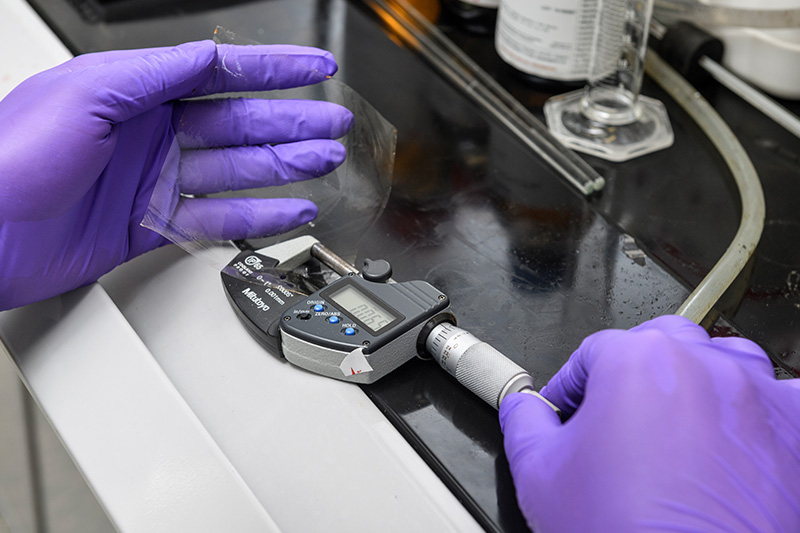
A solid oxide fuel cell is essentially an engine that provides an alternative way to burn fossil fuels or hydrogen to generate power. These fuel cells burn their fuel electrochemically instead of by combustion, and are more efficient than any practical combustion engine.
As an alternative energy technology, solid oxide fuel cells are a versatile, highly efficient power source that could play a vital role in the future of energy. Solid oxide fuel cells could be used in a variety of applications, from serving as a power supply for buildings to increasing fuel efficiency in vehicles.
However, solid oxide fuel cells are more costly than conventional energy technologies, and that has limited their adoption.
Want to see Electrochemistry in Action and ride in one of the world’s first commercial fuel cell cars while at the 232nd ECS Meeting? Join us for a Ride-and Learn on Monday, October 2 from 12:00 pm to 2:00 pm in front of the main entrance of the Gaylord National Resort and Convention Center. This Ride-and-Learn is open to all ECS meeting attendees. First come, first serve.
Fuel cell cars run on hydrogen fuel, use a fuel cell that converts hydrogen into the electricity that powers the car’s electric motor and emit only water from the tailpipe. For the first time ever, they are commercially available, have started hitting the streets and the hydrogen stations to fuel them are up and running in select U.S. regions.
This Ride-and-Learn is organized by the U.S. Department of Energy’s Fuel Cell Technologies Office (FCTO) in the Office of Energy Efficiency and Renewable Energy. FCTO has funded early-stage hydrogen and fuel cells research and development enabling a 60 percent reduction in fuel cell cost, a fourfold increase in fuel cell durability and an 80 percent cut in the cost of electrolyzers over the past decade. You can learn more about this exciting technology and the work FCTO funds to enable hydrogen and fuel cell technological breakthroughs at energy.gov/fuelcells.
Following the 232nd ECS Meeting, the third annual National Hydrogen and Fuel Cell Day will take place on October 8, 2017, aimed at raising awareness and celebrating advances in fuel cell and hydrogen technologies. The U.S. Department of Energy, Fuel Cell and Hydrogen and Energy Association , its members, industry organizations, and state and federal governments will be commemorating National Hydrogen and Fuel Cell day with a variety of activities and events across the country.

Image: Kathy F. Atkinson, University of Delaware
Fuel cells are an important technology for the nation’s energy portfolio, offering a cleaner, more efficient alternative to combustion engines that utilize fossil fuels.
However, a team of researchers from the University of Delaware point out that a major challenge in the commercialization of fuel cells is the durability of the membrane, which tends to develop cracks that short is life during operation.
A new article published in the Journal of The Electrochemical Society, “Self-Healing Composite Membrane for Proton Electrolyte Membrane Fuel Cell Applications,” aims to address the fuel cell membrane issue by developing a self-healing membrane, incorporating microcapsules prefilled with a Nafion solution.
“The microcapsules are designed to rupture when they encounter defects in the membrane and then release the prefilled Nafion solution to heal the defects in place,” says Liang Wang, past ECS member and co-author of the study.
Testing showed that the newly developed membrane and its self-healing functionality could greatly extend its useful life.

Image: University illustration / Michael Osadciw
Many researchers agree that microbial fuel cells have a range of promising applications. However, before they can reach widespread applications, researchers need to make them both cheaper and more efficient.
A team of researchers from the University of Rochester believe they’re making progress on that front with the development of a paper electrode.
Microbial fuel cells drive electric current by using bacteria and mirroring bacterial interactions found in nature. In the 21st century, microbial fuel cells found new application in their ability to treat wastewater and harvest energy through anaerobic digestion.
This from University of Rochester:
Until now, most electrodes used in wastewater have consisted of metal (which rapidly corrodes) or carbon felt. While the latter is the less expensive alternative, carbon felt is porous and prone to clogging. Their solution was to replace the carbon felt with paper coated with carbon paste, which is a simple mixture of graphite and mineral oil. The carbon paste-paper electrode is not only cost-effective and easy to prepare; it also outperforms carbon felt.