
Prof. Nagappan Ramaswamy

Prof. Nagappan Ramaswamy

Prof. Nagappan Ramaswamy
Indian Institute of Technology Bombay

Date: February 18, 2026
Time: 1000-1100h ET

Register now


Heavy-Duty Vehicles (HDV) powered by hydrogen-based Proton Exchange Membrane (PEM) fuel cells offer a cleaner alternative to the diesel-powered internal combustions engine vehicles for decarbonization of long-haul transportation sectors. The development path of sub-components for HDV fuel cell applications is guided by the Total Cost of Ownership (TCO) analysis of the truck. TCO analysis suggests that the cost of the hydrogen fuel consumed over the lifetime of the HDV is more dominant due to the operation of the trucks for longer mileage (~a million miles) than the fuel cell stack Capital Expense (CapEx). Commercial HDV applications consume more H2 fuel and demand higher durability and hence the TCO of the vehicle is largely related to the fuel cell efficiency and durability of catalysts. This article is written to bridge the gap between the industrial requirements and academic activity for advanced cathode catalysts with an emphasis on durability. From a materials perspective, the underlying nature of the carbon support, Pt-alloy crystal structure, stability of the alloying element, cathode ionomer volume fraction, and catalyst-ionomer interface play a critical role in improving performance and durability. We provide our perspective on four major approaches, namely, mesoporous carbon supports, ordered PtCo intermetallic alloys, thrifting ionomer volume fraction, and shell-protection strategies that are currently being pursued. While each approach has its merits and demerits, their key developmental needs for the future are highlighted.
(more…)

Are you working on groundbreaking research in green energy technologies? There’s great news for innovators and researchers passionate about sustainable solutions—the deadline for the ECS Toyota Young Investigator Fellowship has been extended to February 21, 2025

This prestigious fellowship, a partnership between Toyota Research Institute of North America and The Electrochemical Society (ECS), offers a minimum $50,000 fellowship to support innovative research in batteries, fuel cells, hydrogen, and other sustainable energy technologies. The opportunity is open to applications from individuals working in Europe, Canada, Mexico, and the US.  

Why apply for the ECS Toyota Young Investigator Fellowship? 

(more…)

Hosted by ECS Pacific Northwest Section

A video recording of The Pacific Northwest Hydrogen Workshop webinar is now available for open-access viewing on the ECS YouTube channel.

The Society and ECS Pacific Northwest Section hosted the workshop on July 21, 2022. This timely event covered:

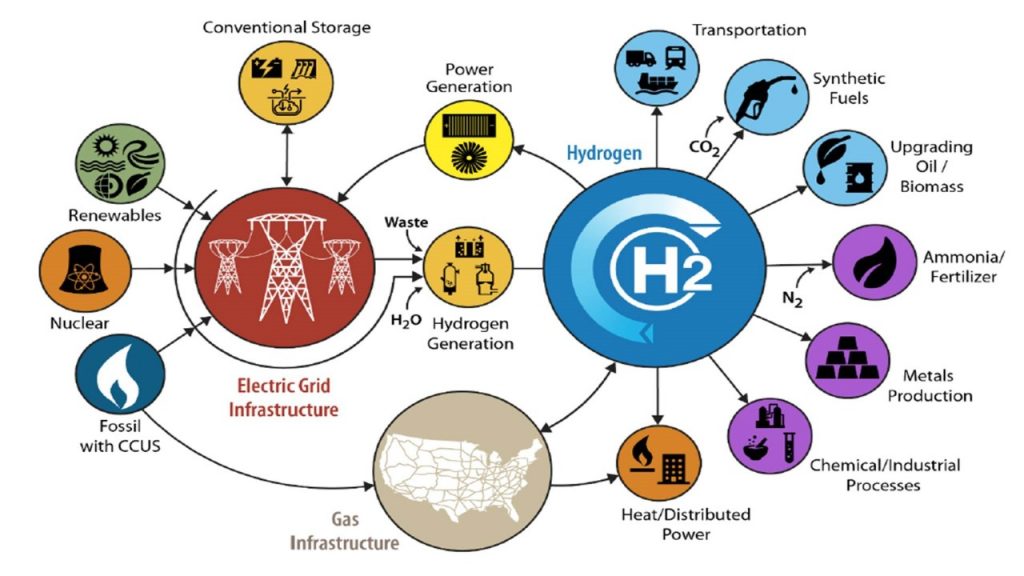
  • Roles of hydrogen and hydrogen technologies in decarbonization of our society;
  • Status of industrial deployment of hydrogen technologies, (e.g., fuel cells, electrolyzer);
  • R&D needs and workforce development for hydrogen technologies

(more…)

Date: July 21, 2022
Time: 1000–1200h PT
Price: 
There is no cost to register for this event. Registration is required.

The webinar is open to the public; ECS membership is not required.

(more…)

Ahmet Kusoglu
Chemist Staff Scientist/Engineer
Lawrence Berkeley National Laboratory, U.S.

Date: March 23, 2022
Time: 1300h ET
Sponsors:
Hiden Analytical, Element Six, TA Instruments – Waters

(more…)

Bryan Pivovar
Senior Research Fellow and Electrochemical Engineering and Materials Chemistry Group Manager
Chemistry and Nanosciences Center
National Renewable Energy Laboratory, U.S.

Date: February 23, 2022
Time: 1000h ET
Sponsors:
Hiden Analytical, Scribner Associates, Gamry Instruments

(more…)

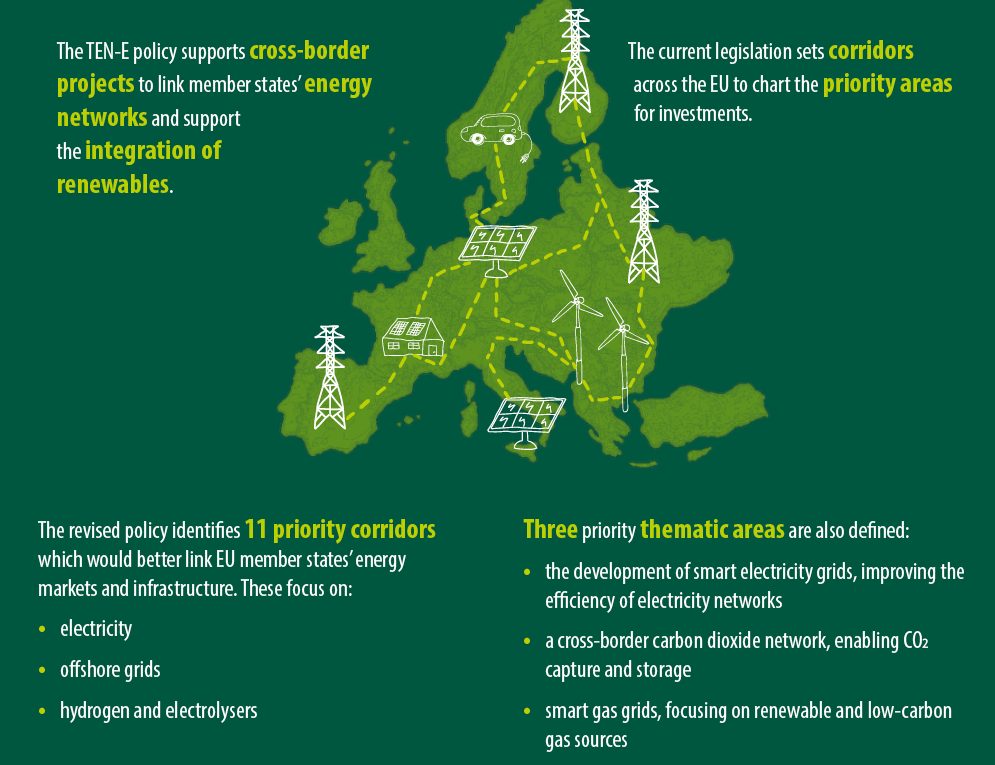
Drs. Atanassov, Di Noto, and McPhail review the main trends in European hydrogen technology

Image courtesy of the European Council

Image courtesy of the European Council

(more…)

The ECS Interface winter 2021 issue is now available to read online. The issue on clean hydrogen is guest edited by Nemanja Danilovic, formerly of Lawrence Berkeley National Laboratory and now at Electric Hydrogen, and Iryna Zenyuk of the National Fuel Cell Research Center, University of California, Irvine. As always, Interface Editor Rob Kelly invites you to enjoy the issue’s special features and news.

Special Features

Hydrogen’s Big Shot
by Nemanja Danilovic, Iryna Zenyuk

Ten Questions for Kelly J. Speakes-Backman, Acting Assistant Secretary for Energy Efficiency and Renewable Energy, US Department of Energy
by Julie C. Fornaciari (more…)

ECS webinar seriesECS is hosting a series of webinars presented by distinguished speakers this June. Join us! Speakers include Harry Atwater from the California Institute of Technology, Arumugam Manthiram from the University of Texas at Austin, and Paul Kenis from the University of Illinois at Urbana-Champaign. Topics include batteries, energy, carbon, and more. Considering attending? Learn more about what you can expect to hear about from our presenters! (more…)

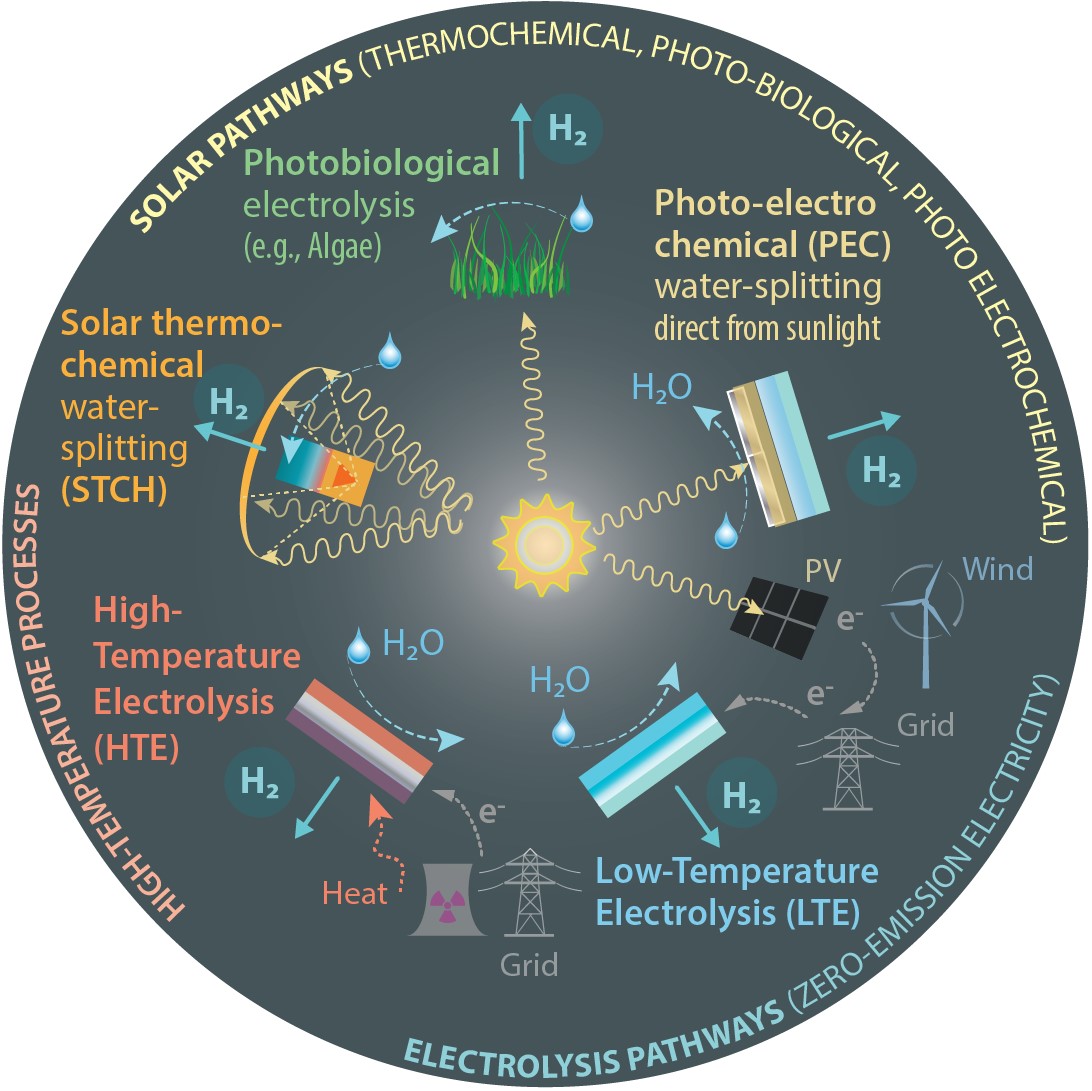
Hydrogen gas: it’s storable, can refuel a car in minutes (versus batteries which can take hours to recharge), and its waste product is water. It is the holy grail of clean-energy advocates.

The only problem is that the electrolyzers that make hydrogen from renewable energy are quite expensive. But, that soon may change, according to Ars Technica.

According to a new paper in Nature Energy, researchers from universities in Germany and at Stanford University have created a financial model for a wind farm connected to a hydrogen electrolyzer. (more…)

  • Page 1 of 5
ECS
Privacy Overview

This website uses cookies so that we can provide you with the best user experience possible. Cookie information is stored in your browser and performs functions such as recognising you when you return to our website and helping our team to understand which sections of the website you find most interesting and useful.