

249th Meeting ECS Lecturer Talks Yesterday, Today, and Tomorrow
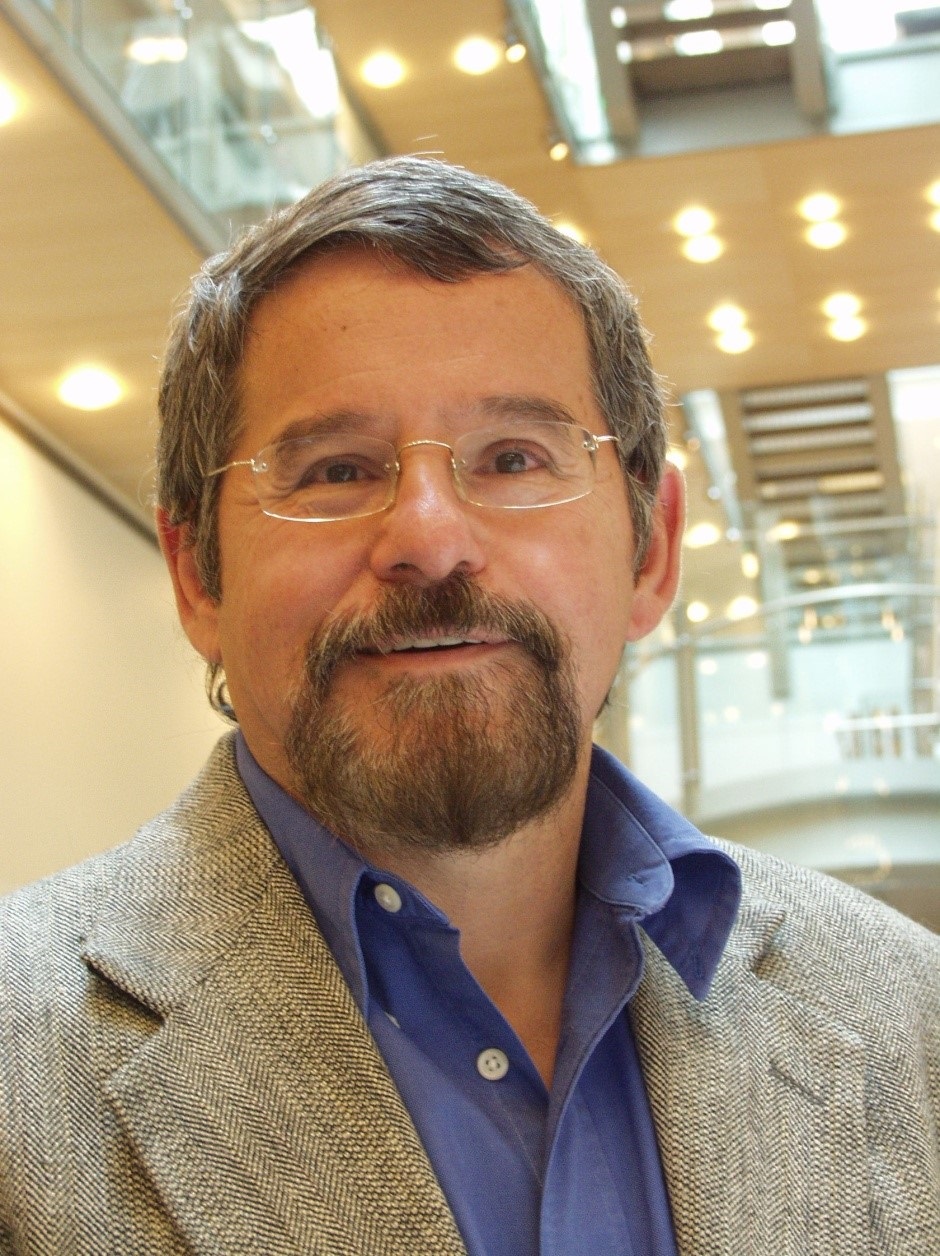
Joseph Wang | 249th ECS Plenary/ECS Lecturer
Joseph Wang (SAIC Endowed Chair, Distinguished Professor of Chemical and Nanoegineering, Director of the Center of Wearable Sensors, and Co-Director, Center for Mobile-health Systems at the University of California San Diego) insists that his research has always focused simply on “solving problems.” Yet his work over the past 40 years has transformed the fields of wearable sensors, nanomachines, and medical diagnostics. He advanced field-based environmental monitoring and forensics by introducing “green” electrodes as non-toxic alternatives to mercury for detecting heavy metals, as well as remote submersible sensors for detecting explosives and gunshot residue. He is also expanding innovative technologies to detect, monitor, and treat disease and promote health—including minute rapidly moving catalytic nanorobots that deliver medication precisely where it is needed!
Dr. Wang is consistently ranked as one of the top engineers and top electrochemists in the world (190,000+ citations). One on one, he is charming—just ask the 800+ aspiring scientists who have graced his labs! Or learn more about his life and work in this interview leading up to his presenting the ECS Lecture, “Wearable Bioelectronic Platforms,” at the 249th ECS Meeting Plenary Session.
Read on and join us—and Joe—in Seattle, WA US, from May 24–28, 2026!
ECS: What have been the biggest scientific or engineering challenges in developing multimodal wearable systems?
For over 40 years, we have developed electrochemical sensors in response to emerging societal needs, including portable glove-based devices for detecting improvised explosives or opioid drugs, or flow detectors for monitoring trace lead in drinking water. Over the past decade, we have focused on developing integrated multimodal wearable sensors for simultaneous monitoring of chemical biomarkers and physical vital signs. The physical sensing components are relatively straightforward. Devices like activity trackers and smartwatches have been measuring motion, heart rate, and other physical signals for years.
Chemical sensing is much more challenging. Electrochemical sensors detect molecules using bioreceptors, such as enzymes or antibodies, and these components are not always stable. When sensors are placed on the body, they encounter complex biological environments that can cause biofouling—the passivation or degradation of the sensing surface. This stability challenge is one reason why glucose remains the most widely commercialized electrochemical wearable sensor. However, companies have invested heavily to solve these problems.
One strategy is to measure biomarkers in alternative fluids such as sweat or interstitial fluid rather than blood. Sweat is particularly attractive because it is less complex than blood and reduces biofouling issues. We have also pioneered microneedle sensors as “labs under the skin” that access interstitial fluid (ISF) and monitor multiple biomarkers simultaneously. These efforts have led to several companies, such as Biolinq and Persperion, for monitoring ISF and sweat respectively.
At upcoming conferences, including ECS meetings, you will see a growing amount of research on sweat-based electrochemical sensing. Even for Parkinson’s disease monitoring, we are exploring detection of drug biomarkers in sweat.
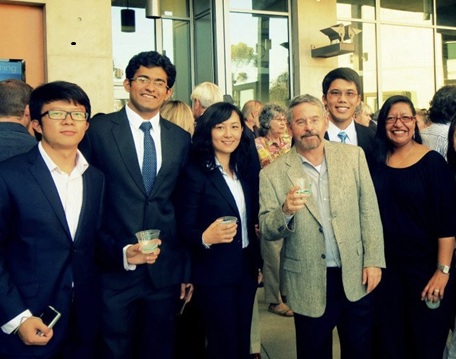
Dr. Wang in 2013 with former students now at leading institutions around the world (from left to right): Jinxing Li (Michigan State University); Amay Bandodkar (North Carolina State University); Wenzhao Jia (Philips); Dr. Wang; Wei Gao (California Institute of Technology); and Gabriela V. Ramirez, (Universidad Nacional Autónoma de México).
ECS: How do electrochemical energy harvesting and microgrid systems address power and autonomy?
We have excellent electrochemical devices, including high-performance batteries, but traditional systems—like lithium coin cells—are not ideal for wearable applications. Instead, we are developing flexible batteries based on materials such as zinc and silver oxide that can conform to the body.
At the same time, energy harvesting is essential. Biofuel cells, for example, can generate power from metabolites like lactate in sweat. But a single energy source is not sufficient. That’s where the concept of a microgrid comes in—integrating multiple energy inputs, including mechanical motion, solar energy, and thermoelectric sources generated during daily activities.
These wearable systems combine energy harvesting with storage. The harvested energy is collected from various sources, then stored in flexible batteries or supercapacitors for later use. All components must be stretchable and adaptable to body movement, unlike traditional rigid electrochemical devices. Ultimately, the goal is to create fully integrated, flexible systems—embedded in textiles or worn directly on the skin—that can continuously harvest, store, and deliver energy to power wearable sensors.
With all these sensors generating data, artificial intelligence becomes essential. AI can analyze large data streams, combine signals from multiple sensors, and detect early signs of abnormal conditions—essentially providing a “check-engine-light” warning signal for the body.
ECS: Are you working on monitoring people who are considered healthy?
Yes, monitoring healthy individuals is a great opportunity. There’s growing interest in tracking wellness, nutrition, and athletic performance, and wearable sensors could provide continuous insight into nutrients, metabolites, and overall physiological status.
These technologies will also be critical for aging populations and for conditions that can escalate quickly, such as sepsis, kidney disease, or heart disease. The goal is to integrate multiple data streams—chemical biomarkers alongside vital signs—to create a completer and more actionable picture of health.
By combining electrochemical and physical sensors on a single wearable platform, we can enable early warning systems that detect subtle changes before symptoms appear. This kind of continuous, multimodal monitoring supports not only disease management, but also proactive health maintenance.
ECS: Your work bridges fundamental electrochemistry with wearable technology that directly impacts health monitoring. What do you think will be the next breakthrough?
One of the most important advances is expanding beyond glucose monitoring to track a broader range of biomarkers continuously. Diabetes research has demonstrated the power of real-time feedback, and we’re now applying those same electrochemical sensing principles to other targets, such as ketones for diabetic ketoacidosis or levodopa for Parkinson’s disease.
More broadly, the field is moving toward continuous, personalized monitoring. Instead of relying on intermittent lab tests, we can develop systems that track biomarkers beneath the skin and provide immediate insight. For example, combining lactate measurements with vital signs could enable much earlier detection of conditions like sepsis.
We’re also advancing multimodal sensing—integrating chemical data with physical signals like ECG or blood pressure. With the addition of AI, these platforms could shift healthcare toward prediction and prevention rather than reaction.
ECS: Looking back over your career, what advice would you give early career scientists who hope to make a high impact in electrochemical science and technology. It’s a tough time for many of those coming up behind you.
More than 800 people have come through my lab over the last four decades, and many of them are now doing fantastic work around the world—in Europe, Asia, South America, Australia, and the United States. My advice to them has always been simple: follow your dream.
The key to our success is that we encourage our students to think creatively and focus on solving important problems. They must also stay current with the literature because the field is evolving very quickly. Wearable technologies, for example, are still emerging and highly competitive. I even “compete” with my own former students, but I’m proud of that competition because it means that my students are doing great work.
After four decades of such intensive research efforts, I’m full of energy and still having lots of fun. What keeps me going is the close, dynamic, day-to-day interactions with students—meeting in small groups, brainstorming ideas, and working through challenges together.
Instead of large group meetings, we often organize smaller project teams. Each project might include a postdoc, a couple of students, and sometimes a visiting researcher. We meet regularly to brainstorm and plan the next steps. It’s a dynamic, stimulating environment where everyone contributes ideas, and we learn from each other.
Our nanobioelectronics (NBE) group is like a family. Many former students have gone on to become leading scientists, heading strong programs across the U.S. and around the world. For example, Martin Pumera1 in the Czech Republic and Arben Merkoçi2 in Spain trained in the lab years ago and are now top researchers in Europe. Similarly, recent PhD students, such as Wei Gao3, Juliane Sempionatto4, Jinxing Li 5, and Amay Bandodkar6 hold leading academic positions throughout the US. I have also collaborated with outstanding colleagues including Y. Shirley Meng7, who works on next-generation rechargeable batteries, and Netz Arroyo8, who works on continuous drug monitoring.
In the end, the message is simple: work smart and hard, be creative, stay curious—and enjoy the process. If you’re having fun while pushing the boundaries of science, you’re already on the right path.
We’re also looking forward to more fun—and great science—at the 249th ECS Meeting in Seattle!
ECS: Why does The Electrochemical Society matter?
I’m very proud of my affiliation with The Electrochemical Society. I’m an ECS Fellow, and in 2018, I received the ECS Sensor Division Achievement Award.
ECS is a fantastic community. When you attend the meetings, you connect with electrochemists from around the world and hear about creative ideas across the entire field—from fundamental electrochemistry to energy storage and sensing technologies. It’s a place where you learn, exchange ideas, and build long-term collaborations.
I try to attend ECS Meetings regularly—ideally at least once a year—because they are an opportunity to present our work, reconnect with colleagues, and meet new collaborators. I hope to attend the 250th Meeting in Calgary this October as well as the 249th Meeting in Seattle.
Of course, I also participate in other conferences, including those organized by the American Chemical Society and Pittcon, which is a major showcase for analytical sensors. But ECS Meetings have always been special to me. Many of my professional friendships were built there. For example, I’ve known Larry Nagahara9 for more than 25 years. We first collaborated when he was at Motorola in Tempe and I was at Arizona State University, working together on explosive detection technologies. We’ve stayed in close contact ever since.
I started attending ECS Meetings in the 1980s, and I published some of my early papers in the Journal of The Electrochemical Society in 1982 and 1983. Since then, I’ve continued publishing in ECS journals and collaborating with many ECS Fellows around the world.
Read Joe’s first Journal of The Electrochemical Society article!
One of the reasons ECS is so important is that electrochemistry touches so many critical challenges—energy, sustainability, environmental protection, and now biomedical technologies. Take diabetes monitoring as an example: all commercial glucose sensors are based on electrochemistry. Major companies, such as Apple and Samsung, have tried to develop optical glucose sensors for wearable devices, but the most successful solutions have come from electrochemical approaches.
The power of electrochemistry is truly remarkable, and ECS has played a major role in advancing the field. The community includes many giants in batteries, fundamental electrochemistry, and sensing technologies. Reaching its 250th meeting is an extraordinary milestone for ECS, and I deeply appreciate the support and recognition I’ve received from the Society throughout my career.
NOTES
- Martin Pumera is Chief Investigator of the Future Energy & Innovation Lab at CEITEC, Brno, Czech Republic, and Head of the Advanced Nanorobots and Multiscale Robotics Laboratory at the Technical University of Ostrava.
- Arben Merkoçi is Research Professor at the Institut Català de Nanociència i Nanotecnologia and leader of the ICN2 Nanobioelectronics and Biosensors Group.
- Wei Gao is Professor of Medical Engineering and Heritage Medical Research Institute Investigator at the California Institute of Technology.
- Juliane Sempionatto is Assistant Professor and Electrical and Computer Engineering Member in the Ken Kennedy Institute at Rice University.
- Jinxing Li is Assistant Professor in the Department of Biomedical Engineering and the Institute for Quantitative Health Science & Engineering at Michigan State University.
- Amay Bandodkar is Assistant Professor of ECE at North Carolina State University.
- Shirley Meng is the Liew Family Professor at the University of Chicago and Chief Scientist at Argonne National Laboratory.
- Netz Arroyo (Netzahualcóyotl Arroyo Currás) is Associate Professor in the Department of Chemistry at the University of North Carolina at Chapel Hill.
- Larry Nagahara is Vice Dean for Research and Translation at Johns Hopkins University.