
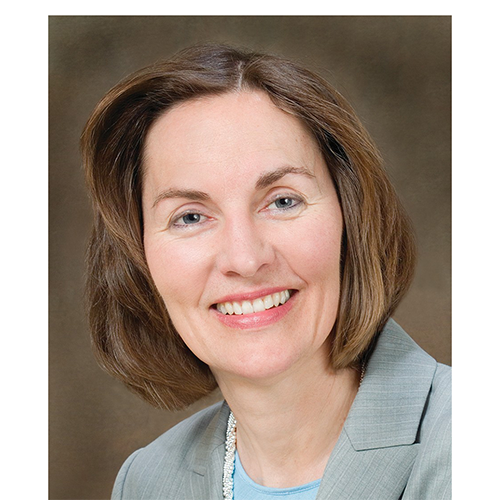
Esther Takeuchi
Takeuchi to Present ECS Lecture at 250th Meeting
Esther Takeuchi (SUNY Distinguished Professor and William and Jane Knapp Chair in Energy and the Environment at Stony Brook University and Chief Scientist and Chair of the Interdisciplinary Science Department at Brookhaven National Laboratory) will present the ECS Lecture—“Electrochemistry: A Keystone of the Energy Future”—at the 250th ECS Meeting Plenary Session. Her participation is especially fitting as ECS celebrates its 250th meeting since its founding in 1902. As she noted, “Scientific participation and scientific discovery is a marathon, not a sprint; you have to be in it for the long haul. I think that idea is very reflective of the Society and its members.”1
Holding more than 150 patents and in the National Inventors Hall of Fame, Prof. Takeuchi is best known for developing the lithium/silver vanadium oxide (Li/SVO) battery used in implantable cardioverter-defibrillators (ICDs), more than 150,000 of which are implanted annually in the United States.2
An ECS member for over 40 years and Society President from 2011 to 2012, Prof. Takeuchi credits ECS with fostering connections across disciplines, sectors, and countries. In a conversation with ECS staff in June 2026, she discussed the themes of her ECS Lecture and the evolving role of electrochemistry in addressing global energy challenges.
Read on—and join Prof. Takeuchi and the ECS community in Calgary, Canada, October 25–29, 2026, for the 250th ECS Meeting.
ECS: Tell us about your Plenary presentation.
ET: Broadly speaking, the message is that electrochemistry is as relevant and important today as it has ever been. What makes ECS remarkable is that it spans so many disciplines while keeping electrochemistry at its core. From sensors and biological systems to energy conversion and storage, batteries, fuel cells, and fundamental electrochemistry, the field touches nearly every aspect of modern life.
Many of the technologies we rely on daily are either electrochemically manufactured or electrochemically functional. The circuitry in our electronics, the batteries in our phones, computers, EVs, and even conventional cars all depend on electrochemistry. Yet most people don’t realize how pervasive it is. If you ask someone why electrochemistry matters in everyday life, they may not even know what it is. We have a complex name for something that is truly omnipresent.
Part of the message I want to convey is not only the scientific importance of electrochemistry, but also its impact on society. The work our members do shapes how people live every day, and that’s a story worth telling.
ECS: You describe electrochemistry as a keystone of the energy future. Why is it so foundational?
ET: Energy is central to modern society. How we generate, store, and distribute energy will shape our future, and electrochemistry plays a fundamental role in all three.
Transportation is a major example. While it remains largely dependent on fossil fuels, the transition toward electrification relies heavily on batteries and electrochemical technologies. Electrochemistry also offers a direct way to store electricity—electricity in, electricity out—without requiring additional conversion steps.
Beyond storage, technologies such as fuel cells and electrolyzers will be critical as energy demand grows and new sources of electricity emerge. Whether we’re talking about generation, storage, or distribution, electrochemistry will be a key part of the solution.
ECS: What developments in batteries or energy storage excite you most right now?
ET: The opportunities keep expanding because the applications keep changing. In some cases, the priority is maximizing energy density. In others, supply chains, sustainability, and access to domestic materials become more important.
Whenever materials need to change, new research opportunities emerge. The materials we use today were selected for good reasons, so replacing them requires innovation and a deeper understanding of alternatives.
That’s why the field remains so exciting. We’re seeing advances in aqueous batteries for grid-scale storage, improvements in lithium-ion systems, growing interest in sodium-ion technologies, and significant progress in solid-state batteries. Each technology addresses different needs and presents its own scientific challenges.
ECS: Looking 20 to 30 years ahead, what might the energy landscape look like if electrochemical technologies continue advancing? And what if progress slows?
ET: Economics will ultimately drive many decisions about energy. As new technologies become scalable and affordable, I can envision a future in which electricity becomes the least expensive form of energy. If that happens, electrification will accelerate across transportation, buildings, and industry.
Transportation and building heating can increasingly shift to electricity through technologies such as EVs and heat pumps. Manufacturing could also undergo significant transformation. Today, many industrial processes rely on heat. In the future, more processes may use electrons and voltage directly through electrochemical methods.
I often challenge students to imagine themselves working in industry, tasked with reducing manufacturing costs. If electrochemistry offers a cheaper and more efficient route, they need the knowledge to evaluate and implement those solutions. That’s why education in this field is so important. The potential for transformation is enormous.
ECS: What do you see as the biggest roadblocks?
ET: Change itself can be a barrier. People are often comfortable with the status quo, and transitions can create uncertainty. But the world continues to move forward. Standing still can ultimately mean falling behind. That’s why the messages of science, innovation, and competitiveness are so important. Advancing technology strengthens economies and improves lives. I hope we continue moving forward together because the risks of stagnation are significant.
ECS: Your lecture headlines the Society’s 250th meeting. As a past ECS president and a leader in the field, what does that milestone mean to you?
ET: It’s a testament to the Society’s longevity and continued relevance. ECS has continued to grow because its meetings and journals provide tremendous value to the community.
One of the things I appreciate most is the breadth of topics represented. No matter what area interests you, you can find experts and learn something new. Equally important is the mix of participants. ECS brings together researchers from industry, national laboratories, government, and academia, and all have a voice. That’s not true of every society.
Another strength is ECS’s international character. Science is global, and advances are happening everywhere. By attending ECS meetings, we gain insight into developments not only in our own institutions but around the world. That broader perspective is essential for understanding where the field is headed.
ECS: How did you come to focus on electrochemistry?
ET: My academic background is in chemistry. Like many graduate students, I initially focused on a particular discipline—organic, physical, inorganic, or analytical chemistry. We were encouraged to take courses outside our concentration, and one of those courses was an analytical chemistry class that was really focused on electrochemistry.
That was my first meaningful exposure to the field. Looking back, most chemistry students encounter electrochemistry as freshmen, but many never revisit it. Later, when I was applying for postdoctoral positions, I had the opportunity to work with Professor Royce Murray at the University of North Carolina, a leading electrochemist. That experience set me on a full-time research path in electrochemistry, batteries, and energy storage, and it’s been a rewarding journey ever since.
ECS: Tell us about how ECS has impacted your career.
ET: I began my career in industry, and ECS helped me stay connected to the fundamental science underlying the work. Later, when I moved into academia, the reverse became true. Through ECS, I remained connected to industry perspectives, challenges, and applications.
That exchange between fundamental science and practical implementation has been incredibly valuable. Beyond the science, ECS has provided a strong professional community. It gives you a network of colleagues and friends you can turn to when you need insight, expertise, or collaboration.
ECS: What advice do you give students and early-career researchers about opportunities in the field?
ET: We talk a lot about lifelong learning. Graduate school is important, but it’s only the beginning. Students often think graduate school lasts forever, yet by the time they’re finishing, they’re amazed at how quickly it passed.
The most important thing is learning how to think, how to solve problems, and how to find and evaluate information. The challenges they’ll face five or ten years from now may be very different from the ones they’re studying today. Success comes from continuously learning and adapting as new problems emerge.
ECS: If attendees leave your presentation with one message, what do you hope it is?
ET: That electrochemistry is essential. We need to continue explaining what it is, why it matters, and how it improves people’s lives. ECS has played an important role in advancing that message, and I hope we continue building on that success for the next 250 years.
Read “Lithium Deposition in Prismatic Lithium Cells during Intermittent Discharge,” Prof. Takeuchi’s 1991 Journal of The Electrochemical Society article identifying the root causes of lithium deposition and degradation in primary lithium batteries.
- “Esther Takeuchi: Building Networks,” https://www.electrochem.org/membership-stories/takeuchi
- “Esther Sans Takeuchi,” National Inventors Hall of Fame, https://www.invent.org/inductees/esther-sans-takeuchi
- “Esther Takeuchi: Building Networks,” https://www.electrochem.org/membership-stories/takeuchi