
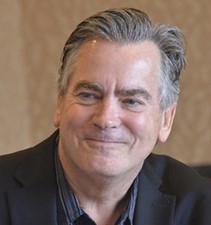
E. Jennings (EJ) Taylor
“Celebrating Electrochemical and Solid State Science Innovations: Commercialization of Electrochemical Processes and Products”
When different ECS Divisions repeatedly asked EJ (E. Jennings) Taylor1 to deliver talks at symposia on commercializing scientific innovations, he began to wonder, “Why not combine these different symposia into one multi-division symposium?”2 Since solving so many of the world’s grand challenges requires interdisciplinary collaboration, an international symposium that brings together researchers at different career stages and across different disciplines could help streamline the path from invention to market while supporting ECS’s vision to “accelerate scientific discovery and innovation”—a foundational aspect of the Society’s mission.
EJ feels strongly that researchers need more support in bridging the “Valley of Death”—the challenge of successfully bringing a promising idea or technology to market. “When I talk about the broader challenges of commercialization, people always respond, ‘I’ve encountered similar challenges in taking technology from lab to market.’ These challenges occur across all disciplines of electrochemical and solid state science and technology. Z02 was conceived to address the common challenges of technology commercialization.”
The Society’s 250th Meeting is a particularly fitting setting for the symposium. For more than 124 years and through 250 meetings, ECS and its members have been dedicated to accelerating scientific discovery. Z02 reflects ECS’s longstanding commitment to advancing innovation while inspiring the next generation of thought leaders in electrochemistry and solid state science and technology.
The symposium brings together an impressive range of international perspectives, including representatives from industry, academia, government laboratories and early- and mid-career researchers. In addition to submitted and invited presentations, several keynote presentations are included:
- Prof. Stan Whittingham, 2019 Nobel laureate, describes his experiences in lithium battery development from discovery at Exxon in the 1970s, to commercialization at Sony in the 1990s and mobile energy storage today.
- Prof. Esther Takeuchi (Stony Brook University), inventor of the implantable cardiac defibrillator battery, provides case studies of product introductions and the importance of fundamental understanding in product improvement.
- Dr. Ben Feldman (Abbott Labs) presents the story of working with Prof. Adam Heller to transition glucose sensing technology leading to Abbott Diabetes Care.
- Prof. Yet-Ming Chiang (Massachusetts Institute of Technology) provides case studies of his experiences in spinning out multiple electrochemical startup companies.
- Dr. Andrew Smeltz (De Nora Tech LLC) tells the story of Vittorio De Nora and Henri Beer’s collaboration leading to the commercialization of the Dimensionally Stable Anode (DSA) for chlor-alkali production.
- Prof. Robert Savinell (Case Western Reserve University and 2026 Edward Goodrich Acheson Awardee) shares insights from his career in research, education, and commercialization and discusses the critical role ECS plays in finding solutions to societal challenges.
- Roque Calvo, ECS Historian and past Executive Director, presents a historical perspective of significant electrochemical and solid state science and technology innovations, as well as his observations of the “4P’s” of commercial success.
The program also features a poster session, providing additional opportunities to share ideas and foster connections.
EJ met with ECS staff to answer questions about Z02, its goals, and what he hopes the symposium will accomplish.

What gap in the electrochemical and solid state science community does Z02 aim to address?
“The symposium addresses the “Valley of Death” between scientific discovery and successful commercialization. Moving technology beyond the lab requires more than scientific knowledge; it also requires expertise in scaling, technology maturation, funding, intellectual property, partnerships, marketing, and other challenges. The symposium provides a forum for sharing that translational knowledge across the ECS community.”
What makes Z02 different from a traditional technical symposium; what can attendees expect to learn?
“Rather than focusing primarily on scientific advances, the symposium examines what it takes to turn those advances into commercial products and processes. Innovators from across ECS will share best practices/lessons learned, successes, and failures, which can be applied across technologies. These best practices are relevant to seasoned innovators as well as students and early-career researchers contemplating a commercial venture. There is no formula for success, but sharing experiences and ideas across career stages can help people navigate their own paths.”
Why is Z02 especially relevant today, particularly given the current research funding environment?
“Innovation has always been central to ECS’s mission and innovators must bridge the “Valley of Death” between discovery and a viable product. Challenges such as intellectual property, financing, marketing, and scaling are common across technologies, yet there is no single recipe for commercialization. That’s why ECS needs a more coordinated approach to innovation programming.
It is also increasingly important to demonstrate the tangible outcomes of publicly funded research. Fundamental research remains the foundation of innovation, but we must also consider how discoveries can be scaled and brought to market. As ECS celebrates its 250th Meeting, this symposium highlights that innovation has always been—and remains—central to the Society’s mission.
Demonstrating that science is relevant and leads to results is more critical than ever. Fundamental science, engineering, and innovation are deeply connected, and innovations build on other innovations. The less science funding is perceived to be relevant, the more important it becomes to demonstrate the connection between scientific discovery and innovation.
Innovation also depends on bringing together people with different perspectives. This symposium reflects that by bringing science, engineering, industry, and diverse perspectives together.”
Which areas of electrochemical and solid state science seem especially poised for commercialization over the next decade?
“Every ECS Division will contribute to commercialization of new and next generation technologies. ECS is uniquely suited for commercialization as it includes world-class scientists, engineers, and technologists. In my opinion, electrochemical manufacturing is an area with enormous potential. For example, electrochemical machining/polishing is critical to applications ranging from medical devices such as stents and implants to niobium cavities for particle accelerators. Electrodeposition is used in electronics such as circuit boards and integrated circuits and emerging applications such as corrosion resistant coatings for molten salt nuclear reactors. These and other electrochemical manufacturing processes are dependent on the fundamental science and the applied engineering within the ECS community.”
How can Z02 benefit students and early-career scientists, and what opportunities are there for mentorship and participation?
“Students and early-career scientists are thinking about entrepreneurship and commercialization earlier in their careers. I hope the symposium helps them become interested in moving technologies from the lab to the marketplace. In addition, this symposium will resonate with those interested in pursuing careers in startups, industry, or entrepreneurship.
Commercialization and entrepreneurship are naturally suited to mentorship. Learning to bridge the “Valley of Death” is strongly linked to past successes and failures. While more experienced entrepreneurs are continually learning, they are ideally suited to mentoring by sharing their experiences. This is really the point of the Z02 symposium.”
Not registered yet for the 250th ECS Meeting from October 25–29, 2026, in Calgary, Canada? There’s still time!
1. Jennings (EJ) Taylor, Founder of Faraday Technology, Inc., is a Fellow of The Electrochemical Society and a 42-year ECS member. He has served on the ECS Board, including as Treasurer, and on numerous Society committees, chairing the Institutional Engagement, Individual Membership, and Finance Committees; the Interdisciplinary Science and Technology and FTASB Finance Subcommittees; and the Free the Science Advisory Board. He also served as Secretary/Treasurer of the Industrial Electrochemistry and Electrochemical Engineering Division and has contributed to various award subcommittees.
2. Jennings Taylor, “Innovation and The Electrochemical Society: Past and Planned Symposia Provide the Foundation for Future Interdisciplinary Symposia,” 2025 Electrochem. Soc. Interface34 38 DOI 10.1149/2.F04254IF