

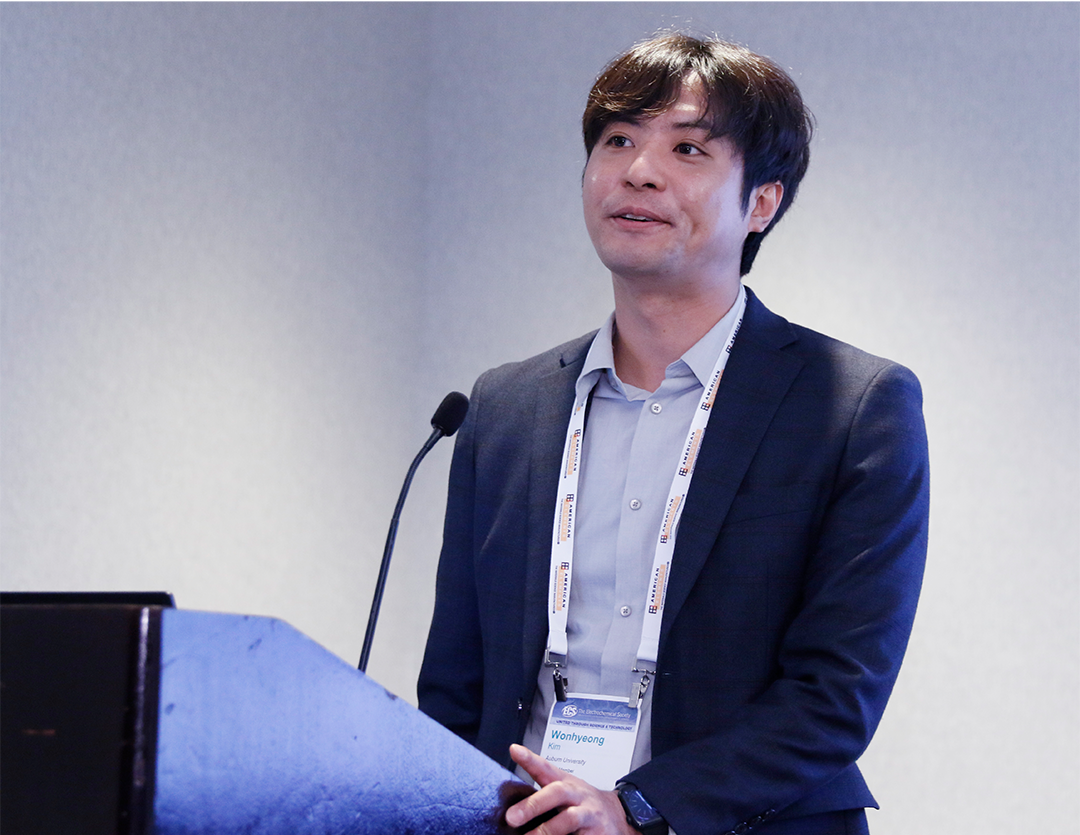
Wonhyeong Kim
Wonhyeong Kim
University of Arizona
Date: September 30, 2026
Time: 1300–1400h ET
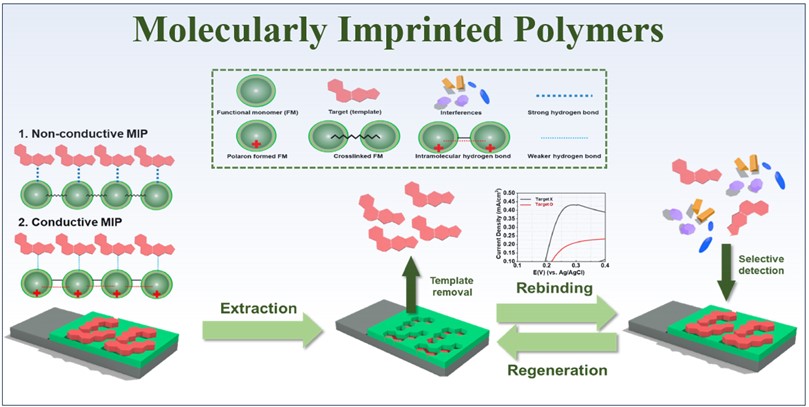
(Click to enlarge)
Molecularly imprinted polymers (MIPs) are synthetic receptors that can recognize target analytes through tailored binding sites, offering a stable, cost-effective, and versatile alternative to natural bioreceptors. In electrochemical sensing, MIPs have attracted growing interest because they can provide high selectivity while enabling rapid, portable, and low-cost detection. This webinar introduces the fundamentals of molecular imprinting, including binding site design, polymerization strategies, template removal, and immobilization on electrode surfaces. It then compares molecularly imprinted non-conducting polymers (MINPs) and molecularly imprinted conducting polymers (MICPs), focusing on their differences in conductivity, binding-site accessibility, reproducibility, sensitivity, and selectivity. Recent advances in MIP-based electrochemical sensors are discussed across representative applications, along with current limitations and design strategies to improve sensor performance. The webinar concludes with perspectives on how conducting polymers, nanomaterials, and optimized molecular recognition can guide the development of next-generation selective and sensitive electrochemical sensors.
Benefits of attending this webinar
- Learn the fundamentals of molecularly imprinted polymers (MIPs) and molecular recognition.
- Understand the advantages and limitations of conducting and non-conducting MIPs for electrochemical sensors.
- Explore recent advances and future opportunities in electrochemical sensing for food, environmental, and biomedical applications.
Presenter
Wonhyeong Kim is a Postdoctoral Research Associate in the Department of Materials Science and Engineering at the University of Arizona. His research interests include molecular imprinting, conducting polymers, electrochemical sensors, and functional materials for selective chemical sensing, with recent work expanding into advanced polymeric materials and nanomaterials for environmental applications. He received his PhD in Materials Engineering from Auburn University, where his research focused on molecularly imprinted polymers, conducting polymers, and electrochemical sensors for selective chemical and biomarker detection. His work resulted in multiple publications in leading journals, and he received the 2025 ECS Sensor Division Student Research Award for his contributions to molecularly imprinted polymer-based electrochemical sensors.
Thank you to the sponsors who make these complimentary programs possible!
 |
 |
Interested in presenting in the ECS Webinar Series? Email your presentation title and abstract to education@electrochem.org for consideration.