


Gerard Bree
Gerard Bree
University of Warwick
Date: June 24, 2026
Time: 1000–1100h ET
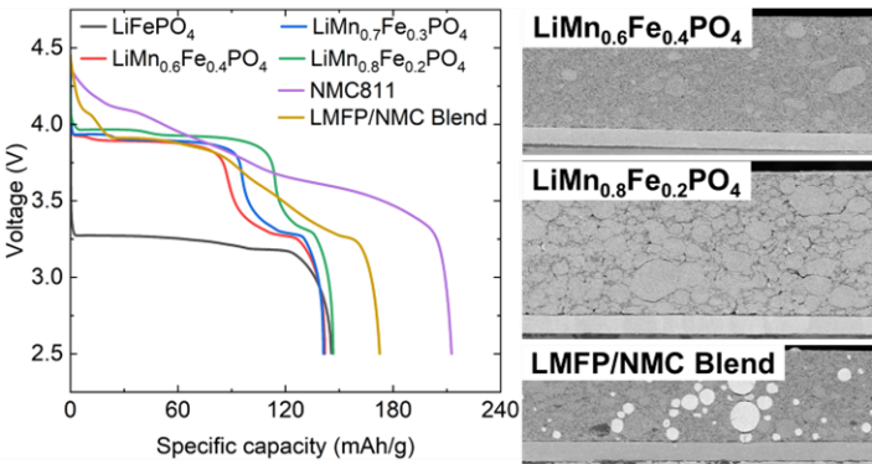
While LiMnxFe1-xPO4 (LMFP) cathode materials have been investigated academically for decades, in the past three years they have been adopted by dominant battery manufacturers. What prompted this sudden commercial interest? What market share could LMFP capture, and can it surpass LFP and NMC? What are the outstanding limitations, and how might they be overcome?
This webinar addresses these questions, as well as the challenges of translating fundamental LMFP characteristics to large-format cell manufacturing and industry trends. Recent research conducted at WMG to better understand LMFP behavior is also highlighted, along with efforts to use AI to design improved LMFP electrode microstructures that enable fast charging. Join the webinar to find out how this emerging material may alter the EV and battery manufacturing landscape.
Attend this webinar to learn:
- What are LMFP’s potential and limitations?
- What might an ideal LMFP material look like?
- How can we build better LMFP batteries?
- How does performance translate from lab to fab?
Presenter
Gerard Bree is an Assistant Professor in the Battery Materials and Cells (BMAC) Research Group at WMG, University of Warwick. His research focuses on improving lithium-ion battery performance to deliver greater energy density, longer lifetimes, and lower costs. He is interested in the interaction between academia and the battery industry and works on many projects supporting companies building a European battery supply chain. Prof. Bree earned his undergraduate degree from Trinity College Dublin and his PhD from the University of Limerick.
Thanks to the webinar sponsors who make these complimentary programs possible!
 |
 |
 |
 |
Interested in presenting in the ECS Webinar Series? Email your presentation title and abstract to education@electrochem.org for consideration.