




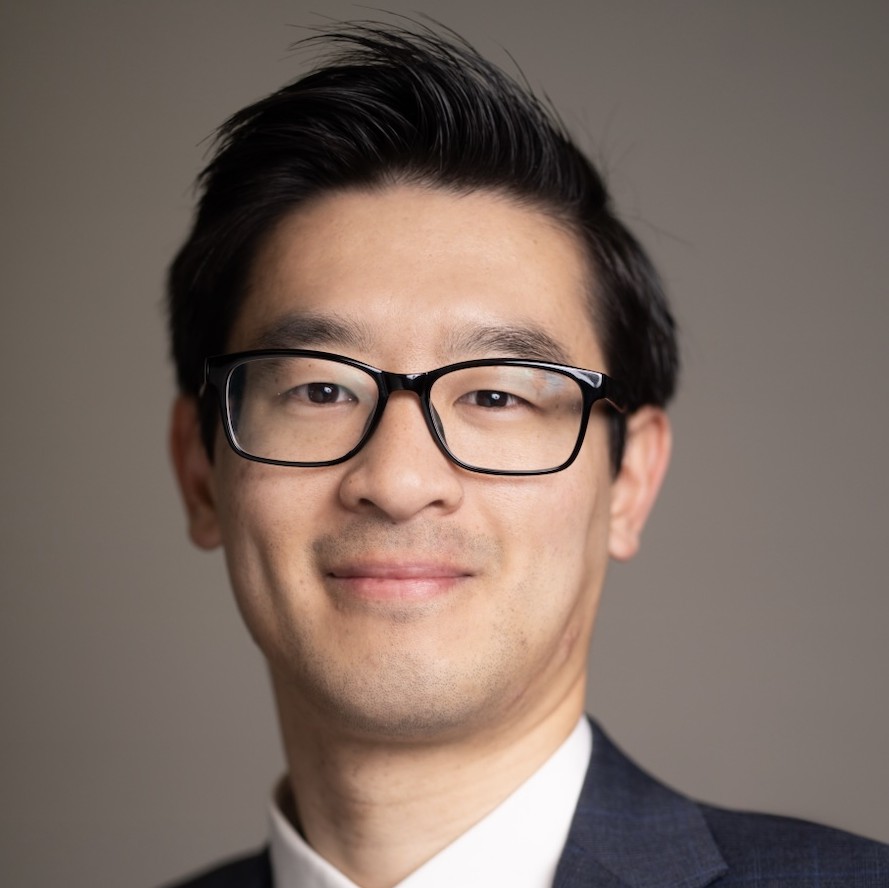
Wesley Chang
Monday, October 26 | 0800h
Room 223, BMO Centre, Level 2
Progress Towards Depth-Resolved Ultrasound for Multilayered Battery Diagnostics
by Wesley Chang
Wesley Chang is Assistant Professor in the Department of Mechanical Engineering and Mechanics and Faculty Affiliate in the Department of Materials Science and Engineering at Drexel University. His research focuses on battery ultrasound.
Prof. Chang completed his BS (2014) and MS (2016) in Chemical Engineering at Stanford University, and PhD (2021) in Mechanical Engineering and Materials Science under Daniel Steingart at Princeton University. His PhD thesis focused on interfaces and interphases for anode-free lithium metal cells, developing a new operando ultrasound characterization and imaging technique for batteries, and fast-charging and temperature-driven electrode phase behaviors. At Princeton, Prof. Chang participated in the Scholars Institute Fellows Program, advising first-generation low-income graduate students on STEM careers. His postdoc at Columbia University involved collaborations with electric vehicle companies. From 2022–2023, Prof. Chang worked on lithium-mediated electrochemical ammonia synthesis as the Arnold O. Beckman Postdoctoral Fellow at the California Institute of Technology. In the past, he was an energy and utilities companies consultant and now regularly serves as a technical advisor to energy-focused startup companies and investment firms.
The author of 31 publications, in 2025, he received the ACS PRF Doctoral New Investigator Award and ORAU Ralph E Powe Junior Faculty Enhancement Award, and in 2021, the ECS F. M. Becket Fellowship. Prof. Chang joined ECS in 2019 and served as a 244th ECS Meeting Session Chair and 249th ECS Meeting Symposium Co-Chair.
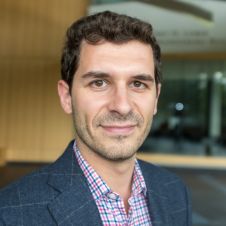
Jovan Kamcev
Wednesday, October 28 | 1400h
Room 208, BMO Centre, Level 2
Alkaline Stable Anion-Exchange Membranes with Ultrahigh Charge Densities
by Jovan Kamcev
Jovan Kamcev is Associate Professor of Chemical Engineering and Macromolecular Science & Engineering at the University of Michigan (U-M). The Kamcev Research Group has advanced the fundamental understanding of ion transport in charged polymer membranes for electrochemical applications through a combined experimental/modeling approach.
After receiving a BE in Chemical and Molecular Engineering at Stony Brook University in 2012, Prof. Kamcev completed a PhD in Chemical Engineering under Profs. Benny D. Freeman and Donald R. Paul at The University of Texas at Austin in 2016. Prior to joining U-M in 2019, he completed his postdoctoral training in Chemistry at the University of California, Berkeley (2017–2019) under the guidance of Prof. Jeffrey Long.
The author of 53 articles with an h-index of 34, he holds three patents and serves on the Early Career Editorial Board of the Journal of Membrane Science. Notable awards he received include the 2025 University of Michigan ChE Department Outstanding Faculty Award; 2025 American Chemical Society (ACS) PMSE Young Investigator Award; in 2023, the AIChE 35 Under 35 Award (Chemicals & Materials Category) and NSF CAREER Award; 2021 DOE Early Career Research Program Award; 2021 North American Membrane Society Young Membrane Scientist Award; and 2019 Henkel Award for Outstanding Graduate Research in Polymer Science and Engineering.
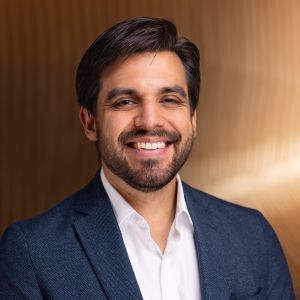
Jeffrey Lopez
Tuesday, October 27 | 1330h
Room 222, BMO Centre, Level 2
Organic Materials in Interphases, Mechanistic Study for High-Performance Lithium Metal Batteries
by Jeffrey Lopez
Jeffrey Lopez is Assistant Professor of Chemical and Biological Engineering at Northwestern University. A pioneer in self-healing polymer coatings to stabilize silicon anode materials and Li metal electrodeposition, he has significant experience synthesizing and characterizing new materials for battery applications. He has also worked extensively on the development of advanced electrolytes for various lithium-based electrode materials and is an expert on the Li metal SEI. Prof. Lopez’s work on artificial SEIs determined that while global lithium morphology depends on the coating quality and mechanics, the local morphology of lithium particles is strongly influenced by the chemistry of the polymer coating. A systemic study of several rationally chosen polymers with varied chemical and mechanical properties identified polymer dielectric constant and surface energy as two key descriptors of the lithium deposit size. This understanding has continued to provide direction for the design and synthesis of new polymer materials and electrolytes to better stabilize Li metal anodes.
After completing a BS in Chemical Engineering at the University of Nebraska, Lincoln (2012), and PhD in Chemical Engineering with Zhenan Bao at Stanford University (2018), Prof. Lopez was an Intelligence Community Postdoctoral Fellow with Yang Shao Horn at the Massachusetts Institute of Technology (MIT) (2018–2021). The author of 40 articles with an h-index of 39, he holds three patents with two more pending. Prof. Lopez received significant awards including a 2024 NSF CAREER Award; 2024 Scialog Fellow: Automating Chemical Laboratories; 2020 Henkel Award for Outstanding Graduate Research in Polymer Science and Engineering, American Chemical Society POLY/PMSE Divisions; 2019 Distinguished Young Scholars Seminar – University of Washington, Chemical Engineering; 2019 Metrohm Young Chemist Award; 2018 Eastman Chemical Student Award, American Chemical Society PMSE Division; and 2017 DSM Science and Technology Award Runner Up.
Prof. Lopez was President of the Stanford Polymer Collective from 2013–2016 and has worked with various programs at Stanford and MIT to promote improved access to higher education among students from underrepresented minority groups.
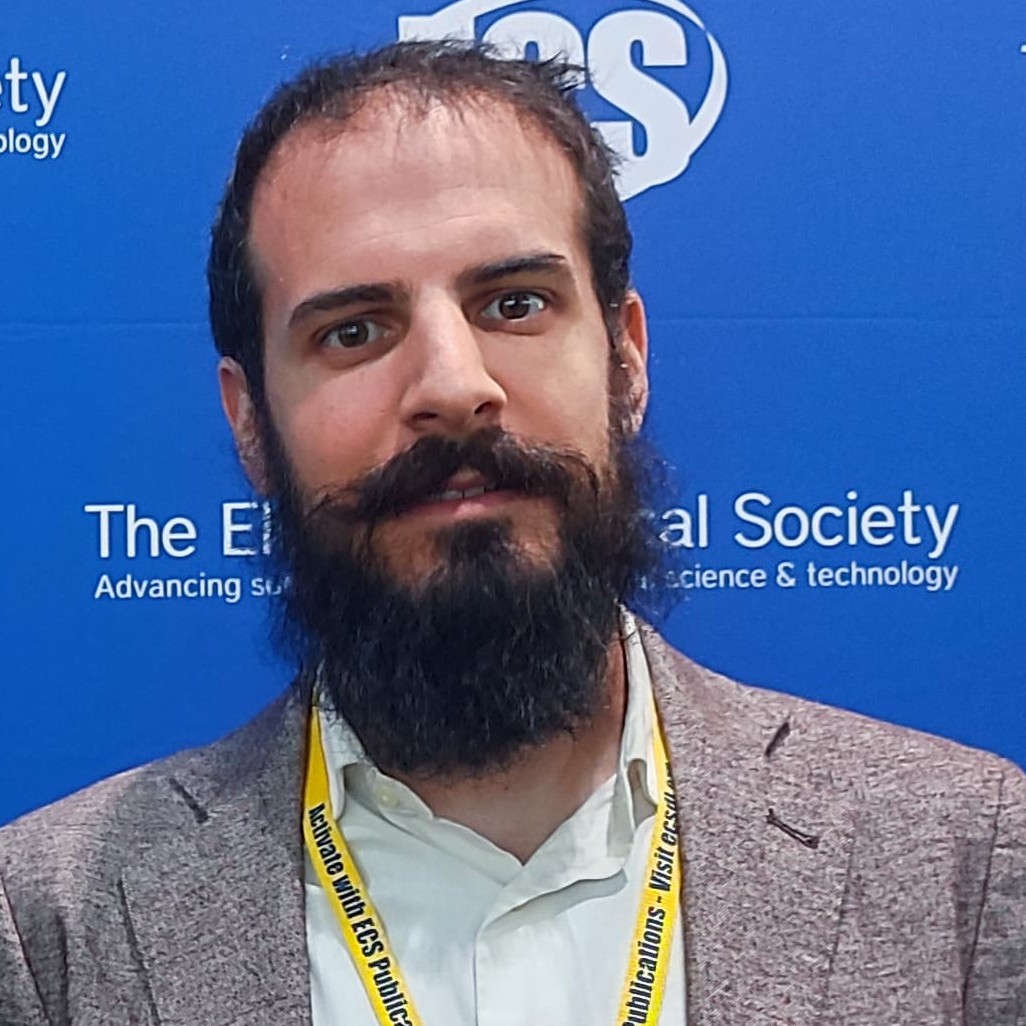
Gioele Pagot
Sunday, October 25 | 1020h
Room 225, BMO Centre, Level 2
Polyketone-Based Functional Materials for Energy Storage: From Li+-Ion Conducting Polymer Electrolytes to Fluorine-Free Binders
by Gioele Pagot
Gioele Pagot is Assistant Professor of Chemistry for Technologies at the Department of Industrial Engineering, Università degli Studi di Padova, and member of the CheMaMSE (Chemistry and Electrochemistry of Materials for the Metamorphosis and the Storage of Energy) Research Group. His research focuses on the synthesis, characterization, and lab-scale testing of electrode and electrolyte materials for next-generation lithium, sodium, magnesium, calcium, and aluminum secondary batteries, as well as redox flow batteries. A key aspect of his work is investigating the relationships between composition, structure, thermal properties, and electrochemical performance in advanced battery materials.
Prof.. Pagot earned his MS in Chemistry (2014) and PhD in Science and Engineering of Materials and Nanostructures (2019) from the Università degli Studi di Padova. Vito di Noto oversaw his PhD research. Following Postdoctoral Fellowships and a Research Fellowship at Padova, he was a Visiting Scientist at Hunter College of the City University of New York working in Steven Greenbaum’s lab. He joined the faculty at Padova in 2023.
The co-author of four book chapters and 89 peer-reviewed papers (h-index: 23), Prof. Pagot has contributed to over 200 national and international scientific conferences, including one keynote lecture, seven invited oral presentations, and three award-winning oral presentations. He holds four patents. He has served as Review Editor for Frontiers in Chemistry – Energy Materials and Frontiers in Chemistry – Electrochemical Energy Conversion and Storage since 2022; Review Editor for Frontiers in Chemistry – Electrochemistry since 2021; and Topic Editor for Crystals since 2020. He received significant awards including the 2020 Fondazione Oronzio e Niccolò De Nora Award for the Best Italian PhD Thesis in Electrochemistry; in 2019, the European Institute of Innovation and Technology Raw Materials Future Mobility Thesis Award and Italian Chemical Society Industrial Chemistry Division Best Italian Ph.D. Thesis Award in the field of Industrial Chemistry; 2016 ECS Travel Grant to participate in the 229th ECS Meeting; and 2015 Italian Chemical Society Premio Primo Levi for the Top 10 Papers in Chemical Sciences by Young Researchers in Italy.
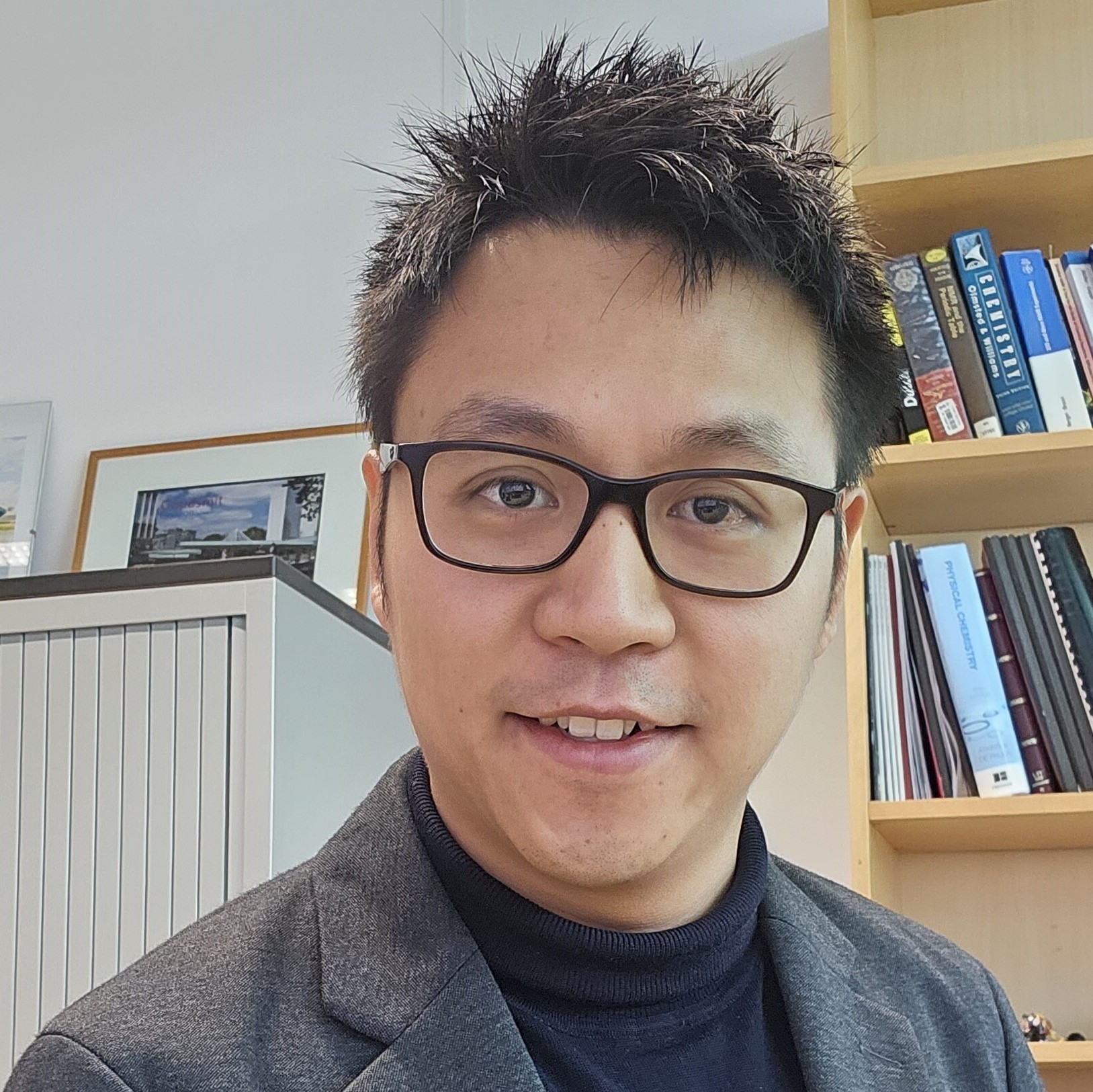
Evan Wenbo Zhao
Sunday, October 25 | 1340h
Palimino Ballroom B, BMO Centre, Level 1
Operando Magnetic Resonance for Electrochemical Energy Storage and Conversion
by Evan Wenbo Zhao
Evan Wenbo Zhao is a tenured Assistant Professor at the Institute for Molecules and Materials (IMM) at Radboud Universiteit Nijmegen. His core research focuses on developing operando/in situ NMR methods for studying electrochemical storage and conversion chemistries, including redox flow batteries, electrochemical ammonia synthesis, carbon dioxide reduction, and lignin oxidation.
After receiving his BS from Nanyang Technological University, Prof. Zhao completed a PhD in Chemistry with Prof. Clifford Russell Bowers at the University of Florida (2017). Prof. Zhao’s postdoc was with Prof. Dame Clare Grey at the University of Cambridge from 2017 to 2021, when he joined the faculty at Radboud.
The author of 35 articles with an h-index of 20, he holds four patents. His research has garnered awards including in 2024, the Impact Explorer Innovative Project, and Spanish I-LINK Project; in 2023, Dutch Research Council Open Competition Awards and RSC Materials Chemistry Horizon Prize; in 2022 and 2023, Dutch Research Council Open Competition Awards; and in 2020, the UK Science and Technology Facilities Council Experimental Design Award and UK Science and Technology Facilities Council Futures Early Career Award. He was a 2014 Pacific Northwest National Laboratory Alternated Sponsored Fellow. Prof. Zhao led projects funded by the Dutch Research Council Open Competition Program, Bruker Collaboration, Radboud-Glasgow Collaboration Grants, the Mitacs Globalink Research Award, and others.