




Battery Division Early Career Award
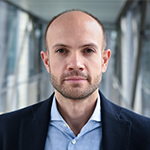
Matteo Bianchini
Wednesday, October 28 | 1500h
Room 226, BMO Centre, Level 2
From Active Materials to Solid Electrolytes for Na-based Batteries
by Matteo Bianchini
Matteo Bianchini is Chair of Inorganic Active Materials for Electrochemical Energy Storage at the Universität Bayreuth, part of the Bayerisches Zentrum für Batterietechnik (BayBatt), of which he is Vice Director. At BayBatt, his group investigates and develops electrode materials, synthetic methods, and analytical tools for the next generation of batteries. The current focus lies on Li-, Na- and K-ion batteries, as well as sodium solid state batteries. He also serves as the program moderator for the master program, “Battery Materials and Technology,” and co-director of the ALISTORE European Research Institute.
Prof. Bianchini studied Physics Engineering at Politecnico di Milano and obtained his PhD in Solid State Chemistry in 2015 with Prof. Masquelier, Dr. Croguennec, and Dr. Suard in a program shared by the Institut Laue-Langevin, Laboratoire de Réactivité et de Chimie de Solides, and Institut de Chimie de la Matière Condensée. He was a Postdoctoral Researcher in Prof. Ceder’s Group at the Lawrence Berkeley National Laboratory (LBNL), working on the design, synthesis, and characterization of materials for Na- and K-ion batteries. He then became a postdoctoral researcher at BELLA-KIT (Battery and Electrochemistry Laboratory at the Karlsruher Institut für Technologie under Prof. Jürgen Janek. There he investigated Ni-rich cathode materials for Li-ion batteries, prior to joining BASF as a lab team leader to co-supervise the BELLA lab. He joined the Universität Bayreuth in 2021.
Among the awards Prof. Bianchini received are the 2025–2026 IBA (International Battery Materials Association) Early Career Award and 2021 ERC (European Research Council) Starting Grant for his 4SBATT project. He joined ECS in 2015, the year he received the ECS Battery Division Student Research Award.
Battery Division Postdoctoral Associate Research Award Sponsored by MTI Corporation and the Jiang Family Foundation
Sicen Yu
Wednesday, October 28 | 1530h
Room 226, BMO Centre, Level 2
The Influence of Substrate Adsorbates on Electrodeposited Lithium Morphology
by Sicen Yu
Sicen Yu is a Postdoctoral Researcher in the Department of Materials Science and Engineering at the University of Washington. His research focuses on advanced materials for high energy batteries, particularly lithium metal anodes and sulfur-based cathodes.
Dr. Yu received his BS from the Southern University of Science and Technology and PhD in Materials Science and Engineering from the University of California, San Diego.
Battery Division Research Award
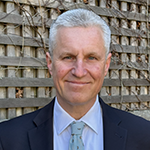
Martin Bazant
Wednesday, October 28 | 1400h
Room 226, BMO Centre, Level 2
A Perspective on Battery Modeling
by Martin Z. Bazant
Martin Bazant is the Chevron Professor of Chemical Engineering and Mathematics at the Massachusetts Institute of Technology (MIT). His contributions span multiple scales, from quantum theory of coupled ion-electron transfer and statistical cluster models of ionic liquids to continuum models of electrokinetics, electro-chemo-mechanics, and electrochemical phase transformations. These advances are integrated into the open-source multiphase porous electrode theory (MPET) software for battery simulations. He is also the Chief Scientist and Cofounder of Lithios, Inc., an MIT startup commercializing advanced lithium extraction (ALE) from brines by intercalation in battery electrodes.
After completing a PhD in Physics at Harvard University in 1997, Prof. Bazant joined the MIT Mathematics faculty in 1998. Then, he joined the Chemical Engineering Department in 2008, which he served as Executive Officer from 2016 to 2020. From 2015 to 2025, he was Director of the D3BATT Center for Data-Driven Design of Batteries sponsored by Toyota Research Institute, “re-making battery science” and pioneering battery informatics. He cofounded the International Electrokinetics Society and serves as its President. He consults extensively for industry and serves as Chief Scientific Advisor for Saint-Gobain Research North America.
Prof. Bazant is a Highly Cited Researcher in batteries, member of the National Academy of Engineering, and Fellow of The Electrochemical Society, International Society of Electrochemistry, Royal Society of Chemistry, and American Physical Society. He has received awards including the 2019 MITx Prize for Teaching and Learning in MOOCs (Massive Open Online Courses), 2018 American Institute of Chemical Engineers (AIChE) Andreas Acrivos Award for Professional Progress in Chemical Engineering, and 2015 International Society of Electrochemistry (ISE) Alexander Kuznetsov Prize in Theoretical Electrochemistry. He joined ECS in 2008.
Corrosion Division Early-Career Award
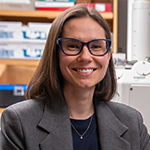
Samantha Gateman
Tuesday, October 27 | 1450h
Room 219, BMO Centre, Level 2
Probing Corrosion in Complex Environments: From Microstructural Heterogeneity to Radiation Fields
by Samantha Gateman
Samantha Gateman is an Assistant Professor in the Department of Chemistry at Western University and Nuclear Waste Management Organization Chair in Radiation-Induced Corrosion Chemistry. Her research focuses on understanding how materials degrade in complex environments through the development of electrochemical methods. She is interested in localized corrosion and links between microstructure and material performance.
Dr. Gateman is recognized for her work in advancing scanning electrochemical probe microscopy for corrosion science, including the development of methodologies that improve the reliability and interpretation of localized electrochemical measurements. Her group applies these techniques to challenges spanning transportation, energy, nuclear materials, and biomedical device technologies. In parallel, she is pioneering the emerging field of radiation electrochemistry, developing in situ electrochemical methods to investigate how ionizing radiation influences corrosion. Her research is supported through collaborations with organizations in the nuclear sector in Canada and abroad.
Dr. Gateman received her BSc and PhD in Chemistry from McGill University and completed an NSERC Postdoctoral Fellowship at Sorbonne Université Paris. In 2024, she was named one of the Chemical & Engineering News‘ Talented Twelve, recognizing scientists making a global impact. In 2025, she received Western University’s Postdoctoral Supervisor of the Year Award for her commitment to mentorship and trainee development. Prof. Gateman joined ECS in 2016.
Outside the laboratory, Samantha enjoys spending time with her husband and son, exploring the outdoors through running, and relaxing with knitting projects. She is passionate about mentoring the next generation of scientists and fostering collaborative research communities that support both scientific excellence and personal growth.
Corrosion Division H. H. Uhlig Award
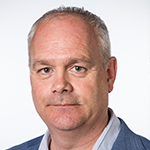
Arjan Mol
Tuesday, October 27 | 1630h
Room 219, BMO Centre, Level 2
Advancing Electrochemical Corrosion Diagnostics: Bridging Measurement, Modeling, and Prediction
by Arjan Mol
Arjan Mol is Professor of Corrosion Technology and Electrochemistry and Vice Chair of the Department of Materials Science and Engineering at the Technische Universiteit Delft. His research focuses on studying fundamental material degradation and protection mechanisms, specifically local electrochemical analysis of corrosion, advanced surface treatments, metal-polymer interfacial bonding, and eco-friendly, active protective and self-healing coatings. Alongside his faculty position, Arjan Mol is Scientific Director of 4TU.Centre High-Tech Materials, coordinating collaborative materials research across the Netherlands’ four technical universities. His extensive contributions to academic publishing and international societies include being Editor-in-Chief of Corrosion Science since 2017. He held successive leadership roles within the European Federation of Corrosion (EFC), serving as Chair of the Scientific and Technology Advisory Committee (2014–2016), Vice President (2017–2018), President (2019–2020), and Past President (2021–2022).
His impactful research and professional service have earned international accolades. He received the 2023 EFC European Corrosion Medal for his profound contributions to the global scientific community. His leadership in technological innovation was recognized in 2023 with election as a Fellow of the Netherlands Academy of Engineering. The UK Institute of Corrosion honored him with the prestigious 2026 UR Evans Award, the institute’s highest distinction for outstanding international achievements in pure and applied corrosion science. His academic portfolio remains dedicated to translating fundamental electrochemical and interface science into practical engineering solutions for corrosion lifetime prediction and longevity. Prof. Mol joined ECS in 2007.
Corrosion Division Morris Cohen Graduate Student Award
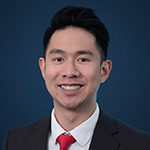
Ho Lun Chan
Tuesday, October 27 | 1410h
Room 219, BMO Centre, Level 2
Applied Corrosion Electrochemistry in Molten Salt Environments
by Ho Lun Chan
Ho Lun Chan is an Innovation Fellow at the Defense Advanced Research Projects Agency (DARPA). This emerging materials engineer is dedicated to driving innovation for today’s most challenging materials problems across the aerospace, nuclear, and semiconductor domains.
Dr. Chan earned his PhD in Materials Science and Engineering from the University of Virginia under the mentorship of Prof. John Scully, and his BS in Chemical Engineering from California State Polytechnic University, Pomona, advised by Prof. Vilupanur Ravi. A former NSF Graduate Research Fellow, Dr. Chan has authored some 25 publications and received 15 poster awards, including being a two-time recipient of ECS poster awards. Major materials, corrosion, and electrochemistry societies have widely recognized his contributions.
Corrosion Division Rusty Award for Mid-Career Excellence
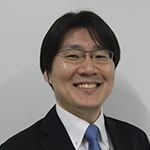
Yoshinao Hoshi
Tuesday, October 27 | 1550h
Room 219, BMO Centre, Level 2
Electrochemical Methods in Corrosion Science: From Method Development to Mechanistic Discoveries
by Yoshinao Hoshi
Yoshinao Hoshi is Associate Professor in the Graduate School of Engineering at Nagoya Institute of Technology. His research spans both fundamental and applied corrosion science, including alloy dissolution, localized corrosion, hydrogen evolution during metal dissolution, corrosion diagnosis, and advanced impedance-based analysis. A focus is on electrochemical impedance spectroscopy and the development of advanced electrochemical methodologies for corrosion science. Through innovations in impedance-based analysis, corrosion monitoring, and real-time electrochemical imaging, he has contributed to the quantitative characterization and mechanistic understanding of corrosion processes in metallic materials. His recent work on three-dimensional complex impedance plot analysis and real-time imaging has provided new insights into the relationship between microstructure and corrosion behavior.
Prof. Hoshi received his BS in Materials Engineering from Shibaura Institute of Technology in 2007 and his MS and PhD in Materials Engineering from the Tokyo Institute of Technology in 2009 and 2012, respectively. He joined the Tokyo University of Science as Assistant Professor in 2012, was promoted to Junior Associate Professor in 2017, and moved to Nagoya Institute of Technology as Associate Professor in 2020. Prof. Hoshi is the author of more than 100 peer-reviewed publications.
An active member of The Electrochemical Society since 2008, Prof. Hoshi has presented over 120 abstracts at ECS meetings including invited talks, organized several ECS symposia, and currently serves on the ECS Interdisciplinary Science and Technology Subcommittee and the ECS Community Inclusion Committee. He also served as Chair of 4th Asian Symposium on Electrochemical Impedance Spectroscopy (AEIS 2024).
Electrodeposition Division Early Career Investigator Award
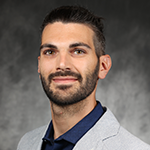
Walter Giurlani
Wednesday, October 28 | 1440h
Room 203, BMO Centre, Level 2
Advances In Pulse Current Deposition: Improving Material Properties and Sustainability In Electroplating
by Walter Giurlani
Walter Giurlani is an Assistant Professor in Chemistry and researcher in the Laboratory of Applied Electrochemistry (LEA) at the Università degli Studi di Firenze (UniFl). His research focuses on the deposition and characterization of metal coatings and development of new analytical methods for electrodeposition processes. He started his research with electrochemical atomic layer deposition (E-ALD), then moved to bulk industrial electroplating processes principally exploiting pulse and reverse pulse currents. Prof. Giurlani studied the electrodeposition of metals and compounds on silicon. Recently, he has been involved in the electrochemical fabrication of silicon nanowires. Driven by industrial and environmental needs, his works contribute to the implementation of sustainable, low-impact production processes and developing metal-recovery devices for a circular economy.
Prof. Giurlani graduated in Chemistry in 2016 from UniFl and received his PhD there in 2020. He held research grants for three years on metal and semiconductor film deposition and their morphological and spectroscopical characterization. He has published 39 articles with an h-index of 21. Prof. Giurlani joined ECS in 2020.
Electrodeposition Division Research Award
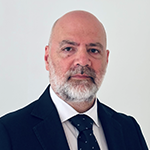
Luca Magagnin
Wednesday, October 28 | 1400h
Room 203, BMO Centre, Level 2
Electrochemical Engineering of Surfaces: From Fundamental Processes to Sustainable Technologies
by Luca Magagnin
Luca Magagnin is Full Professor of Surface Engineering and Applied Electrochemistry at Politecnico di Milano. His research focuses on applications in electrochemical systems for energy storage (redox flow batteries, LIBs, and anode free batteries), surface engineering, and in the development, fabrication, and testing of innovative functional materials and coatings by electro/electroless deposition.
Prof. Magagnin received an MSc in Nuclear Engineering at the Politecnico di Milano in 1997 and PhD in Electrochemical Engineering there in 2000. He was a visiting scientist at the University of California, Berkely in 2000, then joined the Politecnico di Milano as Assistant Professor in 2008, was named Associate Professor in 2015, and Full Professor in 2020.
The author of more than 300 publications (papers and book chapters), Prof. Magagnin is the coinventor of more than 20 patents. In 2018, his significant contributions to the plating and surface engineering fields on an international scale were recognized by the Surface Engineering Association (SEA) Outstanding International Contribution Award, presented jointly with CHTA, and sponsored by British Jewellery & Giftware International. Prof. Magagnin received the 2013 Institute of Materials Finishing Johnson Matthey Silver Medal, 2003 International Society of Electrochemistry (ISE) Hans-Jürgen Engell Prize, and 2003 NACE A.B. Campbell Award.
Prof. Magagnin has been President of the Italian Association of Metal Finishing since 2012 and a board member of the European Academy for Surface Treatments (EAST) since 2015. He joined ECS in 2009. Prof. Magagnin is a Fellow of The Electrochemical Society and served as Chair of the Electrodeposition Division (2023–2025) and member of the Board of Directors.
Electronics and Photonics Division Award
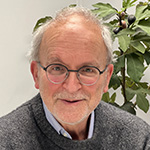
Fred Roozeboom
Monday, October 26 | 1450h
Percheron Ballroom A, BMO Centre, Level 3
Atomic Layer Processing: From Early Applications In Wireless Communication to Advancing Semiconductor Manufacturing Today
by Fred Roozeboom
Fred Roozeboom is Guest (Emeritus) Professor at the Universiteit Twente (UT). His research interests are rooted in selective atomic layer deposition (ALD), atomic layer etching (ALE), Li-ion batteries, the longevity of extreme ultraviolet (EUV) optics, and CO2 capture on active coal.
Prof. Roozeboom holds a PhD in Technical Sciences from UT with a specialization in inorganic chemistry and catalysis. After working in catalysis for three years at ExxonMobil R&D Labs, he joined Philips Research (known as of 2007 as NXP) in 1983. His research there concentrated on thin film technology and plasma processing. From 1997 to 2009, he led a team that focused on applications in 3D passive and heterogeneous integration for System-in-Package devices for wireless communication and power management. He was a Research Fellow and full Professor at the Technische Universiteit Eindhoven from 2007–2021, working on atomic layer deposition including area-selective and etching. Spatial atomic layer process and reactor design for photovoltaics and displays were his specialty at TNO Holst Centre from 2009 to 2021, then in 2021, he joined UT. His high-tech industry consultancies since 2021 have included applications of thin-film processing for atomic layer etching based patterning, EUV optics lifetime, 3D Li-ion batteries, CO2 capture, and greenhouse gas emission reduction.
Prof. Roozeboom has published over 200 papers (with a Scopus h-index of 44) and holds over 50 granted or pending patents. He is a Fellow of The Electrochemical Society and AVS. Prof. Roozeboom joined ECS in 1991 and received the 2023 Gordon E. Moore Medal for Outstanding Achievement in Solid State Science and Technology. Over the past 30 years, he has organized many conferences and workshops on thin-film processing, most recently as Program Chair of the 11th International Atomic Layer Etching Workshop (ALE 2024), part of ALD2024.
Energy Technology Division Walter Van Schalkwijk Award in Sustainable Energy Technology
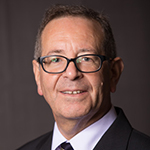
Vito Di Noto
Monday, October 26 | 1330h
Rooms 209, 210 & 211, BMO Centre
The Electrochemistry of Sustainability: Connecting Ion Transport, Interfaces, and Electrocatalysis Across Energy Technologies
by Vito Di Noto
Vito Di Noto is Full Professor of Electrochemistry for Energy and Solid State Chemistry in the Department of Industrial Engineering at the Università degli Studi di Padova (UNIPD), where he leads the Chemistry of Materials for the Metamorphosis and Storage of Electrochemical Energy (CheMaMSE) Research Group. His research focuses on advanced functional materials for electrochemical energy conversion and storage, supporting sustainable energy transition through innovations in batteries, fuel cells, electrolyzers, supercapacitors, and solar cells. He pioneered novel electrolytes and electrode materials and contributed to the fundamental understanding of ion-conduction mechanisms in condensed phases. Prof. Di Noto is actively involved in major European research initiatives, including the European Energy Research Alliance, Batteries Europe, Batteries European Partnership Association, and Hydrogen Europe Research. Over the past three years, he has coordinated more than 10 national and international projects, securing over nine million euros in funding.
Prof. Di Noto obtained his PhD in Chemistry at UNIPD in 1992. He worked as a researcher in the university’s Department of Inorganic, Metallorganic, and Analytical Chemistry until 2002 when he was named Professor of Inorganic Chemistry in the Department of Chemical Sciences. In 2015, he became a Full Professor. He received the 2022 ECS Energy Technology Division Award and 2024 Italian Knowledge Leaders Award. The author of over 378 scientific publications with an h-index of 60, he holds 32 patents. Prof. Di Noto is included in Stanford University’s “World’s Top 2 % of Scientists.”
He joined ECS in 2003 and has served on multiple award committees and as a member at large of the Energy Technology Division. He was named an ECS Fellow in 2019 and received the ECS Energy Technology Division Research Award in 2022. A Past President of the Italian Chemical Society Electrochemistry Division, he currently coordinates its Thematic Group on Conversion and Storage of Electrochemical Energy (ACee). He also chairs the International Society of Electrochemistry Publications Committee and co-leads the European Innovative Advanced Materials Initiative Working Group 5–Materials Innovation Markets (Energy).
High Temperature Energy, Materials, & Processes Division Outstanding Achievement Award
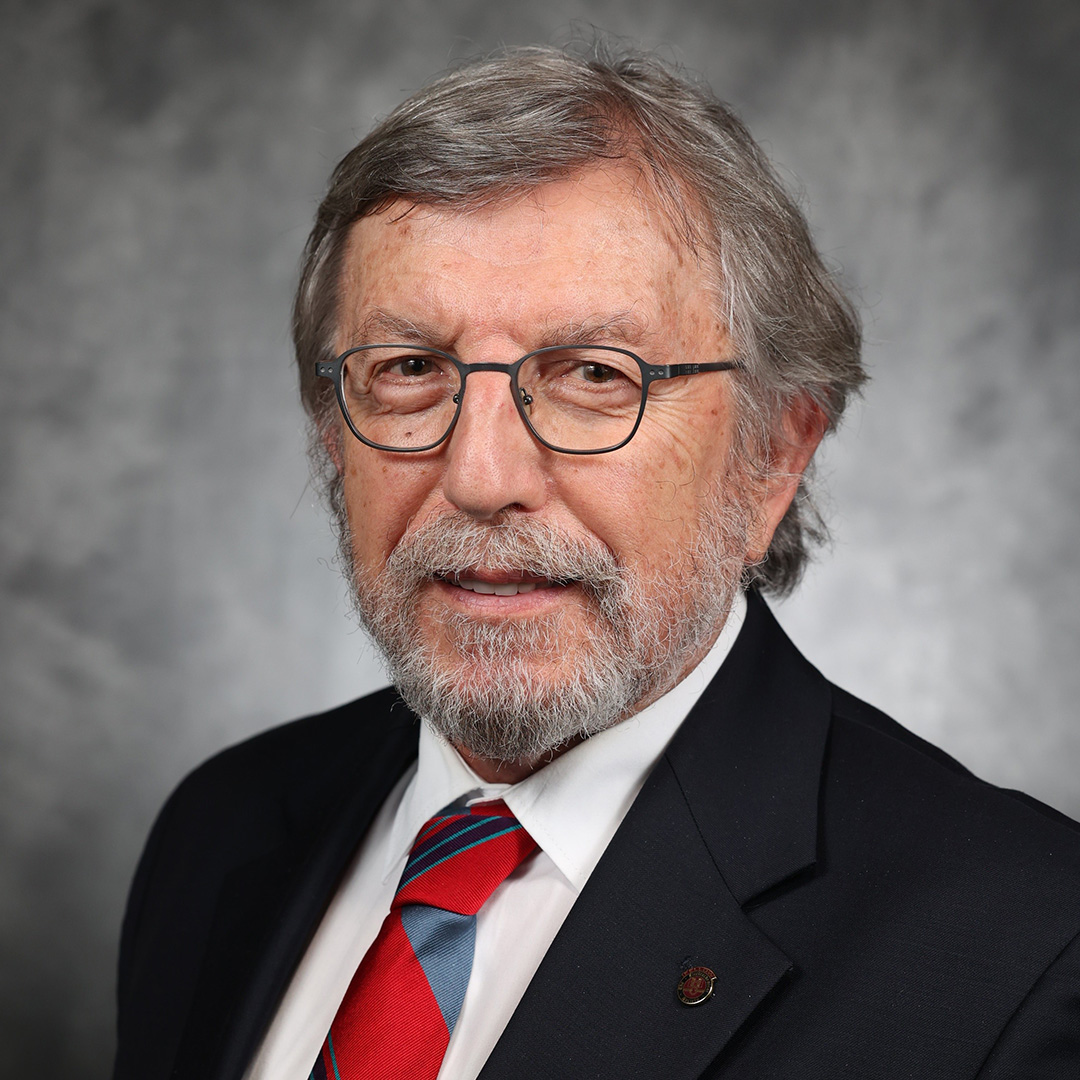
Turgut M. Gür
Monday, October 26 | 1400h
Room 204, BMO Centre, Level 2
A Journey Through Solid State Electrochemistry
by Turgut M. Gür
Turgut Gür is an Adjunct Professor of Materials Science and Engineering at Stanford University and Past President of The Electrochemical Society (2022–2023). He recently retired from Stanford after a career spanning more than three decades that included providing leadership to three major campus-based multi-disciplinary team- and theme-based research centers focused on energy and advanced materials. He also holds a Visiting Professor appointment at the Chinese University of Mining and Technology-Beijing (CUMTB), and an International Mentor appointment from the Norwegian University of Science and Technology.
Prof. Gür completed BS and MS degrees in Chemical Engineering at the Middle East Technical University and three graduate degrees including a PhD in Materials Science and Engineering at Stanford University. He is a recognized leader in high temperature electrochemical energy research, materials, and technologies with 11 U.S. patents and more than 160 publications.
An active member of ECS since 1973, Prof. Gür assumed numerous leadership positions in the Society as well as serving on multiple ECS advisory boards and committees and the ECS Board of Directors and Executive Committee. Formerly, Prof. Gür was Chair of the ECS High-Temperature Energy, Materials, & Processes Division. He co-organized 17 ECS symposia and coedited their ECS Transaction volumes. He was named Fellow of The Electrochemical Society in 2018.
Prof. Gür also served for three separate terms over 10 years on the Board of the International Society for Solid State Ionics (ISSI) and was an Associate Editor of the Journal of the American Ceramic Society for 12 years.
In 2020, out of more than 186,000 energy scientists in the world, he was ranked the 702nd most-cited energy researcher and rated in the top one percent of most-cited scientists in the world across all scholarly fields of sciences, engineering, and medicine. He ranked in the top five percent of cited researchers in Royal Society of Chemistry journals.
Luminescence and Display Materials Division Outstanding Achievement Award
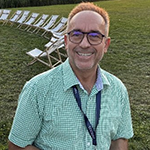
Eugeniusz Zych
Wednesday, October 28 | 1140h
Room 212, BMO Centre, Level 2
Harnessing the Architecture of Defects: From Persistent Luminescence to Wide-Range Optical Thermometry
by Eugeniusz Zych
Eugeniusz Zych heads the Luminescent Materials Group at the Uniwersytet Wrocławski (UWr). His research interests encompass energy storing luminescent materials, persistent luminescence phosphors, scintillators, dosimeters, phosphors for LED lighting and horticulture, luminescent temperature sensors, and multifunctional nanomaterials for biological and medical applications.
After receiving a PhD from UWr in 1994, Prof. Zych completed a postdoctoral fellowship in the Department of Chemistry at Boston University (1994–1997). He has headed the UWr Luminescent Materials Group since 2009 and served as Vice Dean of the Faculty of Chemistry (2005–2012) and Vice Rector for Research (2020–2022). Prof. Zych has supervised over a dozen PhD students and numerous graduate students there. He led nearly 20 nationally funded research projects, as well as several supported by the European Union, NATO, and industrial partners, including Philips. The author of more than 200 scientific publications, Prof. Zych has received distinctions including the 2023 Minister of Science and Higher Education Award and the Golden Cross of Merit, presented by the President of Poland in 2023. He joined ECS in 2017 and served on multiple committees and chaired the ECS Luminescence and Display Materials Division for the 2023–2025 term.
Physical and Analytical Electrochemistry Division Max Bredig Award In Molten Salt and Ionic Liquid Chemistry
Wednesday, October 28 | 1400h
Percheron Ballroom F, BMO Centre, Level 3
Electrochemistry of Liquid Metals and Molten Salts: The Basis for Innovations in Batteries
by Donald Sadoway
Donald Sadoway is the John F. Elliott Professor Emeritus of Materials Chemistry, MacVicar Faculty Fellow at the Massachusetts Institute of Technology (MIT). His research seeks to establish scientific underpinnings for technologies that make efficient use of energy and natural resources in an environmentally sound manner. The overarching theme of his work is electrochemistry in nonaqueous media. Specific topics in applied research are environmentally sound electrochemical extraction and recycling of metals; rechargeable batteries for stationary storage or mobile applications; synthesis of thin films or nanoparticles in cryogenic media.
Professor Sadoway completed undergraduate and graduate studies at the University of Toronto, earning his PhD in Chemical Metallurgy in 1977. He completed a postdoc at MIT, then joined the faculty there in 1978. He was included in Time magazine’s 2012 article, “100 Most Influential People in the World,” for inventing the liquid metal battery. In 2021, The Minerals, Metals & Materials Society established the Sadoway Award for Materials Innovation and Advocacy recognizing scholars with outstanding materials science achievements. Other accolades he received include the 2022 European Inventor Award (Non-EPO Countries), 2014 Norm Augustine Award for Outstanding Achievement in Engineering Communications, 2009 and 2011 Lightspeed Venture Partners Professional Development Award for Research on Grid-Level Energy Storage, 2004 Edward Moore Baker Memorial Award for Excellence in Undergraduate Teaching, and 1980 and 1983 Alcoa Foundation Professional Development Award.
He is the cofounder of Ambri, Boston Metal, Pure Lithium, Avanti Battery, and Sadoway Labs and holds some 40 patents. Prof. Sadoway joined ECS in 1979.
Sensor Division Early Career Award
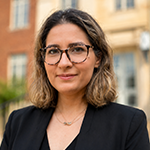
Aida Ebrahimi
Wednesday, October 28 | 1110h
Percheron Ballroom H, BMO Centre, Level 3
From Pathogens to Prosthetics: Multimodal Bioelectronic Sensors for Interrogating Complex Biological Systems
by Aida Ebrahimi
Aida Ebrahimi is an Associate Professor of Electrical Engineering at The Pennsylvania State University, with a courtesy appointment in Biomedical Engineering. She is the Director of the Bioelectronics and Biosensor Engineering Laboratory, where her research focuses on bioelectronic interfaces, electrochemical and field-effect sensors, wearable and implantable devices, and advanced materials for healthcare and environmental monitoring. Her group develops multimodal sensing systems that integrate materials, devices, electronics, and artificial intelligence to interrogate complex biological systems ranging from microbial communities to neural and physiological processes.
Prof. Ebrahimi received her BS and MS in Electrical Engineering from the University of Tehran, and PhD in Electrical Engineering from Purdue University. Her research has been supported by the National Science Foundation, National Institutes of Health (NIH), U.S. Department of Agriculture, industry partners, and private foundations. She is the recipient of the NSF CAREER Award, NIH:NIBIB (National Institute of Biomedical Imaging and Bioengineering) Trailblazer Award, ECS Sensor Division Early Career Award, Penn State Engineering Alumni Society (PSEAS) Outstanding Research Award, Rustum and Della Roy Innovation in Materials Research Award, Thomas and Sheila Roell Early Career Professorship in Electrical Engineering, and the Scialog Fellowship from the Research Corporation for Science Advancement.
Prof. Ebrahimi joined the Society in 2017 and is a member at large of the ECS Sensor Division, member of the ECS Sensor Division Awards Committee, and chairs the Women in Sensors Research Subcommittee. She is also an Associate Editor of the IEEE Sensors Journal.
Sensor Division Outstanding Achievement Award
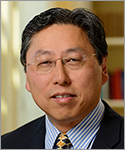
Larry Nagahara
Monday, October 26 | 0800h
Room 213, BMO Centre, Level 2
Coming Full Circle with Nanosensors
by Larry Nagahara
Larry Nagahara is Vice Dean for Research and Translation at the Whiting School of Engineering and Research Professor in the Department of Chemical and Biomolecular Engineering at Johns Hopkins University. For more than 25 years, he has been a devoted thought leader and steadfast advocate of nanotechnology and sensor application applied toward biomedical applications. He has made lasting contributions through his groundbreaking work on nanometer scale phenomena at the solid-liquid interface with scanning probe microscopy and his pioneering applications made toward bio/chem nanosensors.
Prof. Nagahara received his BS in Physics from the University of California, Davis, and PhD in Physics from Arizona State University under Professor Stuart Lindsay. He then did a postdoc fellowship in Akira Fujishima’s lab at the University of Tokyo and later became an assistant professor. In 1994, Prof. Nagahara joined Motorola, leading the company’s nanosensor effort and rising to the rank of Distinguished Member of the Technical Staff. In 2007, he joined the National Cancer Institute as an Associate Director in the Division of Cancer Biology, where he directed and coordinated programs and research activities related to expanding the role of the physical sciences and engineering in cancer research. He is the author of more than 100 peer-reviewed articles and three book chapters and holds close to 30 issued/filed patents.
Since joining ECS in 2004, he has been an active member of the ECS Sensor Division, helping to organize over 20 symposia and serving on the division Executive Committee since 2008, and as Division Chair (2022–2024). He is a Fellow of The Electrochemical Society, American Association for the Advancement of Science (AAAS), American Institute for Medical and Biological Engineering (AIMBE), American Physical Society (APS), IEEE, and a former member of Motorola’s Scientific Advisory Board.
Sensor Division Outstanding Achievement Award
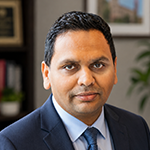
Praveen Kumar Sekhar
Wednesday, October 28 | 1030h
Percheron Ballroom H, BMO Centre, Level 3
Printed Sensors, Reconfigurable RF Devices, and Emerging Quantum Platforms: Engineering the Future of Intelligent Sensing Systems
by Praveen Kumar Sekhar
Praveen Sekhar is Associate Professor of Electrical Engineering at Washington State University Vancouver (WSU-V). An internationally recognized engineer, educator, and scholar, his work has advanced sensing technologies while expanding opportunities for students and communities historically underserved in STEM. At WSU-V, he has built a distinguished interdisciplinary research program at the intersection of electrochemical sensing, quantum sensing, wireless sensor systems, machine learning, and advanced manufacturing.
Prof. Sekhar received his BS from the Coimbatore Institute of Technology, and MS and PhD from the University of South Florida (USF). Over the course of his career, Prof. Sekhar has secured more than $2.25 million in research funding and led innovative projects addressing critical societal challenges in healthcare, food security, environmental monitoring, and sustainable agriculture. His work has resulted in widely recognized advances in chemical/biosensing and sensor-enabled technologies, fostering collaborations among academia, industry, government agencies, and community partners.
Prof. Sekhar’s contributions have earned national and international recognition. He is a Fellow of the Royal Society of Chemistry, Alexander von Humboldt Fellow, and Fulbright Specialist. He joined ECS in 2000 and currently chairs the ECS Sensors Division and serves as a Technical Editor of the Journal of The Electrochemical Society. From 2021 through the 2026 term, he was Associate Editor for ECS Sensors Plus. His excellence in research, teaching, leadership, and service has been recognized through numerous honors, including the Washington State University Chancellor’s Award for Research Excellence, Chancellor’s Award for Advancing Equity, Martin Luther King Jr. Distinguished Service Award, Student Award for Teaching Excellence, and Partners in Innovation Award.
Equally notable is his commitment to educational access and community engagement. Through mentorship, workforce development initiatives, and partnerships with Tribal nations, K–12 schools, and community organizations, Prof. Sekhar has created pathways that empower the next generation of scientists, engineers, and innovators.
Europe Section Alessandro Volta Medal
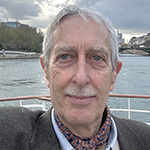
Philippe Marcus
Tuesday, October 27 | 1710h
Room 219, BMO Centre, Level 2
Surface Science, Surface Electrochemistry, Corrosion Science: Where Are the Boundaries?
by Philippe Marcus
Philippe Marcus is CNRS Director of Research Emeritus at Institut de Recherche de Chimie Paris, Chimie ParisTech. His research focuses on surface science, surface electrochemistry, and corrosion science, with emphasis on the understanding of the structure and properties of metal and alloy surfaces and thin oxide layers at the atomic and nanoscale, revealing the link between surface reactions at the nanoscale and macroscopic corrosion behavior of metals and alloys.
Dr. Marcus completed his PhD in Physical Sciences at the Université Pierre-et-Marie-Curie in 1979. He has published over 450 papers with an h-index of 96 and 33,998 citations (source: Google Scholar, June 2026). Dr. Marcus has presented over 150 invited lectures at international conferences and serves or served on the editorial board of five international journals, including Electrochimica Acta, npj Materials Degradation, and Corrosion Science.
International awards and honors Dr. Marcus received include the 2024 International Corrosion Council Marcel Pourbaix Award, 2017 ECS Olin Palladium Award, 2015 European Corrosion Medal, 2010 Institute of Corrosion U R Evans Award, and 2005 ECS Corrosion Division H. H. Uhlig Award. He is a Fellow of The Electrochemical Society, European Academy, International Society of Electrochemistry, Association for Materials Protection and Performance, and APICS CSCP. He was Chair of the ECS Europe Section (2020–2023), Chair of the Electrochemical Materials Science Division of the International Society of Electrochemistry, President of the European Federation of Corrosion (2008–2012), and Chair of the 2006 Gordon Research Conference on Aqueous Corrosion. He is currently Chair of the International Steering Committee for the European Conferences on Applications of Surface and Interface Analysis, Head of the European Federation of Corrosion Paris office, and President of the French Corrosion Society (CEFRACOR). He joined ECS in 1986.