




Battery Division M. Stanley Whittingham Mid-Career Award
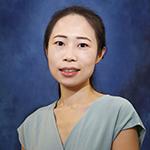
Yi-Chun Lu
Tuesday, May 26 | 1700h
Room 307, Seattle Convention Center – Arch
Material Designs for Sustainable Aqueous Batteries
by Yi-Chun Lu
Yi-Chun Lu is Professor at The Chinese University of Hong Kong (CUHK). Her research focuses on advancing clean energy storage and conversion through fundamental insights and innovative material design. Her group investigates electrode and electrolyte design for high-energy metal-air and metal-sulfur batteries, redox-active components and solution chemistry for redox-flow batteries, high-voltage aqueous battery development, and mechanistic studies of interfacial phenomena in electrochemical energy systems. Prof. Lu is the co-Founder and Chief Scientist of Luquos Energy Limited, a company dedicated to commercializing polysulfide flow battery technology for long-duration energy storage.
In 2012, Prof. Lu earned a PhD in Materials Science & Engineering from the Massachusetts Institute of Technology, then conducted postdoctoral research at the Technische Universität München in 2013. Joining CUHK in 2013 as an Assistant Professor, she was promoted to Associate Professor in 2018, and Professor in 2022.
Prof. Lu is a Fellow of the Royal Society of Chemistry and Founding Member of the Young Academy of Science of Hong Kong. Among the recognition and awards she received are the 2024 ISE Tajima Prize, 2023 Hong Kong Engineering Science and Technology Award, 2021 Xplorer Prize, 2021 IBA Early Career Award, and 2020 Top 10 Falling Walls Science Breakthroughs of the Year. She serves as an Associate Editor and Board Member for the Journal of Materials Chemistry A and as an Editorial Board/Advisory Member for Energy & Environmental Science, Materials Today, and Chemistry of Materials. Prof. Lu joined ECS in 2010.
Dielectric Science & Technology Division Thomas D. Callinan Award
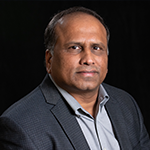
Mahendra Sunkara | Photo by Ashly Cecil
Sunday, May 24 | 1400h
Room 616, Seattle Convention Center – Arch
Plasma‐Catalysis for Chemical Production: Hydrogen, Green Methanol, and Ammonia
by Mahendra Sunkara
Mahendra Sunkara is the Founding Director of the Conn Center for Renewable Energy Research, Professor of Chemical Engineering, and University Scholar at the University of Louisville (UofL). His research spans the development of plasma-catalytic processes for the synthesis of nanowire materials, energy conversion and storage technologies, and advanced plasma catalysis for chemical production.
Prof. Sunkara received his PhD in Chemical Engineering from Case Western Reserve University in 1993. He has published more than 175 peer-reviewed journal articles, four book chapters, and holds over 35 U.S. patents. He is coauthor of the book Inorganic Nanowires: Applications, Properties, and Characterization. His work has been cited more than 14,800 times with an h-index of 57. Under his mentorship, Prof. Sunkara has graduated over 20 MS/MEng and 30 PhD students, many of whom have successful careers in academia—serving as faculty at institutions such as Rensselaer Polytechnic Institute, Texas A&M, University of Arkansas, Indian Institute of Technology Hyderabad, and Oklahoma State University—and in industry at companies including Intel, HP, Lam Research, Veeco, Applied Materials, and Lexmark. Since founding the Conn Center for Renewable Energy Research in 2009, Prof. Sunkara has built it into a thriving hub with a dedicated full-time research staff and over 30,000 square feet of state-of-the-art laboratory space. He currently leads the Regional Energy Business Education Commercialization Convergence Accelerator (REBECCA)—a consortium of industry, educational institutions, and government agencies fostering an innovation ecosystem across Kentucky and southern Indiana. In addition to his academic leadership, Prof. Sunkara founded ADEM Technologies, Inc. (formerly Advanced Energy Materials, LLC) in 2011. The company successfully scaled up nanowire production for use in catalysts and sorbents targeting desulfurization, carbon capture, and reforming applications.
Among the awards Prof. Sunkara received are, in 2009, the UofL President’s Distinguished Faculty Award for Research and Indian Institute of Chemical Engineers United Phosphorus CDS Award, and in 1999, the Ralph E. Powe Junior Faculty in Engineering award and National Science Foundation CAREER grant. He joined ECS in 2004.
Energy Technology Division Graduate Student Award Sponsored by BioLogic
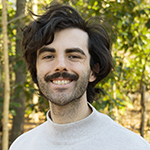
S. Avery Vigil
Wednesday, May 27 | 1610h
Room 4C-1, Seattle Convention Center – Arch
Multiscale Studies and Interfacial Strategies to Accelerate Oxygen Evolution Electrocatalysis
by S. Avery Vigil
S. Avery Vigil is a fourth-year PhD candidate and NSF Graduate Research Fellow in the Department of Chemistry at Duke University, advised by Prof. Ivan A. Moreno-Hernandez. Avery’s doctoral work is centered on using in situ transmission electron microscopy to understand the nanoscale dynamics of electrocatalyst materials. They leveraged this technique to investigate the degradation of model nanocrystalline electrocatalysts for the oxygen evolution reaction, revealing complex dissolution phenomena. Avery’s research has led to the synthesizing of next-generation electrocatalyst materials for the oxygen evolution reaction. These materials are designed with a focus on reduced noble metal loadings and high stability at the device scale. Avery collaborated closely with researchers at the University of Pennsylvania, Colombia University, Brookhaven National Laboratory, and the Lawrence Livermore National Laboratory.
Avery earned a BS in Chemistry and BA in Linguistics from the University of Oklahoma in 2020, with a research focus on optoelectronic material synthesis for light emission and language preservation, respectively. Outside of the lab, they served the community through the Materials Research Society, Duke Materials Initiative, and Graduate Chemistry Council at Duke. Their results are published in the Journal of the American Chemical Society, Energy & Environmental Science, and Matter, among other journals.
Energy Technology Division Graduate Student Award Sponsored by BioLogic
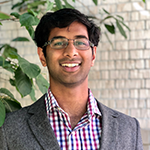
Siddharth Rajupet
Wednesday, May 27 | 1650h
Room 4C-1, Seattle Convention Center – Arch
Electrostatically-Controlled PFSA Ionomer Adsorption to Catalyst Particles In Catalyst Inks
by Siddharth Rajupet
Siddharth Rajupet is a fifth-year PhD student at the University of California, Berkeley, working in the Energy Conversion Group with Dr. Adam Weber and Prof. Clay Radke. His thesis explores interactions between ion-conducting polymers (ionomers) and catalyst particles in inks deposited to form fuel-cell electrodes. In particular, his work investigates the driving forces for and factors limiting the extent of ionomer adsorption to catalyst particles, which governs the ionomer distribution and structure of the final fuel-cell electrode. His research combines fundamentals of colloid science and electrochemistry to address these questions.
Sidd earned his BS and MS in Chemical Engineering from Case Western Reserve University in 2021. He worked with Prof. Daniel Lacks there, investigating forces governing the dynamics of fine particles adhered to surfaces, suspended in air, and dispersed in solution. He won an AIChE Student Poster Competition Award in 2019.
Energy Technology Division Research Award
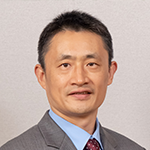
Minhua Shao
Monday, May 25 | 1000h
Room 401, Seattle Convention Center – Arch
Development of High Performance and Durable Fuel Cell Electrocatalysts
by Minhua Shao
Minhua Shao is the Cheong Ying Chan Professor of Energy Engineering and Environment, and Head and Chair Professor in the Department of Chemical and Biological Engineering at the Hong Kong University of Science and Technology (HKUST). He is the Director of the HKUST Energy Institute and Joint Laboratory for Hydrogen Energy.
After completing his PhD in Materials Science and Engineering at the State University of New York at Stony Brook in 2006, Prof. Shao joined UTC Power in 2007. There he led the development of advanced electrocatalyts for fuel cells and was promoted to UTC Technical Fellow in 2012. He conducted research on lithium-ion batteries at the Ford Motor Company in 2013, then joined HKUST in 2014. His research has been recognized with numerous awards including the 2022 International Outstanding Young Chemical Engineer Award and 2014 ECS Energy Technology Division Supramaniam Srinivasan Young Investigator Award. He is a founding member of The Hong Kong Young Academy of Sciences and author of over 350 peer-reviewed papers.
Prof. Shao joined ECS in 2005, is a Fellow of The Electrochemical Society, and currently chairs the Energy Technology Division and serves as a Technical Editor for the Journal of The Electrochemical Society.
Energy Technology Division Supramaniam Srinivasan Early-Career Investigator Award

Antoni Forner-Cuenca // Photo credit: Princess of Girona Foundation
Monday, May 25 | 1400h
Room 306, Seattle Convention Center – Arch
Engineering Electrode Materials Across Length Scales: How Microstructure and Surface Chemistry Govern Performance in Flow Batteries and Fuel Cells
by Antoni Forner-Cuenca
Antoni Forner-Cuenca is Full Professor at the Technische Universiteit Eindhoven (TU/e), where he founded and leads the Electrochemical Materials and Systems Group. His research focuses on advancing transformative electrochemical technologies for real world energy applications. By leveraging principles from (electro)chemical engineering, materials science, and physical chemistry, his team designs, synthesizes, characterizes, and models innovative materials and electrochemical reactors. Key applications include large-scale energy storage with flow batteries, energy conversion via hydrogen fuel cells and electrolyzers, and decarbonization of the chemical industry through efficient molecular synthesis and separation processes.
Prof. Forner-Cuenca earned his PhD at the Eidgenössische Technische Hochschule (ETH) Zürich Paul Scherrer Institut in 2016. His pioneering work on gas diffusion layers with patterned wettability for polymer electrolyte fuel cells was recognized by the ETH Zürich Medal for Outstanding Thesis. As a Postdoctoral Fellow at the Massachusetts Institute of Technology from 2017 to 2018, he advanced the science and engineering of redox flow batteries for large-scale energy storage. Prof. Forner-Cuenca joined the TU/e faculty in 2019 and was promoted to Full Professor in 2025.
His research has been distinguished with numerous honors, including the 2025 Princess of Girona Award, 2024 Royal Netherlands Academy of Arts and Sciences Early Career Award, 2024 Dutch Research Council (NWO) Vidi Grant, 2022 European Research Council Starting Grant, 2021 Hydrogen Europe Young Scientist Award, 2019 Dutch Research Council Division of Applied & Engineering Sciences Veni Grant, and 2017 ECS Energy Technology Division Graduate Student Award Sponsored by BioLogic. He was voted Best Teacher of the TU/e Master Program in the Department of Chemical Engineering and Chemistry in 2022 and 2023. He joined ECS in 2015.
Industrial Electrochemistry and Electrochemical Engineering Division H. H. Dow Memorial Student Achievement Award
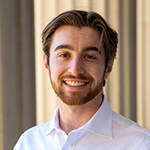
Simon Rufer
Monday, May 25 | 1040h
Room 401, Seattle Convention Center – Arch
Systems and Materials for Electrochemical CO2 Capture and Conversion
by Simon Rufer
Simon Rufer is CEO & Co-Founder of CoFlo Medical and a PhD candidate in Mechanical Engineering at the Massachusetts Institute of Technology (MIT). His electrochemical research approach spans length scales and systems—from deploying novel micro-electrode architectures at the micro-level, to developing new electrochemical cell schema at a macro-level and establishing processes that more efficiently incorporate electrochemistry at a system level. Throughout, his work focuses on addressing mass transport limitations which are often limiting factors to the industrial scalability of electrochemical processes, while using technoeconomic analyses to contextualize these improvements. Simon has explored and optimized electrochemical approaches for environmental CO2 removal (battery-based ocean carbon dioxide removal and direct air capture), point source capture, electrochemical CO2 conversion to value-added chemicals, and hydrogen electrolysis.
Simon completed an MS in Mechanical Engineering at MIT in 2022 before pursuing his PhD as a Presidential Fellow and National Science Foundation Graduate Research Fellow in the Varanasi Research Group. He is passionate about entrepreneurship and bringing technologies from the lab to the market. CoFlo Medical, the company Simon founded with MIT Prof. Kripa Varanasi and MIT alumnus Vishnu Jayaprakash, won the 2025 MIT $100,000 Entrepreneurship Competition. Simon received the 2025 Wunsch Foundation Silent Hoist and Crane Award and won the 2025 De Florez Competition. A California native and appreciator of his state’s beautiful nature, Simon enjoys all things outdoors.
Industrial Electrochemistry and Electrochemical Engineering Division Student Achievement Award
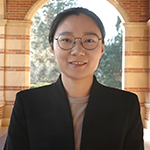
Xintong Yuan
Tuesday, May 26 | 1040h
Room 603, Seattle Convention Center – Arch
Multi-Faceted Roles of Lithium Metal in Batteries and Beyond
by Xintong Yuan
Xintong Yuan recently completed her PhD in Chemical Engineering at the University of California, Los Angeles (UCLA), working with Prof. Yuzhang Li. Dr. Yuan worked on next-generation batteries, exploring the fundamentals of lithium metal deposition and the formation of solid electrolyte interphase formation using cryo-EM. Specifically, her research tackled a decades-old battery science question: What is the intrinsic morphology of lithium deposits in the absence of a solid electrolyte interphase layer? She showed that it is a non-dendritic rhombic dodecahedron, independent of electrolyte chemistry or substrate composition. Her unexpected findings, which transformed how the field thinks about lithium metal electrodeposition, provide new insights into avoiding key failure modes during the fast charging of lithium metal batteries.
Dr. Yuan is a member of the 2025 class of next-generation researchers pursuing postdoctoral studies supported by Schmidt Science Fellowships. In 2025, she received the ECS Battery Division Student Research Award, Materials Research Society Graduate Student Gold Award, and American Institute of Chemical Engineers Women in Chemical Engineering Travel Award. In 2023, Dr. Yuan was recognized as a Massachusetts Institute of Technology (MIT) Chemical Engineering Rising Star and Materials Science and Engineering Rising Star (co-organized by MIT, Stanford University, Carnegie Mellon University, and the University of Illinois Urbana-Champaign). The author of 21 journal publications including five as first author, she joined ECS as a student in 2024.
Industrial Electrochemistry and Electrochemical Engineering Division Ralph E. White Outstanding Student Award
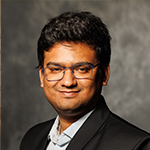
Tushar Khemraj Telmasre
Tuesday, May 26 | 1000h
Room 603, Seattle Convention Center – Arch
Relevance of Classical Models and Simulation Approaches for Battery Digital Twins
by Tushar Khemraj Telmasre
Tushar Khemraj Telmasre is a PhD candidate in Materials Science and Engineering at The University of Texas (UT) at Austin with Prof. Venkat Subramanian as advisor. His research seeks to bring greater coherence between electrochemical theory, simulation, and practice by focusing on experimental design and validation that directly support improved battery performance and the precise estimation of states and model parameters. He developed advanced physics-based electrochemical models in both the time and frequency domains for lithium-ion and next-generation battery systems with the goal of enabling fast and accurate models for battery management systems (BMS). His work has led to nine publications spanning charging optimization, impedance modeling, pack modeling, and FMU based battery digital twins, each informed by the need for models that can withstand experimental scrutiny.
Tushar completed an MS in Metallurgical and Materials Engineering at the Colorado School of Mines, MS at the Indian Institute of Technology Kanpur—where his MS thesis received the Gold Medal—and BTech at the Visvesvaraya National Institute of Technology. He received awards including the 2024 Allen J. Bard Center for Electrochemistry Student Scholar Fellowship.
Since 2022, Tushar has served as President of the ECS UT Austin Student Chapter, leading initiatives including collaborations with other ECS student chapters in Texas.
Nanocarbons Division Richard E. Smalley Research Award
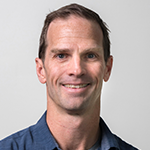
Jeffrey Blackburn
Monday, May 25 | 0900h
Room 2B, Seattle Convention Center – Arch
Fundamentals of Interfacial Charge Transfer in Mixed-Dimensionality Heterojunctions
by Jeffrey Blackburn
Jeffrey Blackburn is a Senior Research Fellow at the National Renewable Energy Laboratory (NREL). He is the lead investigator of NREL’s BES Solar Photochemistry Program and a Principal Investigator in two DOE Energy Frontier Research Centers (EFRCs)—the Center for Hybrid Organic/Inorganic Semiconductors for Energy (CHOISE) and Reconfigurable Electronic Materials Inspired by Nonlinear Neuron Dynamics (reMIND). Dr. Blackburn’s research interests include solar photoconversion, energy-efficient information processing, microelectronic devices, thermoelectric energy conversion, and (photo)catalytic processes. His work on emergent properties and dynamic processes in low-dimensional materials for energy conversion and storage focuses on the transfer, transport, and transduction of charges, excitons, and spins.
Dr. Blackburn received a PhD in Chemistry from Colorado University, Boulder under the guidance of Art Nozik, and was a postdoctoral researcher at NREL with Dr. Mike Heben. A member of ECS for almost 20 years, he was named Fellow of The Electrochemical Society in 2023 and currently serves as Chair of the ECS Nanocarbon Division.
Nanocarbons Division SES Research Young Investigator Award

Kyu-Young Park
Tuesday, May 26 | 0920h
Room 2B, Seattle Convention Center – Arch
Redefining the Function of Carbon for Next-Generation Rechargeable Electrode Design
by Kyu-Young Park
Kyu-Young Park is Associate Professor with joint appointments in the Department of Battery Engineering and Department of Materials Science and Engineering at the Pohang University of Science and Technology (POSTECH). His research focuses on developing next-generation batteries. He is interested in cathode materials and strives to realize high-capacity, high-safety, and high-energy-density chemistries. Specializing in electrochemical energy storage materials and their translation from lab discovery to manufacturable technologies, his research integrates quantum-mechanical modeling (DFT) with multimodal structural probes—x-ray absorption, x-ray and neutron diffraction, and imaging—to reveal electron/ion/mass-transfer bottlenecks that govern battery performance and reliability. Recognizing that practical performance is decided at the electrode scale, Park focuses on carbon. His group endows conventional conductive agents such as CNTs and graphene with additional functionalities beyond electron transport. These include suppressing oxygen release in cathodes, absorbing chemo-mechanical deformation energy to preserve percolation, and mediating heat dissipation to improve thermal stability. By treating carbon as an active component rather than a passive additive, the team creates pathways toward state-of-the-art battery technologies. Building on these insights, Park’s team translates design rules into outcomes: ultra-high-energy-density thick electrodes, long-life high-nickel cathodes, and thermally stable electrodes with engineered carbon–binder domains and robust electrolyte wetting.
Prof. Park received his PhD in 2016 from the Seoul National University School of Engineering followed by postdoctoral fellowships at Seoul National University from 2016 to 2018, and Northwestern University with Prof. Mark C. Hersam from 2018 to 2021. His 80 peer-reviewed papers have been published in journals including Advanced Materials, Advanced Energy Materials, and ACS Nano. Awards received in 2017 include the Korean Synchrotron Radiation Users Association Young Scientist Award, and Korean Conference on Neutron Scattering Best Researcher Award. His group collaborates with academia and industry to couple operando diagnostics with manufacturing-centric process design. He joined ECS in 2023. Outside the lab, he enjoys walks, values conversations with students, and hopes to hasten society’s move toward a carbon-neutral future.
Organic and Biological Electrochemistry Division Manuel M. Baizer Award

Shelley Minteer
Monday, May 25 | 0900h
Room 617, Seattle Convention Center – Arch
Transitioning Bioelectrocatalysis from Sensors to Energy Conversion and Electrification of the Chemical Industry
by Shelley Minteer
Shelley Minteer is the Dr. Ken Robertson Memorial Professor in Chemistry, Director of the Kummer Institute Center for Resource Sustainability at Missouri University of Science and Technology, and Director of the NSF Center for Synthetic Organic Electrochemistry. Her research focuses on bioelectrocatalysis and organic electrosynthesis.
Prof. Minteer received her PhD in Analytical Chemistry at the University of Iowa (2000) under the direction of Johna Leddy. She then spent 11 years as a faculty member in the Department of Chemistry at Saint Louis University before moving to the University of Utah in 2011 to lead the USTAR Alternative Energy Cluster. Prof. Minteer was a Technical Editor for the Journal of The Electrochemical Society (2013-2016) and Associate Editor for the Journal of the American Chemical Society (2016-2020) before becoming the inaugural Editor-in-Chief of the ACS Au Journals. She published over 500 publications and delivered more than 550 presentations at national and international conferences and universities. A Fellow of The Electrochemical Society and the International Society of Electrochemistry, she received the Bioelectrochemical Society Luigi Galvani Prize, International Society of Electrochemistry Tajima Prize and Bioelectrochemistry Prize, ECS Physical and Analytical Electrochemistry Division David C. Grahame Award, American Chemical Society Division of Analytical Chemistry Award in Electrochemistry, and the Society of Electroanalytical Chemists’ Young Investigator Award and Reilley Award.
An active ECS member since 1996, she chaired the Physical and Analytical Electrochemistry Division and has held numerous committee positions.
Sensor Division Early Career Award

Itthipon Jeerapan
Monday, May 25 | 1130h
Room 609, Seattle Convention Center – Arch
Small and Simple by Design: Electrochemical Systems for Modern Analytical Chemistry and Energy Sustainability
by Itthipon Jeerapan
Itthipon Jeerapan is Assistant Professor in the Division of Physical Science at Prince of Songkla University. Dr. Jeerapan’s research lies at the intersection of electrochemistry, analytical chemistry, bioelectronics, and advanced materials. His work emphasizes the development of miniaturized, wearable, ingestible, and implantable electrochemical platforms for diverse applications in healthcare, food sensing, environmental monitoring, and energy systems. He has made significant pioneering contributions to the fields of self-powered biosensors and enzymatic biofuel cells, combining innovative material design with electrochemical functionality to enable autonomous, real-time sensing solutions.
Prof. Jeerapan completed his MS and PhD in NanoEngineering at the University of California San Diego, after earning his BSc in Chemistry with First Class Honors from Prince of Songkla University. He is the author of over 70 publications, with more than 5,550 citations and an h-index of 30. Currently serving as an Associate Editor of ECS Sensors Plus, Prof. Jeerapan is invited to review journals including Nature Communications, Advanced Materials, Biosensors and Bioelectronics, ACS Sensors, Nano-Micro Letters, ACS Nano, and Analytical Chemistry. He was included in the 2023 and 2024 Stanford University/Elsevier World’s Top 2% Scientists lists and received the 2024 Thailand Young Scientist Award, 2022 Chemical Society of Thailand Distinguished Young Chemist Award, 2021 National Research Council of Thailand Outstanding Dissertation Award, and 2005 Federation of Asian Chemical Societies (FACS) Award for Distinguished Young Chemist. A prestigious Royal Thai Government scholarship fully funded his undergraduate and graduate studies in chemistry, science, and technology.