




Joseph Wang to present 249th ECS Meeting Lecture in Seattle
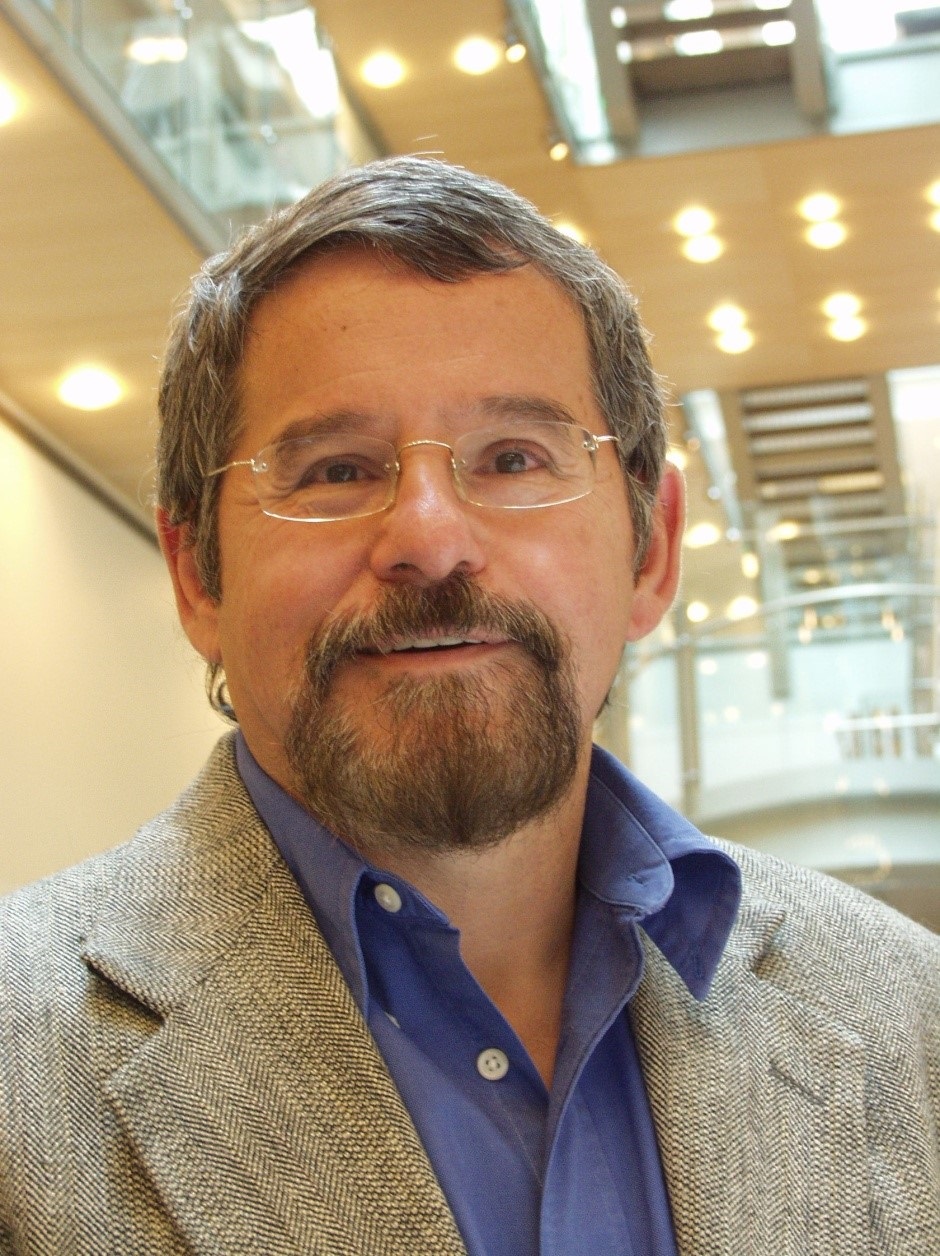
Joseph Wang
249th ECS Plenary/ECS Lecturer
“Wearable Bioelectronic Platforms”
by Joseph Wang
Departments of Chemical and Nanoengineering,
University California San Diego
Monday, May 25, 2026
1700—1800h
Wearable electronic systems have received considerable recent attention owing to their tremendous promise for monitoring the wearer’s health and wellness. Inspired by continuous glucose monitoring, the landscape of wearable devices has substantially evolved over the past decade with the advent of epidermal electrochemical sensors capable of capturing continuous and non-invasively rich and dynamic molecular information. Electrochemical sensors are particularly attractive for such on-body health monitoring owing to their high performance and inherent miniaturization. The recent development of multimodal (hybrid) wearable systems enables the simultaneous real-time monitoring of multiple key chemical and physical parameters and offers previously unattainable comprehensive temporo-spatial insights into a person’s health. A major bottleneck that hampers the widespread use of advanced health monitoring systems is the need for continuous power supply. Integrated energy-autonomous wearable microgrids have been developed for supporting the growing power demands of wearable health monitoring platforms. However, wearable microgrid systems require optimal energy management, tailored to changing environmental conditions and dynamic user demands. This presentation describes our journey towards the introduction of skin-worn bioelectronic platforms, along with related energy and integration advances, and our latest efforts aimed at transforming these innovations into commercial products towards the management of diseases such as diabetes, Parkinson’s, and sepsis.
Speaker biography
Joseph Wang is the SAIC (Science Applications International Corporation) Endowed Chair, Distinguished Professor of Chemical and Nanoegineering, Director of the Center of Wearable Sensors, and Co-Director, Center for Mobile-health Systems at the University of California San Diego (UCSD). Over the past two decades, Prof. Wang has made pioneering contributions to the fields of wearable sensors, microrobots, and bioelectronics. His work bridges fundamental electrochemistry with practical nanotechnology, creating flexible, body-worn sensors, energy harvesting biofuel cells, and novel bismuth electrodes for trace metal detection, making him one of the world’s most cited researchers in the field.
Prof. Wang is a member of the US National Academy of Inventors (NIA), and Fellow of The Electrochemical Society, Royal Society of Chemistry, and American Institute for Medical and Biological Engineering. He is the author of over 1,300 research papers, 12 books (including Analytical Electrochemistry, now in its 4th edition), and 70 patents. A Thomson Reuters Highly Cited Researcher since 2015 (h-index: 220), he has received nearly 200,000 citations. Prof. Wang holds Honorary Professorships from nine universities and is the Founding Editor of Electroanalysis. He received three American Chemical Society Awards for Analytical Chemistry (2024), Electrochemistry (2006), and Chemical Instrumentation (1999); the 2023 Pittcon Ralph N. Adams Award in Bioanalytical Chemistry; 2021 Talanta Medal; inaugural 2021 IUPAC (International Union of Pure and Applied Chemistry) Analytical Chemistry Medal; 2021 IEEE Technical Achievement Award in Sensors – Advanced Career; 2021 Breyer Medal; 2018 ECS Sensors Division Outstanding Achievement Award; 2013 Royal Society of Chemistry Spiers Memorial Medal; and 1994 Heyrovsky Medal.
After earning a DSc from the Technion – Israel Institute of Technology (Haifa) in 1978, Prof. Wang served as a research associate at the University of Wisconsin–Madison from 1978 to 1980. He joined the Chemistry Department at New Mexico State University in 1980, where he served until 2004 and held the positions of Regents Professor and Manasse Chair from 2001 to 2004. From 2004 to 2008, he was at Arizona State University as Director of the Center for Bioelectronics and Biosensors (Biodesign Institute) and Professor of Chemical Engineering and Chemistry. In 2008, he joined UC San Diego’s Jacobs School of Engineering.
Prof. Wang became an ECS member in 1981 and is now an Emeritus Member. He served on the Editorial Advisory Board of ECS Sensors from 2022 to 2024.
Related Resources
- “Sensing at Your Fingertip: On-Glove Electrochemical Sensor for Copper Detection on Vine Leaves,” A. Raucci, A. Miglione, G. Manganiello, C. Cimminella, L. Moio, S. L. Woo, J. Wang, S. Cinti. ECS Sensors Plus, 2024, DOI: 10.1149/2754-2726/ad7da1
- “An overview on recent progress in screen-printed electroanalytical (bio)sensors,” S. Singh, J. Wang, and S. Cinti. ECS Sensors Plus, 2022, DOI 10.1149/2754-2726/ac70e2
- Guest Editorship: JES: International Meeting on Chemical Sensors (IMCS) 2020 – Volume One, Vol. 168, 2021
- Guest Editorship: JES: 18th International Meeting on Chemical Sensors (IMCS 18) – Volume Two, Vol. 169, 2022