The ECS Imperial College London Student Chapter is co-organizing SElectrochem 2019: chance to meet bright young researchers in the electrochemistry field!
On September 19, 2019, young researchers in the field of electrochemistry (including batteries, fuel cells, catalysis, and corrosion) will gather at Imperial College London for a one-day event to share ideas, present work, and form new collaborations. There will be four sessions of oral presentations, poster sessions during lunchtime, and a prize ceremony with a drinks reception at the end of the day.
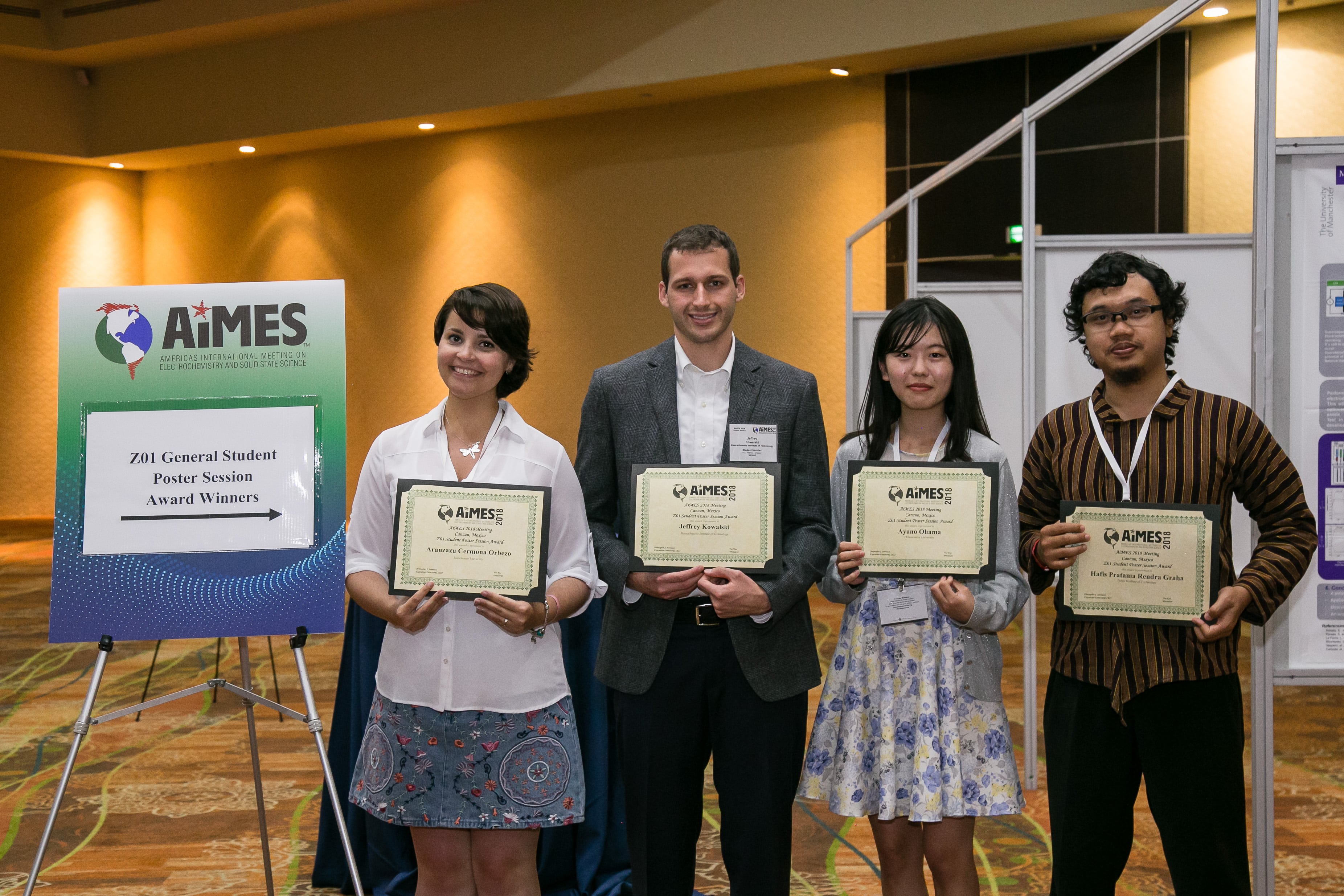
Talks with a twist! The student chapter is inviting two-minute “quick-fire” presentations with an accompanying poster, giving early career researchers a great way to introduce their work, inspire others, and encourage interest and collaborations. Prizes are lined up for the best presenters, generously supported by our sponsors that include the Royal Society of Chemistry, The Electrochemical Society, the Faraday Institution, Energy Futures Lab, Metrohm, and Alvatek. (more…)


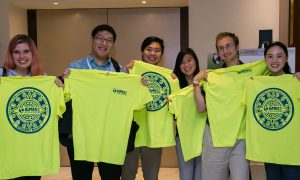
Samuel Castro Pardo, a PhD student at Rice University in Texas, says because of his travel grant, he was able to attend AiMES last week and discover a solution he was looking for. “I’ve been struggling with a project for a few months, and a speaker mentioned something during a talk, and I said, ‘Oh my gosh, I think I know why my experiment isn’t working.'” Pardo is already planning for future experiments with this newfound information.
Raisa Oliveira, a PhD student from the Instituto Superior Tecnico in Portugual, says she wouldn’t have been able to attend AiMES without her travel grant, as her supervisor doesn’t have the finances to support the trip. “It’s an amazing opportunity to be here,” said Oliveira. “I can be drinking coffee, look up, and say, ‘this is the person whose paper I read yesterday.’ I’m meeting my stars, my scientific stars.”
Matthias Künzel, a PhD student from the Karlsruhe Institute of Technology in Germany, says his travel grant allowed him to attend AiMES, which he finds particularly important due to its international reach. “I think people learn different in different countries,” says Künzel. “In Germany, we follow rules strictly. Talking to other people who have different views pushes you to approach things differently.”