

 We are pleased to spotlight a publication from the ECS Journal of Solid State Science and Technology (JSS):
“Low-Damage Atomic Layer Etching for Contact Resistance Reduction in Millimeter Wave AlGaN/GaN HEMTs on Si” (DOI: 10.1149/2162-8777/ae1ced) by Hsuan-Yao Huang et al. (2025) —available fully open access.
In this work, the authors address one of the key bottlenecks for high-frequency GaN electronics: ohmic contact resistance and accompanying device damage in high-electron-mobility transistors (HEMTs) built on Si substrates. Conventional etching methods for the ohmic-recess process often introduce plasma-induced damage, rough surfaces, and degraded channel performance.
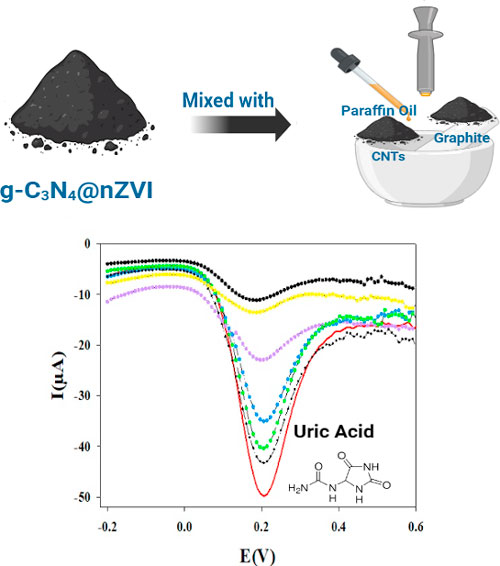
Click to enlarge
The work underscores the compatibility of high-performing AlGaN/GaN on Si (GaN-on-Si) for millimeter-wave/mm-wave systems, especially when the ohmic access and barrier etch are optimized with low damage techniques.
You can access the full article here (open access): https://iopscience.iop.org/article/10.1149/2162-8777/ae1ced
I encourage members of the ECS publications community, device-engineers, and materials-science researchers to review this article for its novel processing approach and strong performance gains. If you’re working on GaN device fabrication, ohmic contact optimization, or mm-wave HEMTs, give this article a read!