Tech Highlights was prepared by Colm Glynn and David McNulty of University College Cork, Ireland, David Enos of Sandia National Laboratories, Zenghe Liu of Verily Life Science, and Donald Pile of Rolled-Ribbon Battery Company. Each article highlighted here is available free online.
Performance of Three-Dimensional LiMn2O4/Carbon Composite Cathodes Prepared Via Sol-Gel Impregnation
With the ever advancing improvements in electronics and display technologies, it is crucial that Li-ion batteries are able to rise to the challenge of powering next generation consumer electronics. Consequently, the development of electrode materials for Li-ion batteries that are capable of delivering high capacities with stable capacity retention is of the utmost importance. Researchers from the University of Bremen have investigated the fabrication of 3D composite cathodes consisting of LiMn2O4 particles deposited directly onto an electrically conductive matrix of carbon fibres via sol-gel impregnation. The electrochemical performance of the composite cathodes was evaluated as a function of the number of sol impregnation steps. Through systematic galvanostatic cycling, the researchers determined that high capacity cathodes could be obtained from increased filling of the carbon matrix with the LMO sol. A cathode sample after four filling cycles demonstrated a discharge capacity of 132mAh g-1 after 50 cycles, corresponding to ~89% of the theoretical capacity of LiMn2O4.
Additionally, as a proof-of-concept, LMO cathodes were cycled against Lithium Titanate (LTO) anodes in a solid state battery (SSB) setup. The evaluation of these cells offers valuable insight for future SSB applications.
 The discovery of an electric arc can be tied to the use of an electrochemical energy source. Sir Humphry Davy described in 1800 an electric discharge using electrochemical cells1 that produced what we would call a spark, rather than an arc. However, in 1808, using an electrochemical battery containing 2000 plates of copper and zinc, he demonstrated an electric arc 8cm long. Davy is also credited with naming the phenomenon an arc (Fig. 1). An electric arc was also discovered independently in 1802 by Russian physicist Vasily Petrov, who also proposed various possible applications including arc welding. There was a long gap between the discovery of the electric arc and putting it to use.
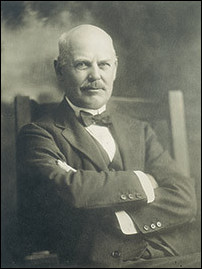
 In April 1902, upon the conclusion of the Society’s first meeting in Philadelphia, the Society’s first president wrote the column below, which was printed in the Society’s first publication, explaining the rationale to form the American Electrochemical Society.
 The advent of the Internet of Things suggests the potential for broad dissemination of information through a world of networked systems. An aspect of this paradigm is reflected in the concept of Smart Sensors Systems previously described in Interface: Complete self-contained sensor systems that include multi-parameter sensing, data logging, processing and analysis, self-contained power, and an ability to transmit or display information.
 Calling all ECS members! Has your section or student chapter achieved something momentous in recent months, or will it do so before mid-October? Tell us about it and you just might see your submission published. ECS wants to highlight YOUR news in the Winter 2016 edition of