

 Minhua Shao is an associate professor at the Hong Kong University of Science and Technology, where he leads a research group pursuing work in advanced material and electrochemical energy technologies. Shao’s current work focuses on electrocatalysis, fuel cells, lithium-ion batteries, lithium-air batteries, CO2 reduction, and water splitting. Shao was recently named an associate editor of the Journal of The Electrochemical Society in the area of fuel cells, electrolyzers, and energy conversion.
The Electrochemical Society: What do you hope to accomplish in your new role as associate editor of the Journal of The Electrochemical Society?
Minhua Shao: As an associate editor, I hope to accelerate the manuscript handling process by identifying suitable reviewers and making fair decisions. I also hope to promote the journal at conferences and among peers, attracting high-quality manuscripts.
ECS: How has scholarly publishing evolved throughout your career?
MS: Scholarly publishing has changed significantly in the past two decades. Now researchers have many more choices on which journals to publish their results. The adoption of the so-called impact factor in assessing the quality of journals/papers has misled the scientific community. More seriously, there is a trend that scholarly publishing is more of a business than a platform for sharing research results.
 The
The 
 The journal impact factors (JIFs) for 2016 have been released, and ECS is pleased to announce that the JIFs for the
  Brett Lucht is a professor of chemistry at the University of Rhode Island, where his research focuses on organic materials chemistry. Lucht’s research includes the development of novel electrolytes for lithium-ion batteries and other efforts to improve the performance of electrolytes for electric vehicles. Lucht has recently been named associate editor for the
  ECS believes that the key to sustainability is the ability to adapt. For over
  The
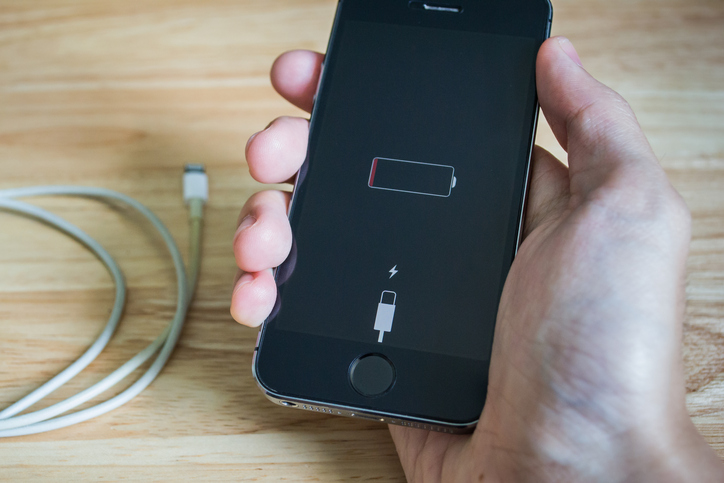
The  Like all things, batteries have a finite lifespan. As batteries get older and efficiency decreases, they enter what researchers call “capacity fade,” which occurs when the amount of charge your battery could once hold begins to decrease with repeated use.