

 In addition to the newly published enhanced issues of ECS Transactions (ECST), various ECS publications will be available for purchase on-site at the 232nd ECS Meeting in National Harbor.
Anniversary deals
In commemoration of ECS’s 115th anniversary, the Society will be offering two historically significant titles at highly discounted, limited-time prices:
- The Electrochemical Society 1902-2002: A Centennial History – $15.00
By F. A. Trumbore and D. R. Turner (2002), 204 pages, ISBN 1-56677-326-1
In this centennial history book, Trumbore and Turner chronicle 100 years of ECS, beginning with the Society’s formation in 1902 and tracing its achievements through the scientific landscape of the twentieth century. The work is a record and a celebration. It documents ECS’s evolution into the global steward of electrochemical and solid state science and technology it is today, while honoring the individuals and efforts which contributed the Society’s enduring success and longevity. The book also includes historical information about the Society’s operations, publications, membership, and awards.
 Nine new issues of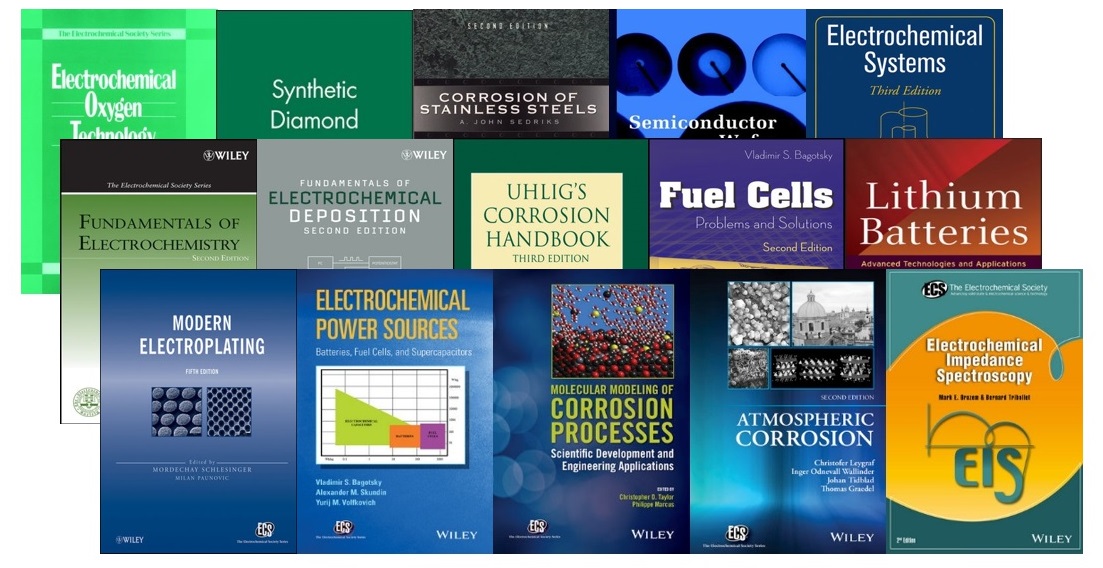

 With
With  The third annual
  The
The 
 Tech Highlights was prepared by David Enos, Mara Schindelholz, and Mike Kelly of Sandia National Laboratories, Colm Glynn and David McNulty of University College Cork, Ireland, and Donald Pile of Rolled-Ribbon Battery Company. This article was originally published in