Why Go to Glasgow?

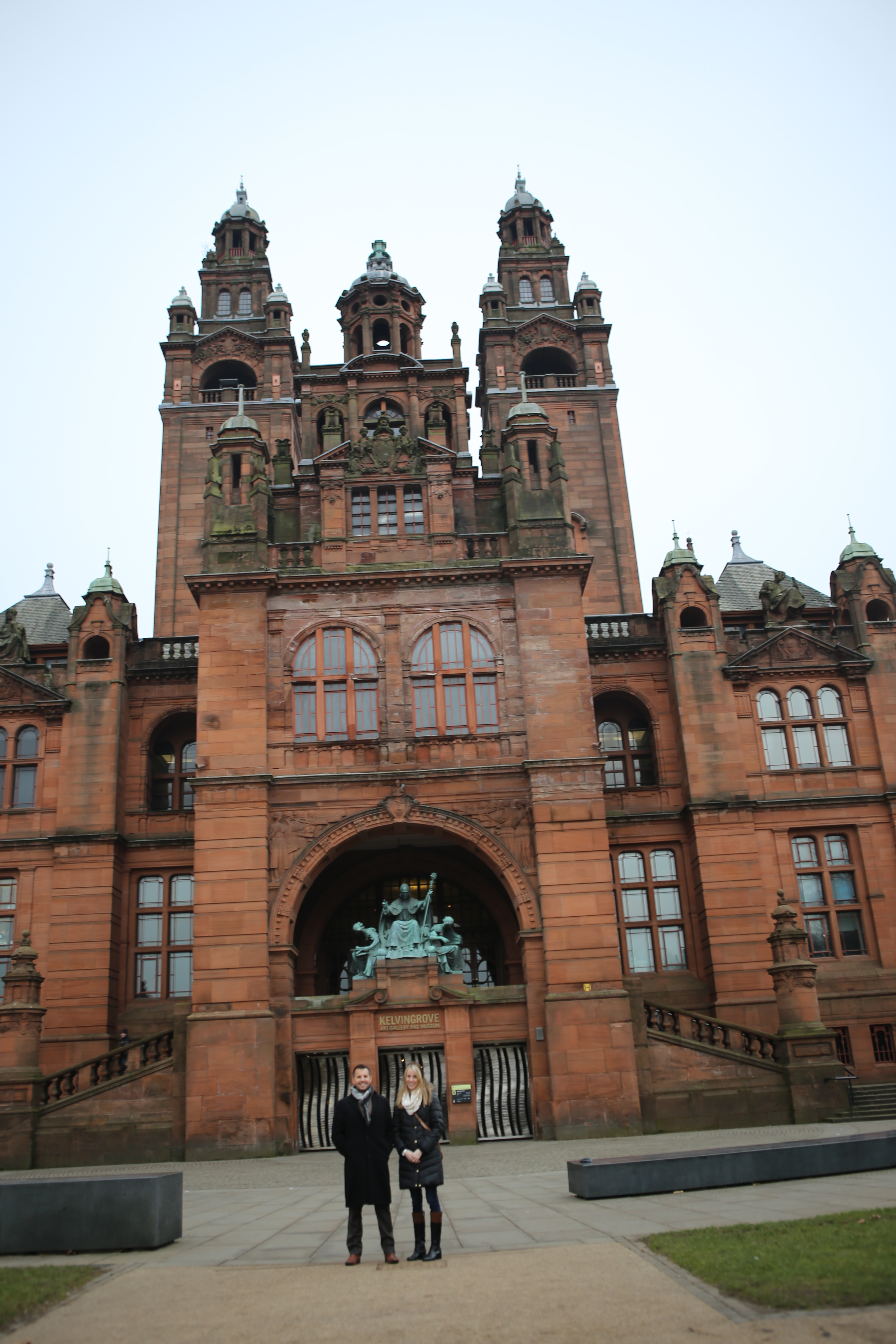
Dan Fatton, Director of Development and Membership Services and Christie Knef, ECS Director of Meetings outside Kelvingrove Museum.

Dan Fatton, Director of Development and Membership Services and Christie Knef, ECS Director of Meetings outside Kelvingrove Museum.

Last weekend, I had the great opportunity to visit Glasgow, Scotland in the United Kingdom. Christie Knef, ECS Director of Meetings, and I were scoping out the location for our upcoming conference, the ECS Conference on Electrochemical Energy Conversion & Storage with SOFC-XIV.

The city is really beautiful, but also very compact and walkable. I’m excited that the conference location is extremely accessible, adjacent to the Exhibition Centre station. Even more exciting to me, there is a city bike system and in July, our delegates will be able to bike to the Scottish Exhibition and Conference Centre easily; there is a nice bike path along the River Clyde leading directly to the venue from a multitude of hotels, many of which will be offering discounted room rates for delegates. There are several other noteworthy attractions, including the Glasgow Science Centre, Kelvingrove Art Gallery and Museum, University of Strathclyde and University of Glasgow, as well as the exciting Center City of Glasgow. Here’s a less than 90 second video tour of the sites and people that make Glasgow.

Not only is Glasgow easy to get around, but it’s very simple to travel to Edinburgh by train. Of note, the 2015 British Open will be held the week before our conference, and the United Kingdom’s largest art festival will begin July 30. Even if attendees cannot extend their stay, it’s less than 45 minutes on ScotRail to visit another great city for one evening; be sure to check out the historic fortress, Edinburgh Castle, and Scotland’s first university, University of St. Andrews.

The deadline for abstracts is quickly approaching later this week – Friday, February 20! I encourage anyone considering attending the conference to submit your abstract now.

And don’t forget, there are still exhibit spaces left with plenty of opportunities for sponsorship.
The Solar Breakthrough

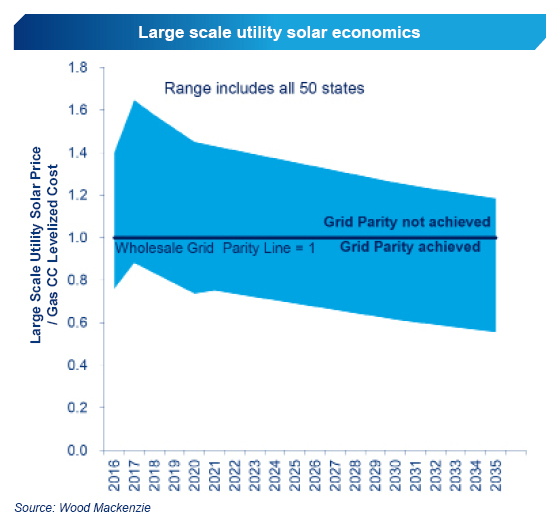
wood_mackenzieCountries around the world have been embracing solar energy with open arms – just take a look at Germany or Switzerland. In the United States, however, solar energy has made its way into the mainstream, but has not gone as far as many environmentalists would like. With the advances in drilling technology in the U.S., one is left to wonder what the next big breakthrough in the nation’s energy supply will be.

The Wood Mackenzie consultant agency out of Scotland believes the next big thing in energy in the U.S. will be solar, and they’ve got some pretty solid reasons.

(more…)

Making Solar Wallpaper

Design freedom improves the range of applications of the panels on the surfaces of interior and exterior building spaces.Image: Antti Veijola

Design freedom improves the range of applications of the panels on the surfaces of interior and exterior building spaces.
Image: Antti Veijola

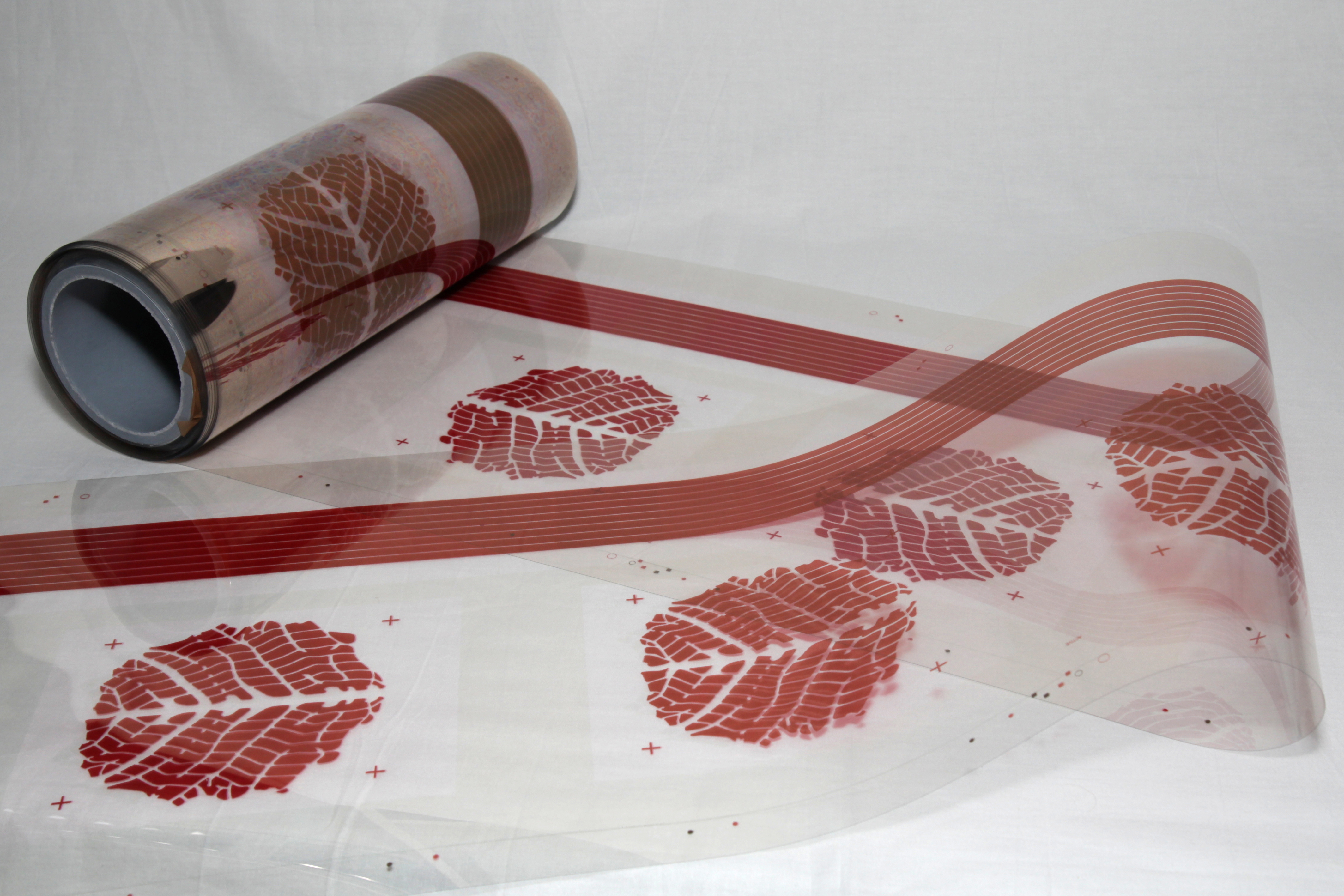
We’ve been talking about climate change and green energy for a while now, so of course we think solar panels should exist wherever light is. Now, that could mean using solar wallpaper to harvest as much energy as possible.

VTT Technical Research Centre of Finland has developed and utilized a mass production method based on printing technologies that will allow the manufacturing of decorative, organic solar panels for use on the surfaces of interior and exterior building spaces.

The new organic photovoltaic panels are only 0.2 mm thick each and include the electrodes and polymer layers where the light is collected.

(more…)

An Ever-Present Light (Bulb)

Centinnial Light Bulb

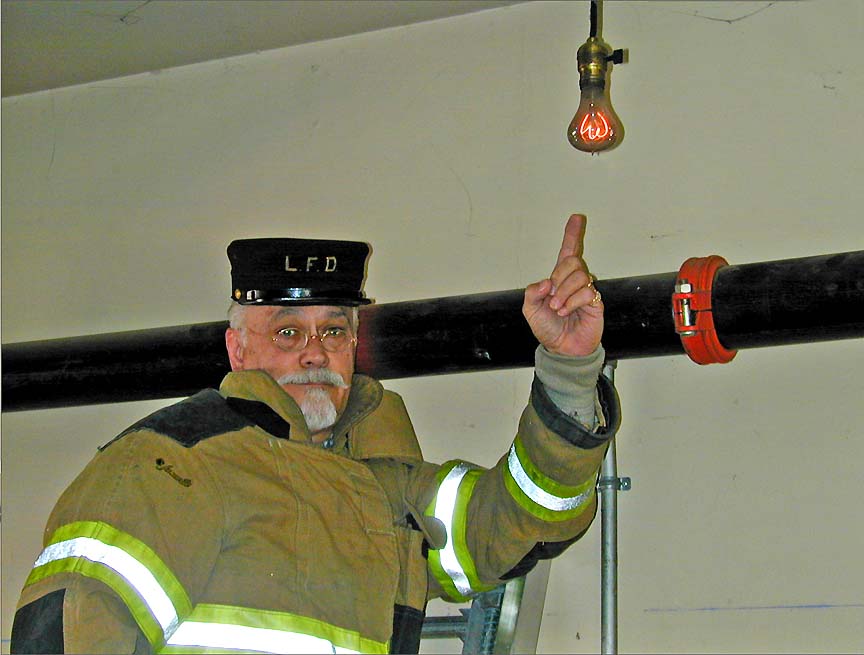
Lynn Owens, former chairman of the Centennial Light Bulb

Since 1901, just a year before The Electrochemical Society was founded, a light bulb was installed to bring light into a firehouse in Livermore, California. Back then, if a call came in for the firemen at night, they would have to dress, assemble their gear, and organize the hand water-trucks (no motorized firetrucks yet) in the dark. By adding what we now consider the simple light bulb, a fire station was much more readily able to handle emergencies. And that light bulb, now more than 113 years old, is still burning today.

This incandescent light bulb, invented by Adolphe A. Chaillet, was produced by the Shelby Electric Company. Originally giving off a glowing 60 watts, it now burns steadily at 4 watts. It has been moved several times, most recently in 1976, as the Livermore-Pleasanton Fire Department has changed locations.

“According to a website dedicated to the bulb, Debora Katz, a physicist at the US Naval Academy in Annapolis, Md., has conducted extensive research into the Livermore light bulb’s physical properties, using a vintage light bulb from Shelby Electric Co. that is a near replica of the Livermore light.

“The Livermore light bulb differs from a contemporary incandescent bulb in two ways,” says Katz. “First its filament is about eight times thicker than a contemporary bulb. Second, the filament is a semiconductor, most likely made of carbon.”

Watch the live webcam here to see the longest-burning light bulb in the world.

Listen to the 99% Invisible podcast for an in-depth look at the bulb.

Learn more about light bulbs in the ECS Digital Library.

Member Spotlight – Yossef Elabd

Dr. Yossef Elabd, professor in the Artie McFerrin Department of Chemical Engineering at Texas A&M University, has developed two fuel cell vehicle platforms for both present day enhancements and future innovation.Image: Texas A&M University

Dr. Yossef Elabd, professor in the Artie McFerrin Department of Chemical Engineering at Texas A&M University, has developed two fuel cell vehicle platforms for both present day enhancements and future innovation.
Image: Texas A&M University

The Electrochemical Society’s Yossef A. Elabd is using electrochemical science to work toward global sustainability with his new advancements in fuel cell car technology.

Elabd, an active member of ECS’s Battery Division, has developed two fuel cell vehicle platforms for both present day enhancements and future innovation – focusing not only on the science, but also the environment.

“I just want to drive my car with water vapor coming out the back of it,” Elabd said.

With this new technology and initiatives such as the ECS Toyota Young Investigator Fellowship, Elabd’s statement may become an achievable reality for many people in the near future.

The idea of the fuel cell vehicle is every environmentalist’s dream, but the current issues deal with the sustainability of the vehicle. The current fuel cell car uses a proton exchange membrane (PEM) electrolyte for its platinum-based electrodes.

(more…)

Deep-Fried Graphene for Energy Storage

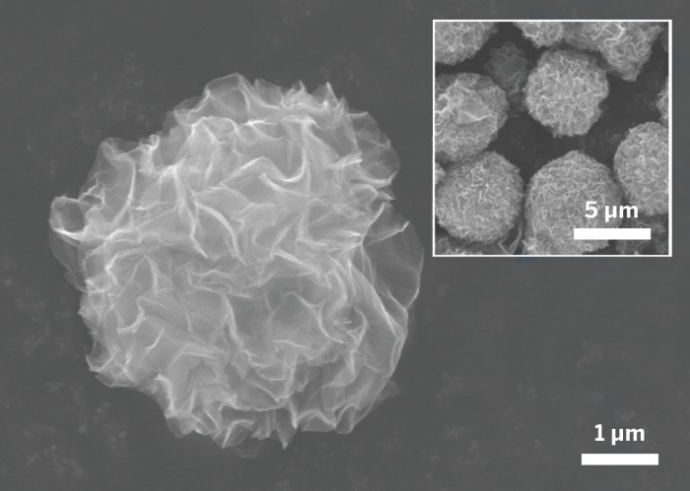
The 5-µm-diameter graphene balls in these scanning electron microscope images contain graphene nanosheets radiating outward from the center.Credit: Chem. Mater.

The 5-µm-diameter graphene balls in these scanning electron microscope images contain graphene nanosheets radiating outward from the center.
Credit: Chem. Mater.

Materials scientists have developed a new technique that could provide a simpler and more effective way to produce electrode materials for batteries and supercapacitors, which could potentially lead to devices with improved energy and power densities.

The researchers have unlocked this new battery technology by exposing tiny bits of graphene to a process that is very similar to deep-frying.

Prior to this development, scientists had difficulty using graphene in electrodes due to the difficulty encountered when processing the material. However, the researchers out of Yonsei University have learned how to harness the material’s electrical and mechanical properties while retaining its high surface are by using an alternative technique.

(more…)

Meet the Glasgow Organizers

Glasgow_blog_imageThe ECS Conference on Electrochemical Energy Conversion & Storage with SOFC-XIV convening in Glasgow, Scotland at the Scottish Exhibition and Conference Centre from July 26-31, 2015 is the first of a series of planned biennial conferences in Europe by ECS on electrochemical energy conversion/storage materials, concepts, and systems.

We are creating a forum where scientists and engineers can come together and discuss fundamental advances and engineering innovations.

Abstracts are due February 20, 2015
Find out more about submitting your abstract today!

The lead organizers of this conference are among the top researchers in their respective fields. We wanted to take a moment to introduce them to you:

(more…)

open_access“Comprehensive scientific assessments of our current and potential future climates clearly indicate that climate change is real, largely attributable to emissions from human activities, and potentially a very serious problem.” This is pulled from a public policy statement originally written in 2004 by the American Chemical Society.

Eighteen scientific societies signed on to a similar American Association for the Advancement of Science statement affirming the consensus scientific view on climate change in 2009. According to the California Governor’s Office of Planning and Research, at least 200 worldwide scientific organizations now formally hold the position that climate change has been caused by human action.

The International Panel on Climate Change (IPCC) was set up in 1988 to assess global warming and its impacts. Recently, the panel released a major report, capping its latest assessment, a mega-review of 30,000 climate change studies that establishes with 95-percent certainty that nearly all warming seen since the 1950s is due to human activity. More than 700 of the world’s top climate scientists and 1,729 expert reviewers from more than 70 countries participated in the report process.

(more…)

Safer, Thinner Lithium Rechargeables

New technology developed by researchers at the University of Michigan has been designed with the intention of preventing fires caused by lithium-ion battery malfunctions.

Researchers are making this possible by creating an advanced barrier between the electrodes in the lithium-ion battery. The barrier is made with nanofibers extracted from Kevlar – the material known for its use in bulletproof vests. The Kevlar nanofibers stifle the growth of metal tendrils that can become unwanted pathways for electrical current.

“Unlike other ultra strong material such as carbon nanotubes, Kevlar is an insulator,” said Nicholas Kotov, the Joseph B. and Florence V. Cejka Professor of Engineering. “This property is perfect for separators that need to prevent shorting between two electrodes.”

Short-circuiting happens in these batteries when holes in the membranes are too big and dendrites poke through to the membrane. They create a path for electrons within the battery, shorting it out.

(more…)

In the scientific race to build fantastical devices such as invisibility cloaks, University of Arizona engineering professor Hao Xin is at the forefront.

His new discovery uses metamaterials – artificial materials engineered to bend electromagnetic, acoustic and other types of waves in ways not possible in nature – to take us one step closer to building microscopes with superlenses that see molecular-level details, therefore bringing us closer to the reality of building shields that could conceal military airplanes and people.

By using a 3-D printer to make metamaterials, Xin is able to configure objects in precise geometrical patterns to bend waves of energy in unnatural ways. Doing this allows researchers to tap into a property call negative refraction, meaning they can bend waves backwards.

In the future, someone wearing a cloak that has been manufactured with these artificially designed refraction properties would appear invisible.

(more…)

ECS
Privacy Overview

This website uses cookies so that we can provide you with the best user experience possible. Cookie information is stored in your browser and performs functions such as recognising you when you return to our website and helping our team to understand which sections of the website you find most interesting and useful.