
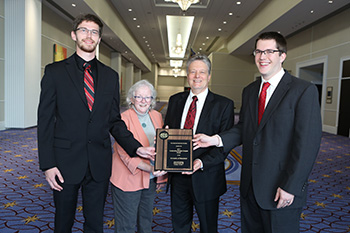
The University of Maryland was the 2017 Outstanding Student Chapter Award winner. Learn more about their chapter activities.
The ECS Outstanding Student Chapter Award was established in 2012 to recognize distinguished student chapters that demonstrate active participation in The Electrochemical Society’s technical activities, establish community and outreach activities in the areas of electrochemical and solid state science and engineering education, and create and maintain a robust membership base.
Click here for complete rules and nomination requirements. Nominations are being accepted for the 2018 award, which will be presented at the AiMES 2018 meeting in Cancun, Mexico from September 30 – October 4, 2018.
The recipient of the Outstanding Student Chapter Award receives a recognition plaque, $1,000 USD in additional student chapter funding, and additional recognition throughout the Society in Interface, the ECS blog, etc.
 The world is full of connected devices – and more are coming. In 2017, there were an
 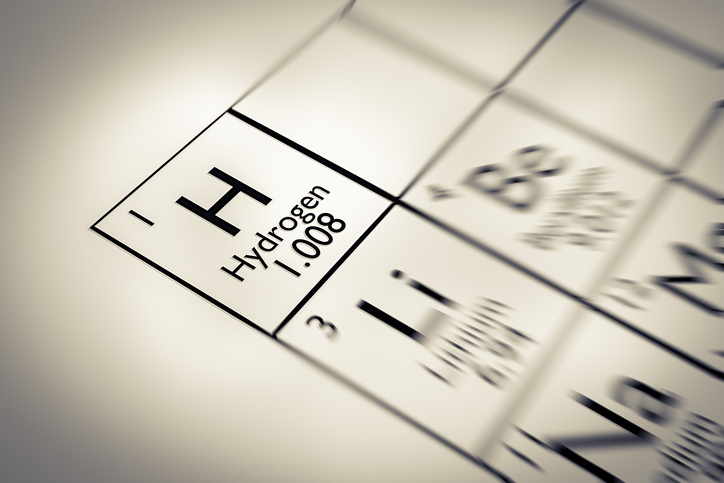 Researchers at KTH have successfully tested a new material that can be used for cheap and large-scale production of hydrogen – a promising alternative to fossil fuel.
 Lenses are no longer necessary for some microscopes, according to the engineers developing FlatScope, a thin fluorescent microscope whose abilities promise to surpass those of old-school devices.
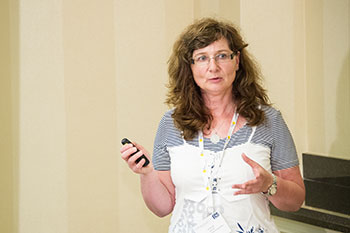 Topic Close-up #9
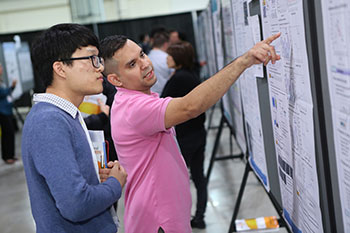 Join us as ECS comes to the Seattle Sheraton and Washington State Convention Center in Seattle, WA! Our strong
  Why do synthetic 2D materials often perform orders of magnitude worse than predicted? A new understanding of this scenario could improve the materials’ performance in future electronics, photonics, and memory storage.
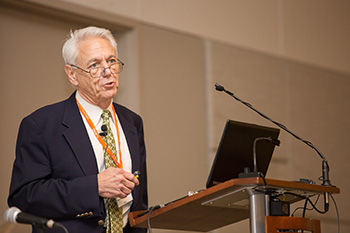 Topic Close-up #8
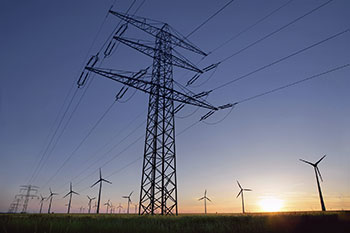 In order to power entire communities with clean energy, such as solar and wind power, a reliable backup storage system is needed to provide energy when the sun isn’t shining and the wind doesn’t blow.