
 Brett Lucht is a professor of chemistry at the University of Rhode Island, where his research focuses on organic materials chemistry. Lucht’s research includes the development of novel electrolytes for lithium-ion batteries and other efforts to improve the performance of electrolytes for electric vehicles. Lucht has recently been named associate editor for the Journal of The Electrochemical Society.
The Electrochemical Society: What do you hope to accomplish in your new role as associate editor?
Brett Lucht: I hope to improve the prestige of the journal. While the Journal of The Electrochemical Society is the oldest journal of electrochemical science, competition from other journals has become fierce. The Electrochemical Society is the largest scientific organization focused on electrochemistry and ECS meetings are very well attended. Thus publishing electrochemical research in the Journal of The Electrochemical Society should be the most prestigious place to publish.
ECS: Why should authors publish in ECS journals?
BL: The Journal of The Electrochemical Society has been in continuous production since 1902—115 years. While many new journals come and go, they are frequently focused on narrow topics which fluctuate in importance. Publications in the Journal of The Electrochemical Society will last the test of time. In my area of research, lithium-ion batteries, many new journals are publishing research in this area. However, many of the fundamental research articles providing the foundation for this field were published in the Journal of The Electrochemical Society.
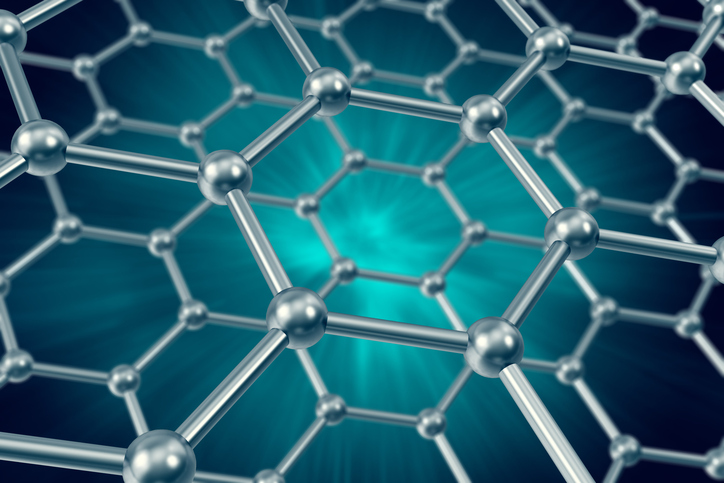 Scientists have found a way to make carbon both
  The global development of industry, technology, and the transportation sector has resulted in massive consumption of fossil fuels. As these fuels are burned, emissions are released—namely carbon dioxide. According to the U.S. Environmental Protection Agency, combustion of petroleum-based products resulted in
 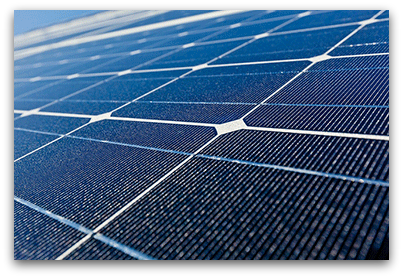 Researchers have created a concentrating photovoltaic (CPV) system with embedded microtracking that is capable of producing 50 percent more energy per day than the standard silicon solar cells.
 ECS believes that the key to sustainability is the ability to adapt. For over
  Lithium-ion batteries power a vast majority of the world’s portable electronics, from smartphones to laptops. A standard lithium-ion batteries utilizes a liquid as the electrolyte between two electrodes. However, the liquid electrolyte has the potential to lead to
  A new issue of ECS Transactions (ECST) has just been published. This issue incorporates 333 papers from the upcoming 15th International Symposium on Solid Oxide Fuel Cells (SOFC-XV). This conference will be held in Hollywood, Florida, USA, July 23-28, 2017.
 ECS is proud to announce its partnership with the Initiative for Open Citations (I4OC). By joining forces with I4OC, ECS has opened up citation data, further expanding accessibility to scientific knowledge by releasing into the public domain reference data published in