
Who’s Talking Energy Conversion & Storage?

E2S-speakersThere are just eight days left to submit your abstracts for the 229th ECS Meeting! Make sure to submit by December 11, 2015.

Submit today!

Topic Close-up #5
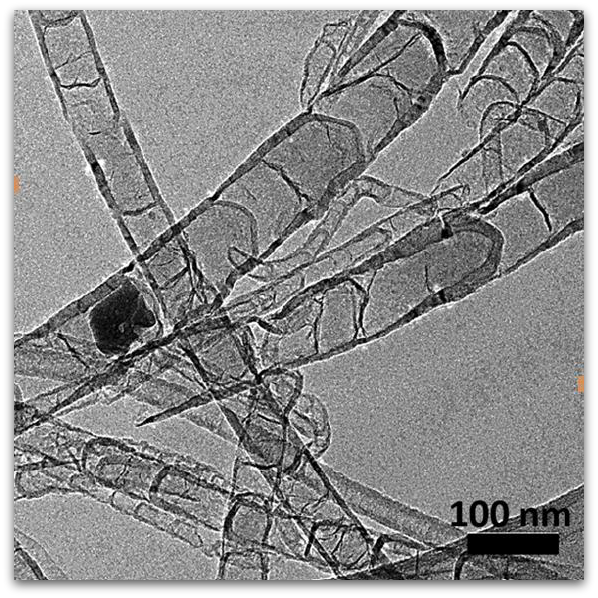
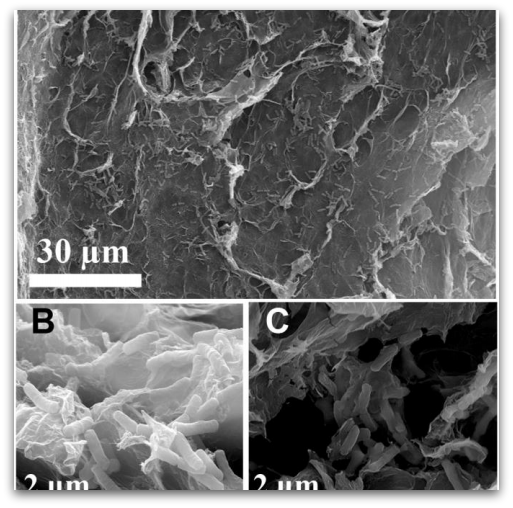
SYMPOSIUM I05: Heterogeneous Functional Materials for Energy Conversion and Storage.

FOCUSED ON the science that controls emergent properties in heterogeneous functional materials as a foundation for design of functional material devices with performance not bounded by constituent properties.

PROVIDING a unique venue for both contributed and invited speakers to present the latest advances in novel modeling approaches, advanced 3-D imaging and characterization techniques, novel material synthesis and manufacturing methods to create highly ordered material structure, and applications of heterogeneous functional materials in devices for energy conversion and storage. This symposium especially encourages and welcomes contributed presentations.
(more…)

Reducing Carbons, Producing Fuels

The effort to harvest atmospheric carbons and transform the greenhouse gases into renewable fuels has taken one step closer to practicality due to new research out of Monash University.

Through the novel combination of cheap materials to develop an energy efficient catalyst, the researchers believe they could electrochemically reduce carbon dioxide into syngas. This produced syngas would be comprised of a combination of carbon monoxide and hydrogen—the elements widely used as the starting point to produce sustainable fuels and materials.

“Our research found that a combination of cheap materials—Molybdenum Sulphide catalytic nano-particles with a conductive layer of graphene and a well-known polymer called polyethylenimine acted together to create this energy efficient catalyst. Each component in the catalyst played a specific role in the reaction and it was only when the three were combined that the energy efficiency of the process was realized,” said Jie Zhang, lead author of the study.

(more…)

Exploring Aging in Lithium Ion Batteries

Researchers combine electrochemical investigations with measurement methodologies to develop a new theory to the aging process of lithium ion batteries.Image: Claudia Niranen/TUM

Researchers combine electrochemical investigations with measurement methodologies to develop a new theory to the aging process of lithium ion batteries.
Image: Claudia Niranen/TUM

Lithium ion batteries affect everything from small electrical devices to airplanes, yet the battery’s aging process creates limitations to storage capacity. While researchers have not yet been able to determine what causes aging in lithium ion batteries, a research team has made new developments to offer more insight to this downfall and potentially create more youthful batteries.

The study, recently published in the Journal of The Electrochemical Society (JES), describes newly discovered factors that speed up the aging process in lithium ion batteries. This research is especially important in light of efforts in renewable energy, where this energy storage technology could be interwoven with the grid to help bolster efforts in wind and solar.

This from a press release:

The research group determined two key mechanisms for the loss of capacity during operation: The active lithium in the cell is slowly used up in various side reactions and is thus no longer available. The process is very temperature dependent: At 25 °C the effect is relatively weak but becomes quite strong at 60 °C. When charging and discharging cells with a higher upper cut off potential (4.6 V), cell resistance increases rapidly. The transition metals deposited on the anode may increase the conductivity of the pacifying layer and thereby speed up the decomposition of the electrolyte.

(more…)

Converting Wastewater to Electricity

The new anode can transfer electrolytes from bacteria in wastewater to a microbial fuel cell.Image: Science Advances

The new anode can transfer electrolytes from bacteria in wastewater to a microbial fuel cell.
Image: Science Advances

With 783 million people world-wide lacking access to clean drinking water and more than 35 percent of the world’s population without access to improved sanitation facilities, researchers are pursuing new ways to clean wastewater that is both effective and energy efficient.

An interdisciplinary team from multiple institutions in China has developed a new freestanding anode that can take harmful electrolytes form bacteria in wastewater and transfer them to a microbial fuel cell. This new process opens the door to effectively cleaning wastewater while converting waste to electricity.

The treatment of wastewater is an essential, yet energy intensive, process. While scientists have been exploring new ways to treat wastewater, none of the option has been very energy efficient.

Many current wastewater treatment plants function through fermentation and the burning of methane. The research team from China opts for an alternative method, where they create sewage-based fuel cells that pull the bacterial electrolytes and create electricity.

(more…)

The fifth international Electrochemical Energy Summit recently took place during the 228th ECS Meeting. From environmental damage to economic implications to political involvement, the summit served as a forum for the top researchers in energy technology to discuss the most pressing issues in renewable energy and inspire technological solutions.

During the summit, we gathered some key speakers from energy research institutions across the U.S. to talk about challenges in energy storage, roadblocks for implementing renewables, and the role government plays in changing the energy infrastructure.

The podcast is moderated by ECS vice president Krishnan Rajeshwar, with guests David Wesolowski, The Fluid Interface Reactions, Structures and Transport (FIRST) Energy Frontier Research Center; M. Stanley Whittingham, NorthEast Center for Chemical Energy Storage (NECCES); Gary Rubloff, Nanostructures for Electrical Energy Storage (NEES) Energy Frontier Research Center; and Paul Fenter, Center for Electrochemical Energy Science (CEES).

Listen and download this episode and others for free through the iTunes Store, SoundCloud, or our RSS Feed. You can also find us on Stitcher.

Hydrogen Meets Lithium Ion Batteries

When it comes to energy storage, hydrogen is becoming more and more promising. From hydrogen fuel cell vehicles to the “artificial leaf” to the transformation of waste heat into hydrogen, researchers are looking to hydrogen for answers to the growing demand for energy storage.

At the Lawrence Livermore National Laboratory (LLNL), researchers are using hydrogen to make lithium ion batteries operate longer and have faster transport rates.

In a response to the need for higher performance batteries, the researchers began by looking for a way to achieve better capacity, voltage, and energy density. Those qualities are primarily determined by the binding between lithium ions and electrode material. Small changes to the structure and chemistry of the electrode can mean big things for the qualities of the lithium ion battery.

The research team from LLNL discovered that by subtly changing the electrode, treating it with hydrogen, lithium ion batteries could have higher capacities and faster transport levels.

“These findings provide qualitative insights in helping the design of graphene-based materials for high-power electrodes,” said Morris Wang, an LLNL materials scientist and co-author of the paper.

(more…)

Some people strive to continue family tradition, while others prefer to cut their own path. Patrick Linford, grandson of prestigious electrochemist Henry Linford, happens to be stepping into his grandfather’s shoes merely by coincidence.

“If you’d rewind my life to last year, I had no idea what electrochemistry actually was,” says Linford.

Linford, current graduate student at the Massachusetts Institute of Technology (MIT) and U.S. Army Officer, was always fascinated by science and the technical side of things. Despite Linford’s grandfather dying a few years before his birth, their academic and career paths have many similarities.

More Sustainable Energy

Currently, Linford is conducting research in alternative energy—specifically, thermogalvanic batteries to power wireless sensors using waste heat.

“This work has tremendous applications in both the military realm and on the civilian side,” says Linford.

(more…)

Making Green Fuels from Carbon Dioxide

The new, inexpensive catalyst could lead to the transformation of CO2 into green fuel.Angewandte Chemie.

The new, inexpensive catalyst could lead to the transformation of CO2 into green fuel.
Image: Angewandte Chemie

On a global scale, carbon dioxide (CO2) is the number one contributor to dangerous greenhouse gas emissions. Increasing levels of CO2 accelerate the devastating effects of climate change, such as rising sea levels and a higher global temperature. In order to reduce these emissions, researchers are tackling projects from the implementation of a clean energy infrastructure to scrubbing CO2 from the atmosphere. The researchers from the University of South Carolina are exploring even another innovative way to reduce CO2 emissions by turning the harmful byproduct into fuel.

The team, led by ECS member Xiao-Dong Zhou, is looking for a way to harness CO2 emissions that already exist in the environment and use green technologies to inject energy and produce fuel.

Making Green Fuels

While 100 percent renewable energy may be the ultimate answer for the energy infrastructure, it is difficult for industrialized countries that heavily depend on traditional combustion technologies to make that transition so rapidly. The implementation of wind and solar technologies on the large scale also raises question to grid efficiency, reliability, and storage.

One solution to this issue is by using technologies such as solar and wind to turn harmful CO2 emissions into clean, usable fuels.

(more…)

How Heat Becomes Hydrogen

More than half energy produced annually—whether it’s heat, gas, biomass, or methane—is wasted. Harvesting the wasted  heat energy could reduce carbon dioxide emissions by 17 percent. Researchers from the Department of Civil and Environmental Engineering at Penn State are looking for new, environmentally friendly ways to harvest and recycle this wasted energy in an effort to create hydrogen gas.

“Existing methods are already very effective at making hydrogen gas,” says Bruce Logan, Evan Pugh Professor of Environmental Engineering. “The problem is that these methods consume fossil fuels in order to generate enough energy to create the hydrogen gas.”

By producing hydrogen gas via waste heat, the researchers eliminate the need for fossil fuels in production.

“Since the new system runs on waste heat, it is effectively carbon neutral and fossil fuel neutral,” says Logan.

(more…)

Harmful Algal for Energy Storage

While we typically work to preserve the environment, there are some aspects that cause more harm than good. Harmful algal blooms (HABs) are one of these environmentally hazardous parts of nature, severely impacting human health, the ecosystem, and the economy.

While HABs put countless people at risk though polluted drinking water, researchers are now attempting to create some good from this negative. Through heating the algal at a very high temperature in argon gas, HABs can be converted into a material known as hard carbon. Typically made from petroleum, hard carbon also has development potential through biomass. Due to the material’s qualities and capabilities, hard carbons have the potential to be used as high-capacity, low-cost electrodes for sodium-ion batteries.

“Harmful algal blooms, caused by cyanobacteria (or so called ‘blue-green algae’), severely threaten humans, livestock, and wildlife, leading to illness and sometimes even death,” says Da Deng, co-author of the recent study. “The Toledo water crisis in 2014 caused by HABs in Lake Erie is a vivid example of their powerful and destructive impact. The existing technologies to mitigate HABs are considered a ‘passive’ technology and have certain limitations. It would significantly and broadly impact our society and environment if alternative technologies could be developed to convert the HABs into functional high-value products.”

(more…)

ECS
Privacy Overview

This website uses cookies so that we can provide you with the best user experience possible. Cookie information is stored in your browser and performs functions such as recognising you when you return to our website and helping our team to understand which sections of the website you find most interesting and useful.