Christian Amatore has given a new direction to electrochemistry and has had a pioneering role in the development of ultramicroelectrodes worldwide. He is currently the Director of Research at CNRS and will be giving the ECS Lecture at the 229th ECS Meeting in San Diego, CA, May 29-June 2, 2016. His talk is titled, “Seeing, Measuring and Understanding Vesicular Exocytosis of Neurotransmitters.”
Listen to the podcast and download this episode and others for free through the iTunes Store, SoundCloud, or our RSS Feed. You can also find us on Stitcher.
ECS has announced its schedule and locations for biannual meetings, PRiME, and SOFC-XV through 2020. First on the list is the 229th ECS Meeting in San Diego, which will be the third meeting that ECS has held in the city in motion. In 2017, we’ll be making our fourth trip to New Orleans for the 231st ECS Meeting. Check out the rest of the meeting dates and locations below.
What are short courses? Taught by academic and industry experts in intimate learning settings, short courses offer students and professionals alike the opportunity to greatly expand their knowledge and technical expertise.
Short Course #2: Fundamentals of Electrochemistry: Basic Theory and Thermodynamic Methods
Jamie Noël, Instructor
This course covers the basic theory and application of electrochemical science. It is targeted toward people with a physical sciences or engineering background who have not been trained as electrochemists, but who want to add electrochemical methods to their repertoire of research approaches. There are many fields in which researchers originally approach their work from another discipline but then discover that it would be advantageous to understand and use some electrochemical methods to complement the work that they are doing. The course begins with a general, basic foundation of electrochemistry and uses it to develop the theory and experimental approaches to electrochemical problems of a thermodynamic nature. It complements a sister course, “Fundamentals of Electrochemistry: Basic Theory and Kinetic Methods”, offered alternately by the same instructor. The two courses have different emphasis, and each is designed to be a stand-alone introduction to electrochemical fundamentals. If both courses are desired, they can be taken in either order.
FOCUSED ON The symposium is focused on recent developments in nanostructured semiconductors, metals and nanocomposite systems. A more detailed understanding of etching and growth mechanisms, and the physical and chemical properties of all types of porous structures is emphasized. It integrates diverse research in different fields such as localized metal corrosion, semiconductor electrochemistry, deposition into pores, matrix materials and optical spectroscopy in order to develop a highly transdisciplinary approach to the topic. Emphasis will be on pit and pore formation, porous-structure/surface-property relations, work relevant to the formation of advanced materials and their characterization, and applications of these materials in different areas of science. The symposium brings together scientists from various research fields such as materials science, electrochemistry, physics, chemistry, engineering and biology.
NOTING THAT an issue of ECS Transactions is planned to be published “before” the meeting.
Manuscript submission deadline: July 01, 2016
INVITED SPEAKERS: Takashi Yanagishita, Metropolitan University Tokyo, Japan; Shinji Yae, University of Hyogo, Kobe, Japan; Hiroki Habazaki, Hokkaido University, Sapporo, Japan; Kurt Hebert, Iowa State University, USA; Robert Kelly, University of Virginia, USA; Julien Bachmann, Friedrich-Alexander-University Erlangen, Germany; Kurt Kolasinski, West Chester University, USA; Bernard Gelloz, Nagoya University, Japan; Ester Segal, Technion – Isreal Institute of Technology, Haifa, Isreal; Kazuhiro Fukami, Kyoto University, Japan. Learn about all the topics!
Deadline for Submitting Abstracts
April 15, 2016 Submit today!
Matteo Bianchini during the Battery Division Student Research Award session at the 228th ECS Meeting.
Topic Close-up #2
SYMPOSIUM M01: Chemical Sensors 12. Chemical and Biological Sensors and Analytical Systems.
FOCUSED ON broad discussions of research and development in the field of chemical/bio sensors and analytical systems, with the goal of presenting the broadest possible coverage of modern chemical sensing methods, highlighting the current state of the art in basic and applied sensor R&D.
FEATURING several international invited speakers and numerous contributed presentations and posters on the broad topic of chemical/bio sensors.
STUDENT POSTER COMPETITION will be held during the symposium. A limited number of student travel grants are also available Refer to the PRiME 2016 Call for Papers for details.
SYMPOSIUM A06: Failure Mode and Mechanism Analyses
FOCUSED ON the studies of fundamental aspects of battery degradations, including experimental characterizations, in situ or ex situ; analytical techniques, modeling and simulations, and hypotheses that propose mechanisms that can explain various degradation and failure behaviors in battery systems under normal operating conditions as well as abuse scenarios; battery management systems that monitor, detect, analyze, and control effects associated with battery degradation to allow reliable and safety operation of batteries.
NOTING THAT this symposium is designed to provide a dissemination forum on various topics related to battery failure mode and mechanism studies, including those related to battery degradation (both catastrophic and non-catastrophic) phenomena investigations, life prediction, diagnostics and prognostics, and modeling that deals with these phenomena. Learn about all the topics!
What are short courses? Taught by academic and industry experts in intimate learning settings, short courses offer students and professionals alike the opportunity to greatly expand their knowledge and technical expertise.
Short Course #1: Basic Corrosion for Electrochemists
Luis F. Garfias-Mesias, Instructor
This course covers the basics of corrosion science and corrosion engineering. It is targeted toward people with a physical sciences or engineering background who have not been trained as corrosionists, but who want to understand the basic concepts of corrosion, learn to select the appropriate materials an know which will be the typical techniques and methodologies to test and qualify materials (resistant to corrosion).
The course will begin with a general, basic foundation of electrochemistry and corrosion. It will cover the typical engineering materials (metals, non-metals, composites, etc.) and their interaction with their environment (temperature, pressure, gasses, liquids, etc.) and the common methodologies to prevent and control their degradation (material selection, adding inhibitors, applying a protective coating, using cathodic or anodic protection, etc.). Basic knowledge of corrosion monitoring and inspection as well as field and laboratory testing will be covered.
Don’t miss out on one of the most popular and rewarding events of the 229th ECS Meeting—the Student Mixer!
Sponsored by Bio-Logic, the Student Mixer will be held in Sapphire Ballroom D of the Hilton in San Diego from 6:30 p.m. to 8:30 p.m. on May 30, 2016.
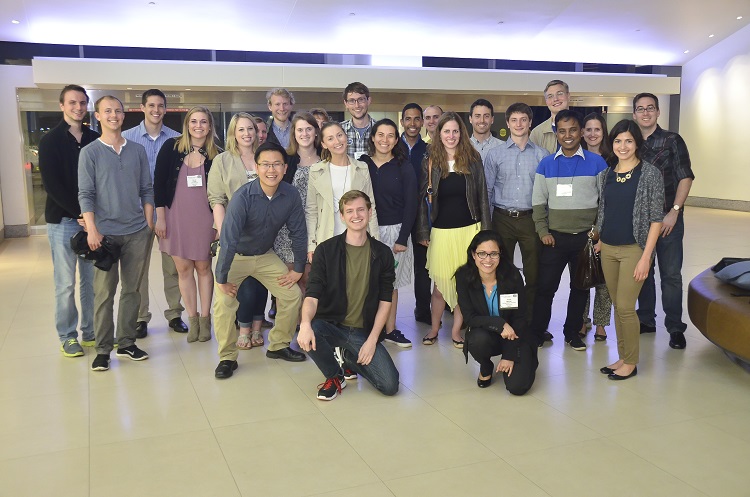
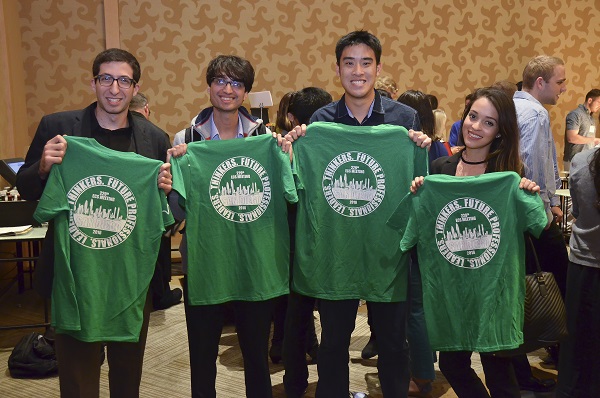
Attended by distinguished ECS members and staff, the Student Mixer offers the perfect opportunity to network and socialize with industry experts, fellow students, and like-minded thinkers.
Student Mixer at 228th ECS Meeting
The Student Mixer is a ticketed event. Add a ticket to your meeting registration or contact customerservice@electrochem.org for more information. Tickets are discounted for student members. Registration info
ECS Student Member Price: $5.00 Student Non-Member Price: $15.00
Not a student member? Join today to receive additional discounts on your registration as well as this exciting event!
Tickets are limited and likely to sell out, so purchase yours today!
Recent Progress in Renewable Energy Generation, Distribution, and Storage
PRiME 2016 | Sunday, Oct. 2, 2016 | Honolulu, Hawaii
Our meetings team was just in Hawaii prepping for PRiME! See more here.
The ECS Electrochemical Energy Summit (E2S) brings together policy makers and researchers as a way of educating attendees about the critical issues of energy needs and the pivotal research in electrochemical energy that will impact our planet’s sustainability.
The 6th International ECS Electrochemical Energy Summit will focus around Recent Progress in Renewable Energy Generation, Distribution, and Storage.
The program will include keynote presentations and remarks from DOE, NEDO, KIER, and the Hawaii State Energy Office followed by a poster session showcasing research, advancements, and technologies within the clean energy sector. There will be networking opportunities and associated receptions.
Chair
Boryann Liaw, Hawaii Natural Energy Institute
Organizers
Adam Weber, Lawrence Berkeley National Laboratory
Hiroyuki Uchida, University of Yamanashi
Won-Sub Yoon, Sungkyungkwan University
Mark Glick, Hawaii State Energy Administrator
Interested in participating in the E2S Poster Session?
The poster session Z03 is designed to provide a platform of networking with other scientists, technologists, stakeholders and policy makers through information exchange and live discussion. The session welcomes contributions from private or governmental organizations, research groups, and industrial manufacturing and service providers that are engaging in the renewable energy technology and business development, implementation or promotion and interesting in sharing their work, ideas, and results with the participants of the PRiME 2016 meeting.
ECS is excited to announce a volunteer program for ECS student members at the 229th ECS Meeting in San Diego, CA, May 29-June 2, 2016. This program was first piloted in the fall at the ECS meeting in Phoenix, AZ.
As a student aide, you will work closely with the ECS staff and gain first-hand experience in what it takes to execute an ECS biannual meeting. Take advantage of the opportunity to network and engage with meeting attendees, symposium organizers and ECS staff while learning how registration operates, technical sessions run and how major meeting programs are facilitated.
Interested in participating within this program?Click here to fill out your application today!
Please note, the deadline to apply is March 11th. The selected candidates will be notified the week of March 14th.
Benefits include a unique behind the scenes experience, networking opportunities, a FREE San Diego meeting registration, an ECS shirt, and a certificate of participation! For more information or questions regarding the application process, please contact membership services intern, Abby Hosonitz, at abigail.hosonitz@electrochem.org.
Interested in kick-starting your 229th ECS Meeting experience with an all-day lesson on a topic of your choice? Consider registering for one of five ECS short courses.
Short courses
ECS short courses will be held in San Diego, CA on Sunday, May 29th, 2016 from 9:00 a.m. to 4:30 p.m., offering enterprising students and seasoned professionals alike the opportunity to receive intensive education from academic and industry experts within intimate learning environments.
Course offerings
Basic Corrosion for Electrochemists Luis Garfias-Mesias, Instructor
This course covers the basics of corrosion science and corrosion engineering. It is targeted toward people with a physical sciences or engineering background who have not been trained as corrosionists, but who want to understand the basic concepts of corrosion, learn to select the appropriate materials an know which will be the typical techniques and methodologies to test and qualify materials (resistant to corrosion). (more…)
Fundamentals of Electrochemistry: Basic Theory and Thermodynamic Methods Jamie Noël, Instructor
This course covers the basic theory and application of electrochemical science. It is targeted toward people with a physical sciences or engineering background who have not been trained as electrochemists, but who want to add electrochemical methods to their repertoire of research approaches. (more…)
Advanced Impedance Spectroscopy Mark Orazem, Instructor
This course is intended for chemists, physicists, materials scientists, and engineers with an interest in applying electrochemical impedance techniques to study a broad variety of electrochemical processes. (more…)
Hydrodynamic Electrochemistry Using Rotating Electrodes Li Sun, Instructor
This course is intended for scientists and engineers who are interested in using rotating electrodes in their projects. Examples of application include fuel cell catalyst screening, corrosion inhibitor testing, and electroplating. (more…)
Nanobiosensors Raluca-Ioana van Staden, Instructor
This course is intended for chemists, physicists, materials scientists, and engineers with an interest in applying electrochemical sensors on fields like biomedical analysis, pharmaceutical analysis, and food analysis. (more…)
Registration and discounts
Pre-registration for short courses is required. Substantial discounts are offered for students and those who register by the early-bird deadline of April 29, 2016. Receive a $75 discount on your short course fee with the purchase of a meeting registration.