Electrochemistry in Orbit

Guest blog by Dr. Alyson Lanciki, Scientific Editor, Metrohm International
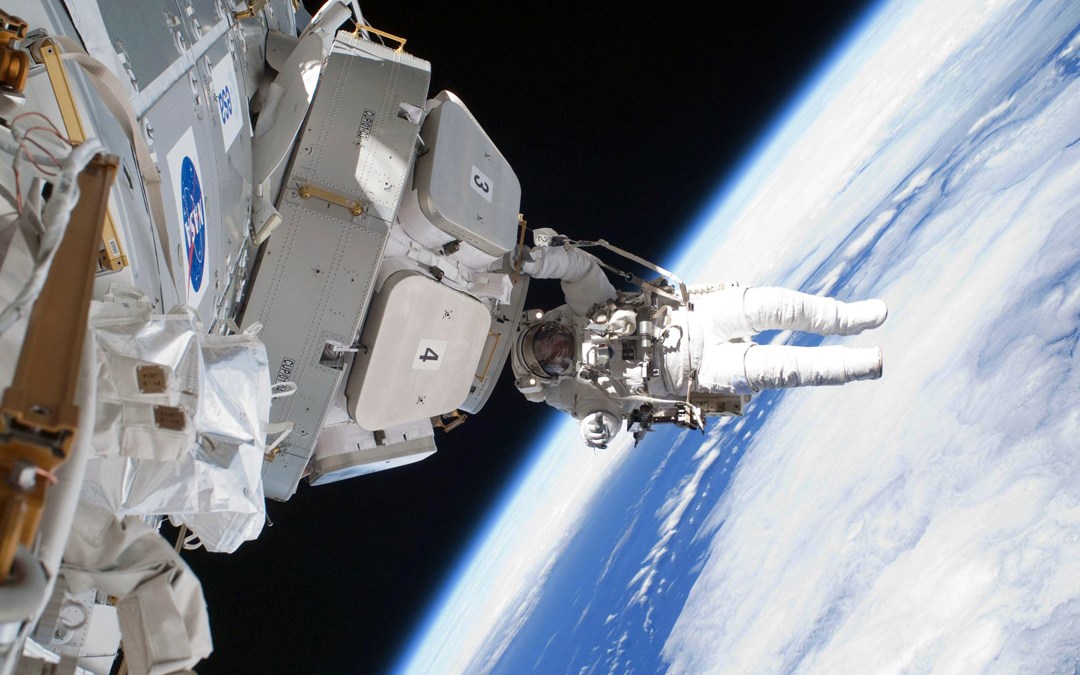
For over twenty years now, there has been continuous human occupation off our planet.

The International Space Station (ISS), launched in 1998, is a modular satellite in low orbit around the Earth, which is visible even with the naked eye.

In October, NASA launched an Antares rocket carrying a Cygnus resupply ship. This cargo ship carried an experimental system on board used to study the oxidation of ammonia under microgravity conditions to convert urine into water on the ISS. Improving this waste management system has far-reaching repercussions for longer exploratory missions where the weight of the payload must be optimized with the amount of water needed (which is heavy) to sustain life during the trip. Given the limited resources aboard a spaceship, the recovery of water from all processes is of great importance. (more…)
The following guest post is by Morgan Frey, Marketing Lead, Ereztech LLC

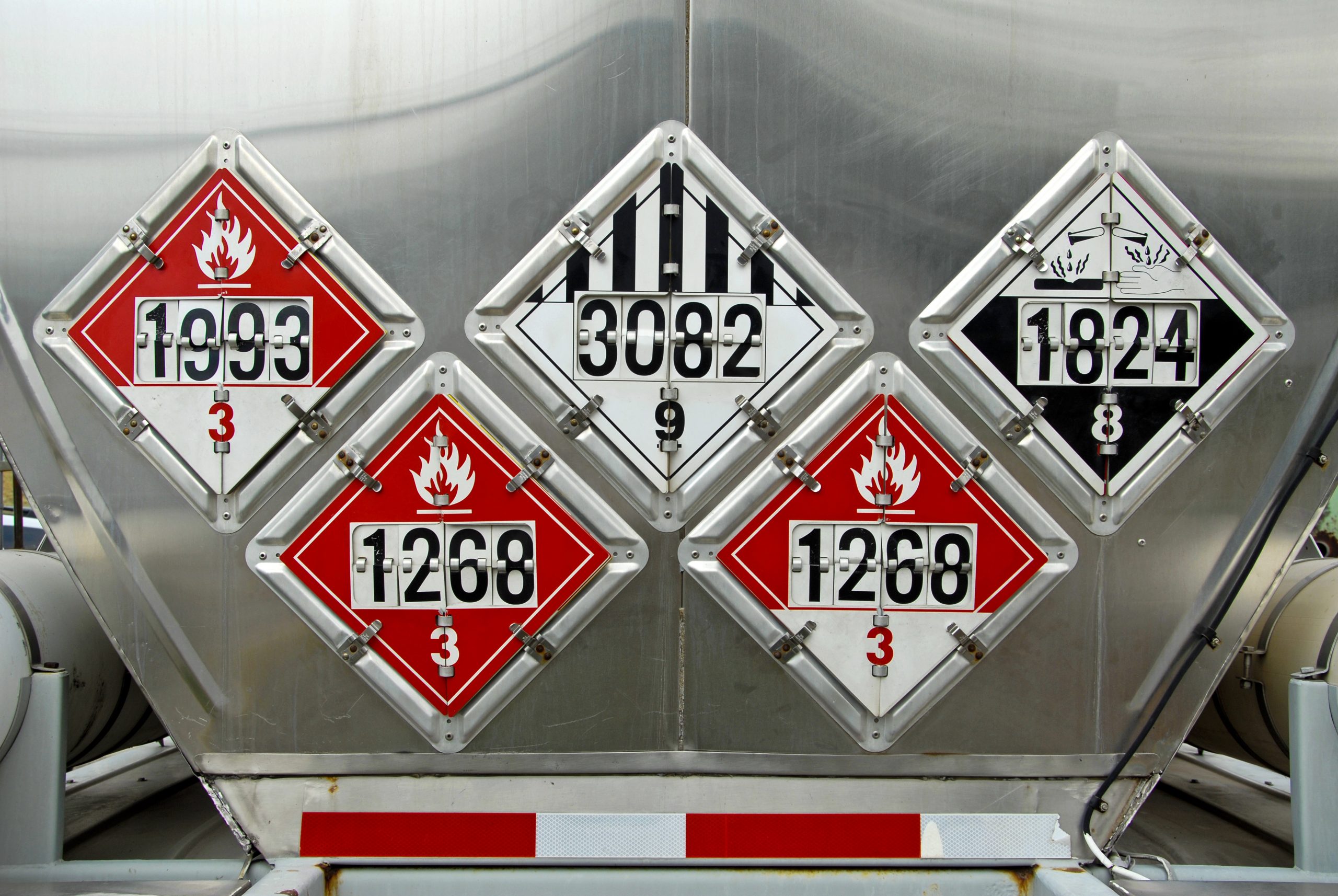
Logistics may not be top-of-mind when thinking about electrochemical and solid state manufacturing processes, but one failed shipment can throw an entire production schedule off target. Specialty chemicals, such as atomic layer deposition (ALD) precursors for the manufacture of thin films, are considered hazardous materials (hazmat) and therefore require special care and preparation for transportation. (more…)

Join the National Academies of Sciences, Engineering, and Medicine for a workshop, Advances, Challenges, and Long-Term Opportunities for Electrochemistry: Addressing Societal Needs. The workshop is on November 18-19, 2019 in Washington, DC. under the auspices of the Chemical Sciences Roundtable of the Board on Chemical Sciences and Technology.

The workshop features sessions on the latest applications of electrochemistry in energy storage, energy conversion, and electrosynthesis. In addition to technical talks, speakers and the audience will discuss the resource, training, and workforce needs to advance electrochemistry in the United States. (more…)

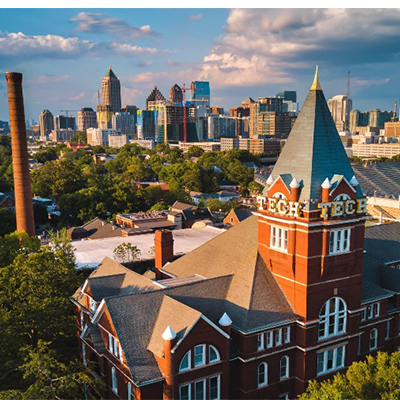
Join the ECS Georgia Institute of Technology Chapter and ECS Georgia Section for a free half-day conference featuring speaker William E. Mustain. Gather at Georgia Tech to share ideas, present work, and form new collaborations with graduate students and post doc researchers in the field of electrochemistry (including fuel cells, batteries, electrocatalysis, and bio-electrochemistry).

When:  Friday, September 27, 2019

Schedule:
1000h  |     Check-in and Networking
1100h  |     Featured Talk
1200h  |     Lunch and Poster Setup
1245 h |     Student Poster Contest
1430 h |     Award Ceremony (more…)

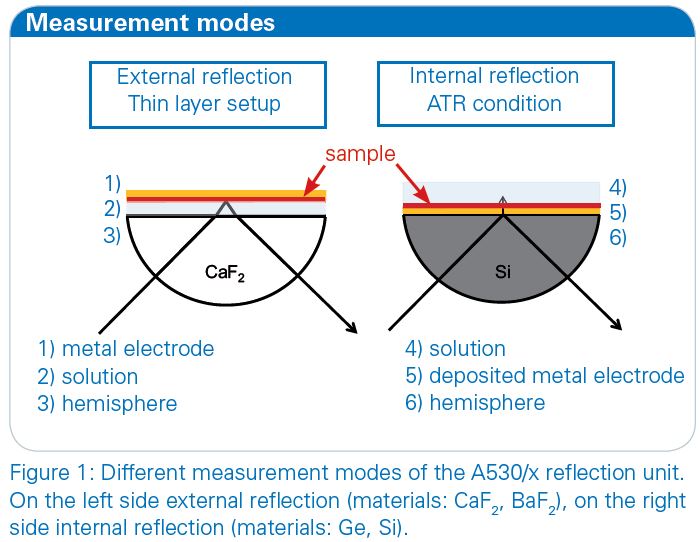
Editor’s note: This briefing was written by Bruker Optics. Bruker Optics will be exhibiting (booth 400) at the 235th ECS Meeting in Dallas, TX this May. See a list of all our exhibitors.

Introduction

Electrochemical investigations are a very current topic in research. In recent times advancement in technology and industry results in a world-wide increasing energy consumption. A future requirement to face this trend is the development of high capacity and as well low weight rechargeable batteries for energy storage. Therefore studies of electrolyte systems or electrode surfaces are of great importance for possible further improvements.

Also in other fields, like biochemistry or catalysis, electrochemistry is of great benefit to get access to information of molecules, depending on an applied electrochemical potential. For example of the redox-active center in biomolecules [1], the reaction behavior of catalysts or the formation of carbon oxides during alcohol oxidation.

(more…)

Sheela Berchmans, CSIR-Central Electrochemical Research Institute chief scientist.

Guest post by: Sheela Berchmans, chief scientist at the CSIR-Central Electrochemical Research Institute

Sheela Berchmans has been an ECS member since 2012 and member of the Organic and Biologic Division and India Section since 2019. Berchmans’ areas of expertise include microbial fuel cells, nanomaterials for sensor applications, bio-assisted synthesis of metal nanoparticles, and electrocatalysis. Read her past work, available now in the ECS Digital Library.

Follow the latest research on electrocatalysis at the 235th ECS Meeting taking place on May 26-30, 2019 in Dallas, TX.

Electrocatalysis assumes a special importance as the applied potential at the electrified interface provides a tunable ∆G to the rate component. ∆G consists of a chemical and a electrochemical component (e-∆G0/RT e-F∆/RT), where the electrochemical component provides a leverage to control the rate of reaction. For simple nonbonding reactions, the rate of the reaction can be expressed as a function of work function of the metal catalyst. However, when bonding reactions are concerned, the adsorption of the reactants at the electrode surface determines the rate of the reaction. For eg, we take into consideration, Hydrogen evolution reaction, (HER) a typical prototype of electrochemical reaction.

The following reaction steps determine the rate of the reaction. The first step involves the proton discharge on the electro catalyst (Volmer reaction) which desorbs either through an electrochemical desorption (Heyrovsky reaction) or chemical desorption from the electrode surface as H2 gas. (2nd and 3rd steps) This reaction is known to be highly exothermic in nature.

(more…)

Write a Guest Post for ECS

Do you have an opinion you’d like to share? Do you have a story to share about what open access means to you? Or maybe you’ve published a paper with ECS and would like a platform to introduce your work and express the motives behind it?

Whatever the case …

We want to hear from you!

We’re accepting guest post submissions. Get creative and send your idea to Marketing@electrochem.org. Contributing posts may be featured in ECS newsletters and posted on all social media sites, including Twitter, Facebook, and LinkedIn. (more…)

Posted in Guest Post
Tagged

Editor’s note: This briefing was written by Admiral Instruments. Admiral Instruments will be exhibiting (booth 309) at the 233rd ECS Meeting in Seattle, WA this May. See a list of all our exhibitors.

You’ve probably heard your potentiostat ‘click’ while running a cyclic voltammetry experiment or similar sweep methods. Have you ever wondered where that clicking comes from, and why it happens?

The clicking sound is made by a series of electromechanical relays (AKA switches) when they turn on or off to direct the flow of current (I) to a different shunt resistor. A shunt resistor is a specialized resistor with high accuracy and a low temperature coefficient. In most commercially-available potentiostats, current is not directly measured. Rather, current readings are calculated by dividing the voltage drop (V) across the shunt resistor by the resistance (R) of the shunt resistor.

I = V/R

(more…)

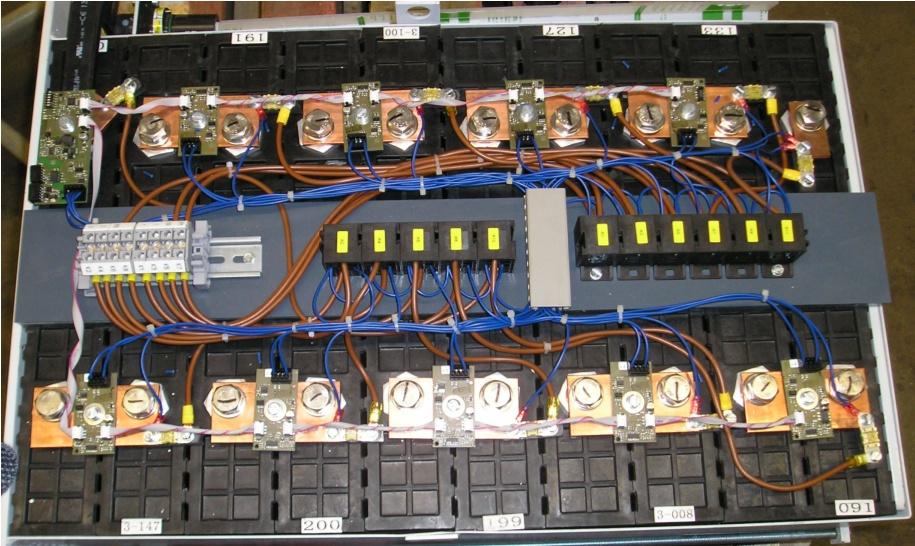
Editor’s note: This briefing was written in a joint collaboration between Admiral Instruments and Zahner Scientific Instruments. Admiral Instruments will be exhibiting (booth 400) at the 232nd ECS Meeting in National Harbor this fall. See a list of all our exhibitors.

lithium batteries

Image: Multiple stacks of lithium batteries

Problem

Methods combining EIS with charge-discharge cycles are among the most powerful tools available to collect in-situ information about electrochemical systems such as battery cells and stacks. However, accurately measuring the rapidly-changing states of the electrodes, electrolytes, and other non-steady-state materials within battery systems is a challenge.

This issue is particularly troublesome when changes in state occur at timescales even shorter than a single charge-discharge cycle or single EIS frequency sweep. Accurately interpreting results from an EIS measurement requires either making the ill-advised assumption of steady-state conditions throughout the duration of a frequency sweep, or accounting for drift effects by using modeling tools that are often time-consuming or ineffective.

(more…)

Posted in Guest Post

Reflections of an ECS Intern

ECS logoMy name is Andrew Ryan. For the past eight months, I served as a Membership Services Intern at ECS under the direction of Beth Fisher. Though I worked on many different projects throughout my time at ECS, my primary contribution was writing membership related posts for the ECS website’s Redcat Blog. A great deal of the posts written over the course of the past eight months with the byline “ECS Staff” were written by me.

An English major who graduated from The College of New Jersey this past May, I was absolutely honored to have the opportunity to write for a website with such a thriving viewership. It was beyond fulfilling to be able to apply my passion for writing in a professional environment.

But ECS was more to me than a writing outlet. It was more to me than a desk job or a resume line. It was a truly, positively rewarding experience.

Let me tell you why.

(more…)

  • Page 2 of 3
ECS
Privacy Overview

This website uses cookies so that we can provide you with the best user experience possible. Cookie information is stored in your browser and performs functions such as recognising you when you return to our website and helping our team to understand which sections of the website you find most interesting and useful.