 Submission Deadline: February 14, 2018
The ECS Journal of Solid State Science and Technology (JSS) Focus Issue on Semiconductor-Based Sensors for Application to Vapors, Chemicals, Biological Species, and Medical Diagnosis is currently accepting manuscripts.
This JSS focus issue aims to cover various active or passive semiconductor devices for gas, chemical, bio and medical detection, with the focus on silicon, GaN, dichalcogenides/oxides, graphene, and other semiconductor materials for electronic or photonic devices. The scope of contributed articles includes materials preparation, growth, processing, devices, chemistry, physics, theory, and applications for the semiconductor sensors. Different methodologies, principles, designs, models, fabrication techniques, and characterization are all included. Integrated systems combine semiconductor sensors, electric circuit, microfluidic channels, display, and control unit for real applications such as disease diagnostic or environmental monitoring are also welcome.
Topics of interest include, but not limited, to the following:
(more…)


 A new issue of ECS Transactions has just been published.
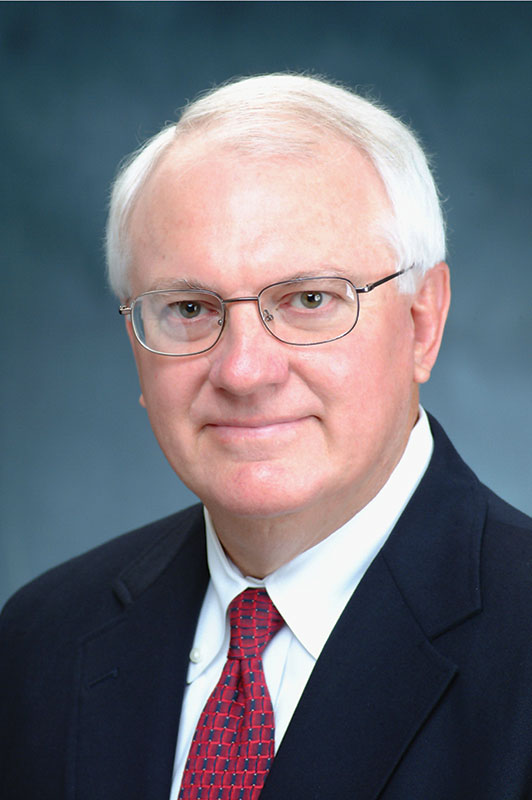 Charles L. Hussey is Associate Dean for Research and Graduate Education in the College of Liberal Arts at the University of Mississippi and professor of chemistry. He is a fellow of ECS and a recipient of the Society’s Max Bredig Award in Molten Salt and Ionic Liquid Chemistry. His scientific research with molten salts/ionic liquids has been directed at the electrochemistry and spectroscopy of d- and f-block elements, the electrodeposition of aluminum and corrosion-resistant aluminum-transition metal alloys, the electrodissolution of metals and alloys, and the electrochemical processing of spent nuclear fuel. Hussey was recently reappointed as technical editor of the
  Two new volumes of ECS Transactions (ECST) have just been published.