How Your Car Could Be Powered by the Sun

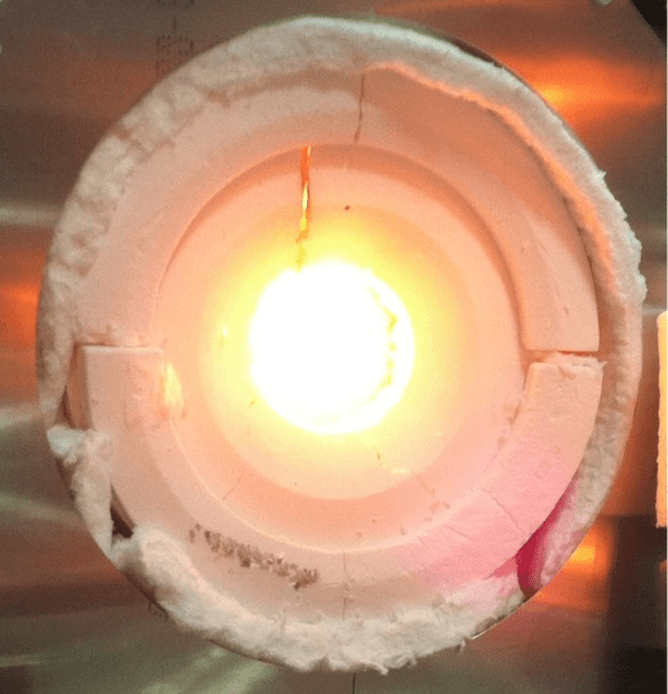
By concentrating sunlight into reactors, H20 and CO2 can be split to form liquid fuels.Image: The Conversation/David Hahn

By concentrating sunlight into reactors, H2O and CO2 can be split to form liquid fuels.
Image: The Conversation/David Hahn

The sun produces an astronomical amount of energy each day, but scientists and engineers are still trying to better understand how to convert that energy into an efficient, usable form. Recently, work in photovoltaics deals with utilizing different materials, new arrangements of cell components, and interdisciplinary work to improve efficiently levels. However, a new and exciting area of photovoltaics is now rising in the ranks: turning sunlight into liquid fuels.

With this new development on the rise, the possibility of one day filling our cars with solar-generated fuel is on the horizon.

Researchers are giving more attention to the production of solar fuels because energy conversion and storage and simultaneously covered under one technique. It will give solar energy a wider scope due to more utilization opportunities, whereas conventional photovoltaic energy is only being used for one-third of the day when sunlight is at its peak.

Currently, the greatest roadblock lies in commercialization of the man-made solar fuels due to the substantial amount of energy it takes to break down stable CO2 and H2O molecules.

However, researchers are also exploring aspects of artificial photosynthesis through electrochemistry to help produce efficient, affordable man-made solar fuels.

Further material from the ECS Digital Library:

Read more about processes and current projects on The Conversation.

PS: Watch Ralph Brodd, a pillar of electrochemical science and technology with over 40 years in the electrochemical energy conversion business, talk about the future of the energy infrastructure and how it has transformed over the years.

New Type of Graphene Aerogel (Video)

focus-issue-boxLogan Streu, ECS Content Associate & Assistant to the CCO, recently spotted an article out of Lawrence Livermore National Laboratory detailing a new type of graphene aerogel that could improve energy storage, sensors, nanoelectronics, catalysis, and separations.

The researchers are creating graphene aerogel microlattics through a 3D printing process known as direct ink wetting.

This from Lawrence Livermore National Laboratory:

The 3D printed graphene aerogels have high surface area, excellent electrical conductivity, are lightweight, have mechanical stiffness and exhibit supercompressibility (up to 90 percent compressive strain). In addition, the 3D printed graphene aerogel microlattices show an order of magnitude improvement over bulk graphene materials and much better mass transport.

(more…)

New Development to Improve Energy Storage

Chemical phase map showing how the electrochemical discharge of iron fluoride microwires proceeded from 0 percent discharge (left), to 50 percent (middle), to 95 percent. Source:

Chemical phase map showing how the electrochemical discharge of iron fluoride microwires proceeded from 0 percent discharge (left), to 50 percent (middle), to 95 percent.
Source: AZO Materials

ECS student member Linsen Li, along with former member Song Jin, have recently completed the first part of their study focusing on the powerful potential of iron fluoride in lithium-ion batteries, which can improve energy storage.

“In the past, we weren’t able to truly understand what is happening to iron fluoride during battery reactions because other battery components were getting in the way of getting a precise image,” said Linsen Li, graduate student and research assistant at the University of Wisconsin – Madison.

This development will likely impact energy storage and could, in the future, advance large-scale renewable energy storage technologies if the researchers can maximize the cycling performance and efficiency of the low-cost fluoride lithium-ion battery materials.

(more…)

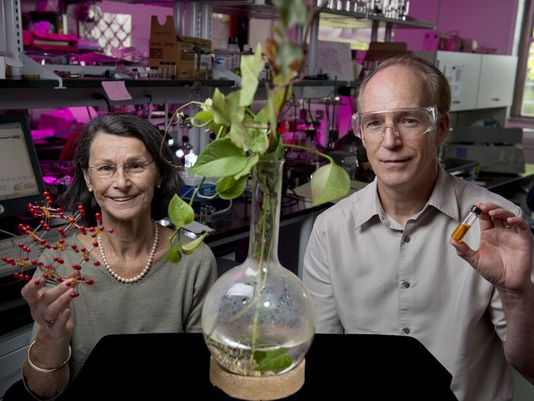
Rutgers researchers Martha Greenblatt (left) and Chalres Dismukes (right) have developed a cost-effective energy storage technology to advance sustainable energy.Image: Nick Romaneko/Rutgers University

Rutgers researchers Martha Greenblatt (left) and Chalres Dismukes (right) have developed a cost-effective energy storage technology to advance sustainable energy.
Image: Nick Romaneko/Rutgers University

Dan Fatton, ECS Director of Development & Membership services, spotted an article in My Central Jersey that details a potential game changer in sustainable energy.

Researchers from Rutgers University may have just found the key to advancing renewable resources and potentially growing an energy infrastructure based on sustainability.

The researchers from Rutgers’ Chemistry and Chemical Biology Department have recently developed a novel patent-pending energy storage technology grounded in electrochemical science. The new technology is said to not only be cost-effective, but also a highly efficient way to store sustainable energy for later use.

The research published in the journal Energy & Environmental Science addresses the feasibility of widespread utilization of sustainable power.

“We have developed a compound, Ni5P4 (nickel-5 phosphide-4), that has the potential to replace platinum in two types of electrochemical cells: electrolyzers that make hydrogen by splitting water through hydrogen evolution reaction (HER) powered by electrical energy, and fuel cells that make electricity from combining hydrogen and oxygen,” co-author of the study Charles Dismukes explained to My Central Jersey.

(more…)

From Packing Peanuts to Energy Storage

The Electrochemical Society’s Vilas Pol has developed a new process to turn simple packing peanuts into energy-storing battery components.

Pol, an associate professor at Purdue University and active member of ECS, has thoroughly succeeded in turning one person’s trash into another person’s high-tech treasure. He and his team from Purdue University have developed a system that turns the puffy packing peanuts into nanoparticles and microsheets perfect for rechargeable batteries. Pol’s new generation of battery could even outperform the ones we currently use.

(more…)

New Speakers for Glasgow Conference

Glasgow_blog_imageJust announced are the newest speakers for the ECS Conference on Electrochemical Energy Conversion & Storage with SOFC-XIV, which will convene in Glasgow, Scotland at the Scottish Exhibition and Conference Centre from July 26-31, 2015. This is the first of a series of planned biennial conferences in Europe by ECS on electrochemical energy conversion/storage materials, concepts and systems, with the intent to bring together scientists and engineers to discuss both fundamental advances and engineering innovations.

Abstracts are due February 20, 2015
Find out more about submitting your abstract today!

We’ve already introduced you to the lead organizers of the conference, now take a moment to meet the speakers:

(more…)

Meet the Glasgow Organizers

Glasgow_blog_imageThe ECS Conference on Electrochemical Energy Conversion & Storage with SOFC-XIV convening in Glasgow, Scotland at the Scottish Exhibition and Conference Centre from July 26-31, 2015 is the first of a series of planned biennial conferences in Europe by ECS on electrochemical energy conversion/storage materials, concepts, and systems.

We are creating a forum where scientists and engineers can come together and discuss fundamental advances and engineering innovations.

Abstracts are due February 20, 2015
Find out more about submitting your abstract today!

The lead organizers of this conference are among the top researchers in their respective fields. We wanted to take a moment to introduce them to you:

(more…)

Development in Lithium-Ion Batteries

You can thank “dendrites” when your smartphone battery goes from a solid 40 percent charge to completely dead in a matter of 20 minutes. Thankfully, researchers out of Purdue University are researching these dendrites – otherwise known as the slayer of lithium-ion batteries – and developing something that could greatly improve the li-ion.

Dendrites work to destroy lithium-ion batteries by forming an anode electrode and growing until they affect battery performance – potentially resulting in complete battery failure.

The new study out of Purdue University explores this issue with the intention of creating a safer and longer-lasting lithium-ion battery that could be charged within minutes instead of hours.

(more…)

The Arizona Section of ECS will be hosting a meeting with special guest speaker Professor Robert F. Savinell.

The Arizona Section of ECS will be hosting a meeting with special guest speaker Professor Robert F. Savinell.

Date: January 26, 2014

Time: Networking and refreshments at 6:15 PM; Seminar begins at 7:00 PM

Place: University of Arizona
Tuscon, AZ 85721
Agave Room, 4th Floor of Student Union Building

Cost: Free to attend; $5 for light refreshments

Speaker: Professor Robert F. Savinell
George S. Dively Professor of Electrochemical Engineering at Case Western Reserve University
Professor Savinell is recognized as a leading authority on electrochemical energy storage and conversion. His research has been directed at fundamental science and engineering research for electrochemical systems and novel device design, development, and optimization. Dr. Savinell has over 100 publications and seven patents in the electrochemical field. He is a past chair of ECS’s Electrolytic and Electrochemical Engineering Division, a former editor of the Journal of The Electrochemical Society, and a Fellow of ECS.

(more…)

Member Spotlight – Ryohei Mori

The aluminum-air battery has the potential to serve as a short-term power source for electric vehicles.Image: Journal of The Electrochemical Society

The aluminum-air battery has the potential to serve as a short-term power source for electric vehicles.
Image: Journal of The Electrochemical Society

A new long-life aluminum-air battery is set to resolve challenges in rechargeable energy storage technology, thanks to ECS member Ryohei Mori.

Mori’s development has yielded a new type of aluminum-air battery, which is rechargeable by refilling with either salt or fresh water.

The research is detailed in an open access article in the Journal of The Electrochemical Society, where Mori explains how he modified the structure of the previous aluminum-air battery to ensure a longer battery life.

Theoretically, metal-air technology can have very high energy densities, which makes it a promising candidate for next-generation batteries that could enable such things as long-range battery-electric vehicles.

However, the long-standing barrier of anode corrosion and byproduct accumulation have halted these batteries from achieving their full potential. Dr. Mori’s recently published paper, “Addition of Ceramic Barriers to Aluminum-Air batteries to Suppress By-product Formation on Electrodes,” details how to combat this issue.

(more…)

ECS
Privacy Overview

This website uses cookies so that we can provide you with the best user experience possible. Cookie information is stored in your browser and performs functions such as recognising you when you return to our website and helping our team to understand which sections of the website you find most interesting and useful.