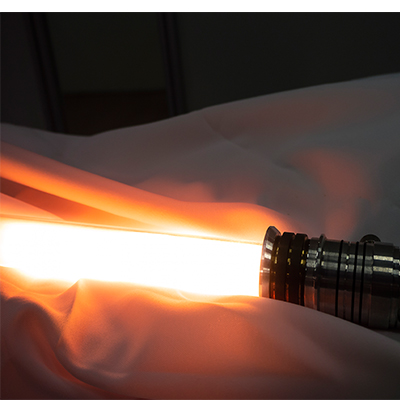

Recent growth in space-related activities has presented numerous opportunities for electrochemistry in space. That’s why Greg Jackson, chair of the ECS High-Temperature Energy, Materials & Processes Division (H-TEMP) and mechanical engineering professor at the Colorado School of Mines, took it upon himself to bring the first-ever symposium dedicated to “Electrochemistry in Space” to the 236th ECS Meeting.

“As a board member and someone who cares about the Society expanding its audience, I felt that there are many activities going on in regards to applying electrochemistry in space and the uniqueness of the space environment merited a special symposium,” said Jackson, lead symposium organizer.

The potential for increased lunar and Martian activities with in situ resource utilization (ISRU), human space flight, and in-space satellite maintenance, and space debris management present many technical challenges and opportunities where electrochemistry plays a central role. (more…)

Impact Canada is working on a $4.5-million project known as the Charging the Future Challenge. The goal is to accelerate made-in-Canada battery innovation, build a clean energy future, and provide economic growth in Canada. The 18-month challenge offers five finalists the opportunity to pitch their ideas for battery breakthroughs to a jury for a chance to win up to $700,000 each to develop battery prototypes, with the winner receiving a $1 million grand prize. (more…)

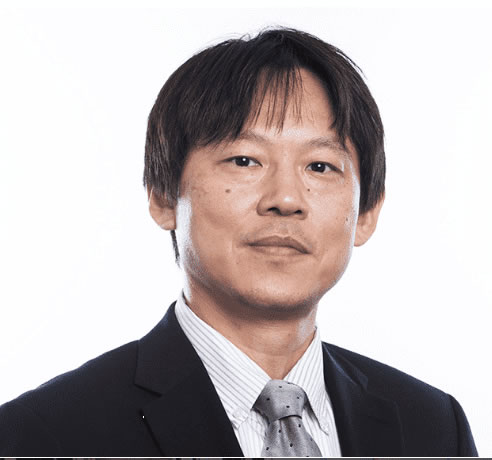
Naoki Ota. Photo Credit: 24M

ECS’s Detroit Section is proud to present guest speaker Naoki Ota at its September section meeting. He will speak on:

“Lithium-Ion Batteries: Semi-Solid Electrode Technology—Next Generation Product / Manufacturing Platform for Lithium Ion”


Naoki Ota

President and CTO
24M Technologies, Inc.
Cambridge, Massachusetts 02139, USA (more…)

Energy storage is crucial for the successful transition to renewable energy. Yet lithium-ion batteries have major limitations. Demand for lithium has increased exponentially, but production has not kept pace. Extracting lithium by brine mining is a long, costly, energy-intensive, and dangerous process with significant environmental impact. Access is difficult as most lithium mines are in South America.

Researchers at the Indian Institute of Technology (IIT) Madras developed a rechargeable iron ion battery to replace lithium. It uses mild steel as the anode and can store a high amount of energy. The iron battery withstood 150 cycles of charging and discharging under controlled conditions. After 50 cycles, the battery had 54 percent capacity retention. (more…)

Canada is looking for its next big battery breakthrough!

Charging the Future Challenge is a new $4.5-million project which aims to accelerate made-in-Canada battery innovation in order to build a clean energy future and provide economic growth within Canada.
The 18-month challenge will offer five finalists the opportunity to pitch their ideas to a jury for a chance to win up to $700,000 each to develop battery prototypes, with the winner receiving a $1 million grand prize.

(more…)

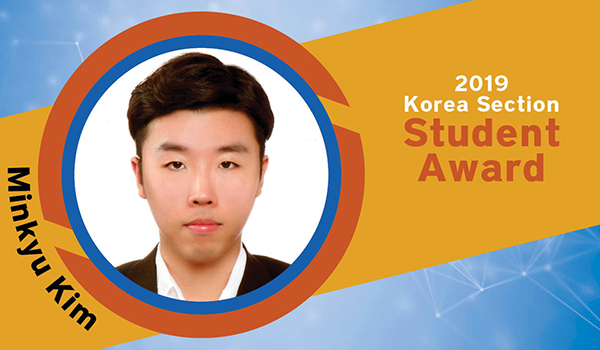
Minkyu Kim is the 2019 winner of the ECS Korea Section Student Award

The ECS Korea Section Student Award was established in 2005 to recognize academic accomplishments in any area of science or engineering in which electrochemical and/or solid state science and technology is the central consideration. To qualify for this award, applicants must (1) be a student who is pursuing a PhD at a Korean University, (2) be nominated by a university faculty member and (3) be a member of ECS at the time of the nomination. (more…)

Venkataraman Thangadurai, University of Calgary chemistry professor and associate head.

University of Calgary Chemistry Professor Venkataraman Thangadurai’s background in solid-state batteries, solid oxide fuel cells, proton conducting SOFCs, and gas sensors have made him a source for information over the years. Because of this, the longtime ECS and battery division member has been invited to present several presentations this spring.

International Battery Event

This March,  Thangadurai will speak at the International Battery Seminar & Exhibit taking place in Fort Lauderdale, Florida. The annual event showcases state of the art energy storage technology developments for consumer, automotive, military, and industrial applications, as well as offer attendees insights from guest speakers sharing their thoughts on significant material advancements, product development, manufacturing, and application of battery systems and enabling technologies.

ECS Biannual Meetings

Similar to the International Battery Seminar & Exhibit, ECS hosts biannual meetings on a broader scale, including a diverse number of topics in the electrochemical, solid state science, and technology field, of which Thangadurai has been a recurring speaker of.

In 2018, he attended AiMES as an invited guest speaker presenting his work, “Chemical and Electrochemical Stability of Fast Lithium Ion Conducting Garnet-Type Metal Oxides in H2o, Aqueous Solution, CO2, Li and S,” available in ECS Meeting Abstracts.

(more…)

Chuanfang (John) Zhang, Valeria Nicolosi, and Sang-Hoon Park. Credit: Naoise Culhane

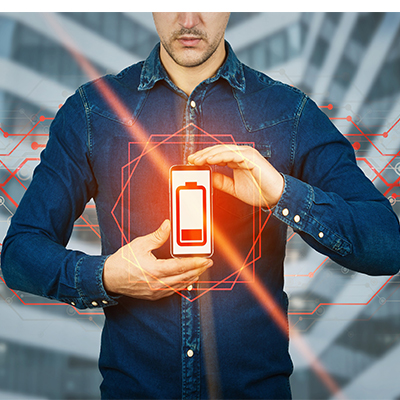
Have you ever wished you could increase your cellphone battery life? Well, that technology may very well already be here.

Researchers from AMBER, the Science Foundation Ireland Research Centre for Advanced Materials and BioEngineering, at Trinity College Dublin, have announced the development of a new material which offers the potential to improve battery life in everyday electronics, like smartphones, according to Irish Tech News.

The discovery could mean that the average phone battery life, roughly 10 hours of talk time, could increase to 30-40 hours.

MXenes, an ink-based nanomaterial, not only significantly improves battery life, but it also offers its batteries the flexibility to become smaller in size, without losing performance. (more…)

Kang Xu, lead author.

“What is the most ideal [solid-electrolyte interphase] SEI or interphase that would enable the next generation of the battery chemistries?”

It was a question that had been lingering in the minds of Kang Xu, fellow of US Army Research Laboratory and team leader; Chunsheng Wang, University of Maryland chemical and biomolecular engineering department professor, as well as one of the most cited researchers of 2018; and Ying Shirley Meng, University of California, San Diego nanoengineering professor, fellow of The Electrochemical Society, and associate director of the International Battery Association.

Together, the trio set out to pursue this question, resulting in the publication of their paper “Perspective—Fluorinating Interphases.” (more…)

It’s winter. And with that comes heavy coats, icy winds, and occasionally, below freezing temperatures: conditions not favorable for batteries.

Car batteries

Temperature extremes, in general, are not favorable to batteries. According to Lifewire, lead-acid batteries drop in capacity by about 20 percent in normal to freezing weather, and down to about 50 percent in temperatures that reach about -22 degrees Fahrenheit.

As a result, you may find your car battery giving out on any given winter morning. This is due to reduced capacity and increased draw from starter motors and accessories. This is because starter motors require a tremendous amount of amperage to get going: knocking out the capacity of even the newest batteries. (more…)

ECS
Privacy Overview

This website uses cookies so that we can provide you with the best user experience possible. Cookie information is stored in your browser and performs functions such as recognising you when you return to our website and helping our team to understand which sections of the website you find most interesting and useful.