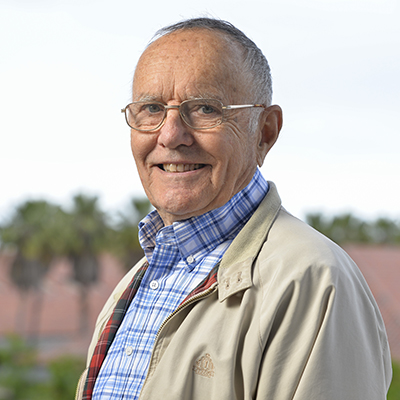
Robert A. Huggins
Topic Close-up #8
Symposium A02: Symposium in Honor of Bob Huggins: Fast Ionic Conductors – Principles and Applications
Symposium focus: Robert A. Huggins, professor emeritus in materials science and engineering at Stanford University, has more than six decades of scientific contributions to the fields of solid-state ionics and electrochemical energy storage systems. Contributions are solicited for all aspects of topics related to Huggins’ main scientific areas in fast ionic conductors, aqueous and non-aqueous batteries, molten salts or ionic liquids-based energy conversion and storage concepts, electrochemical characterizations of materials and batteries, and electrochemical energy storage systems. Please join us to celebrate Huggins’ long time contributions to the fields of solid-state ionics and electrochemical energy storage systems. (more…)