(Learn more about electrochemical engineering and pharmaceutical compounds, visit us at AiMES 2018 in Cancun, Mexico from September 30 – October 4, 2018.)
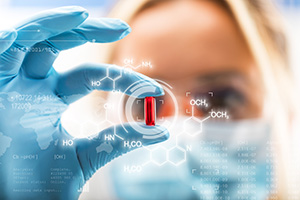 Carbon-nitrogen bonds are the stuff pharmaceuticals are made of. And according to Cornell University, they’re so essential that over 85 percent of the top selling pharmaceuticals have at least one carbon-nitrogen bond. That is to say, advances in carbon-nitrogen bond technology would mean great advances to the drug industry.
Song Lin, a Cornell University researcher in the chemistry and chemical biology field and ECS member of the organic and biologic division, is working on doing just that. He says that with electrochemistry, a process that directly uses electricity to drive chemical reactions, it would be possible to create carbon-nitrogen bonds in a sustainable manner. The only problem is that electrochemical reactions often do not offer the chemical selectivity and efficiency needed to accomplish a particular transformation – a problem Lin and his team are working to solve.




 The winner of the 2018